
 AI photo
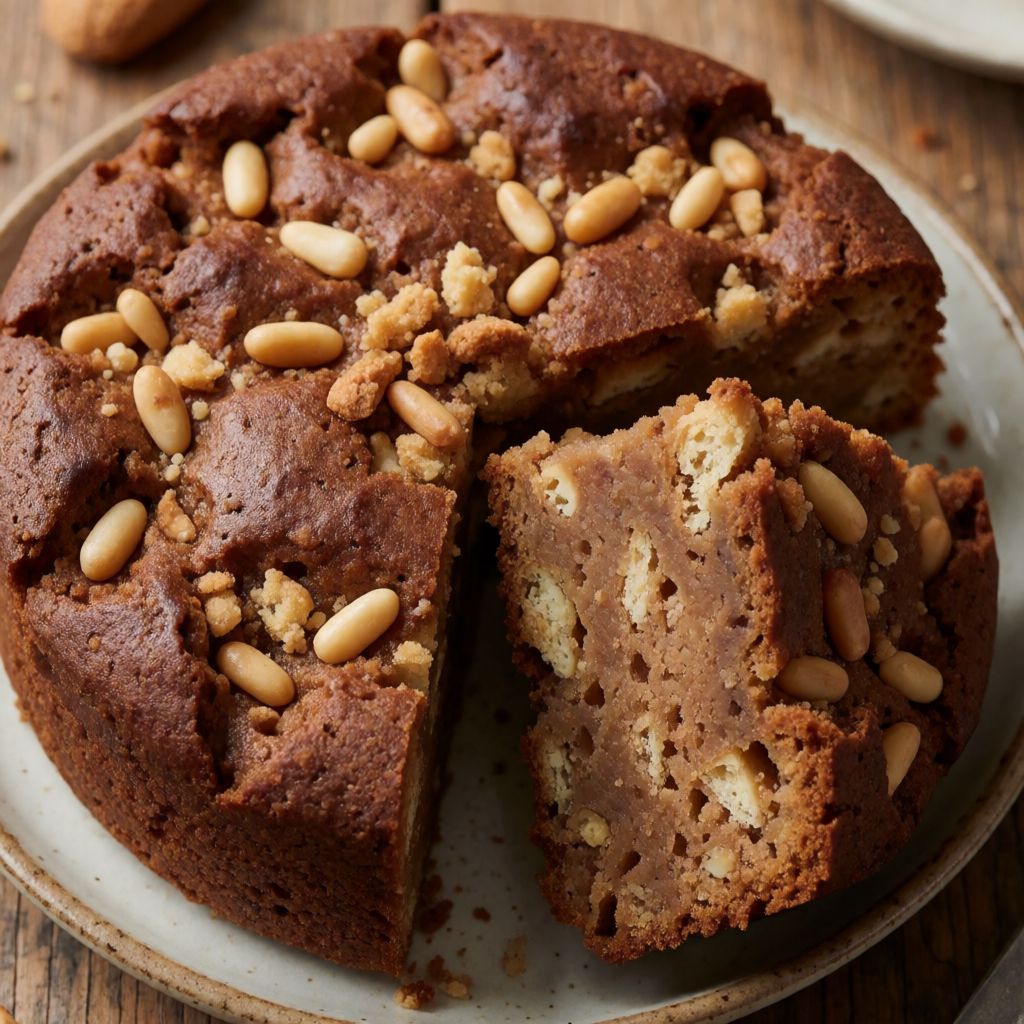
Torta Paesana
A rustic Italian stale-bread cake, bound with milk, amaretti, cocoa, pine nuts, raisins and orange.
Labels are worked out automatically from the ingredients and can be wrong. Check the packaging if it matters to you.
Ingredients
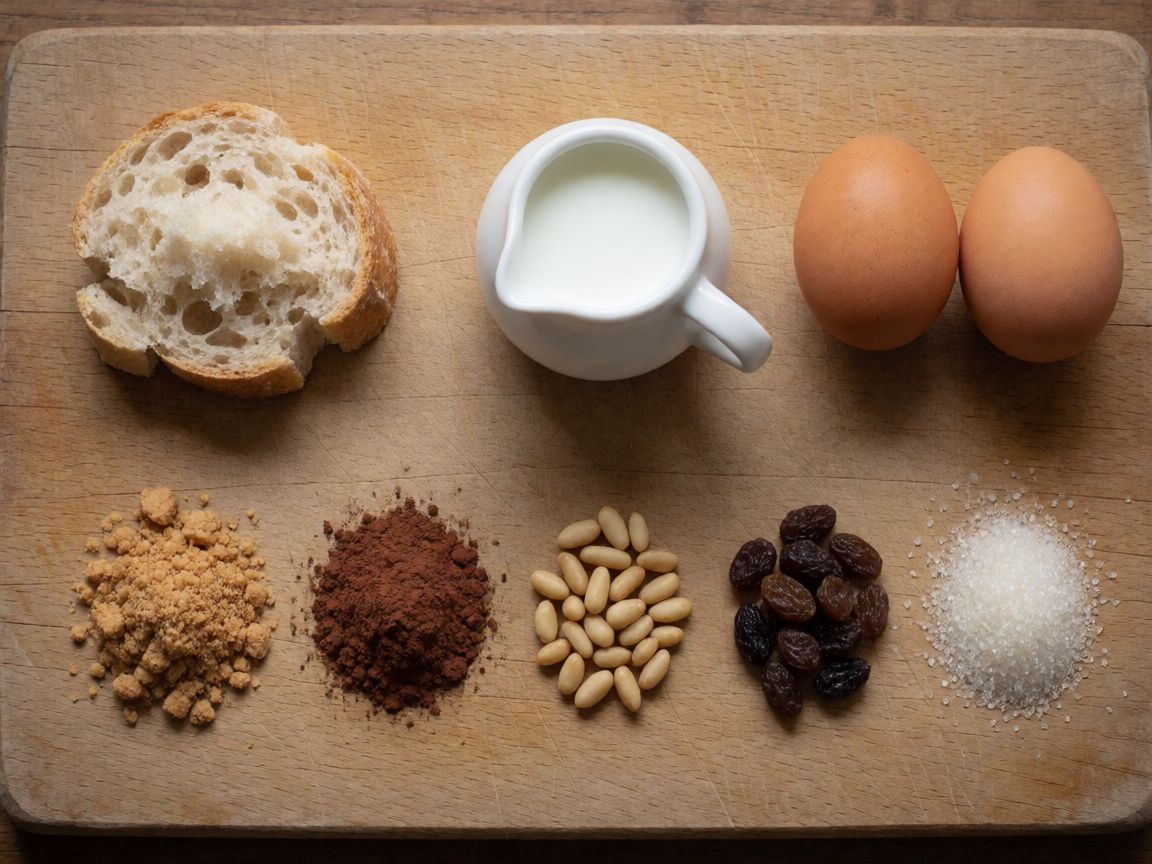
- 200 g stale bread
- 1 l milk
- 2 pcs eggs
- 100 g amaretti biscuits
- 50 g cocoa powder
- 50 g pine nuts
- 50 g raisins
- 120 g caster sugar
- 1 pcs orange zest grated zest of one orange
- 1 pcs orange juice juice of one orange







Steps
Heat the milk almost to boiling, then pour it over the stale bread, torn into small pieces, in a bowl.
Add the grated orange zest. Mix and leave to soften.
30 minSoak the raisins in the orange juice.
Blitz the amaretti biscuits with the cocoa powder in a blender to fine crumbs.
Mash the softened bread with a fork until it forms a smooth mass.
Add the ground amaretti-cocoa crumbs, pine nuts, drained raisins and caster sugar.
Beat the eggs separately, then fold them into the mixture. Mix well.
Transfer the mixture into a 22-24 cm tin and bake in a fan oven at 160°C.
50 minOr bake in a conventional oven at 170°C.
58 min
Torta Paesana is peasant cake in the most literal sense: it's built to use up what's gone stale, not to show off. Stale bread, milk, old amaretti crumbs, whatever raisins are in the cupboard — it's an economy pudding dressed up with orange and cocoa so nobody notices it started life as yesterday's loaf. This is the Italian answer to bread-and-butter pudding, and if that comparison helps you trust it, use it.
What decides whether it works is the bread stage, not the baking. You soak torn stale bread in hot milk and then mash it with a fork until it goes smooth — not until it's merely wet. If you rush this and bake a bowl of soggy lumps with dry centres, you'll get a cake with a grainy, uneven bite, because the starch in the bread never had the time to actually absorb the milk and break down. Thirty minutes is the floor here, not a target — if the bread still resists the fork, give it more time rather than more mixing.
Some say stale bread ruins a cake — no, stale bread is the only bread that works here. Fresh bread is still full of air and structure; it turns to paste and clumps instead of dissolving into the milk evenly. Staleness means the crumb has already dried and opened up, so it drinks the milk through and through, which is exactly the texture you want: dense, moist, no bready chew left in it.
On the oven: 160°C fan or 170°C conventional for roughly fifty minutes to just under an hour is a floor, not a clock to watch. The cake is done when it's set in the middle and no longer wobbles like a custard when you nudge the tin — a skewer coming out without wet batter clinging to it is your real signal, not the timer. A domestic fan oven runs hotter and more evenly than a conventional one, which is exactly why the conventional bake needs those extra minutes — there's no magic in it, just airflow doing work for you or not doing it.
The bread is the frame, so use something with actual structure and a bit of staleness to it — a day-old white loaf, ciabatta, ordinary sliced bread gone dry at the edges, anything without a strong flavour of its own that would fight the orange and cocoa. What you want from it is bulk and the ability to drink milk evenly; a loaf that's still soft just won't give you that.
The amaretti and cocoa are the actual character of the cake — bitter almond and chocolate instead of vanilla and cinnamon, which is what tells you immediately this isn't bread pudding's English cousin, even though the method is a sibling. If you can't get amaretti, any dry almond biscuit will do the job, because what you need is almond bitterness and crunch to blitz down, not a brand name. Don't skip the cocoa to "simplify" — without it you lose the colour and the slight bitterness that cuts the sweetness of the raisins and sugar.
Pine nuts are there for texture and a resinous, faintly sweet bite among all that softness — a cake with nothing firm in it gets tedious to eat. If pine nuts are expensive or you haven't got them, flaked almonds or chopped hazelnuts do a similar job: something that stays slightly crisp against the soft crumb.
Raisins soaked in orange juice rather than water or rum is doing two jobs at once: plumping the fruit and tying the orange flavour through the whole cake rather than just at the zest. If you're out of oranges, a splash of any citrus juice with its own zest will substitute — what matters is acidity and aromatic oil, not the specific fruit.
Caster sugar rather than granulated matters here more than usual, because this mixture never gets creamed or beaten hard — it's folded. Caster dissolves into the wet bread mass readily; granulated sugar, coarser, can sit gritty in a mixture that's handled this gently. If all you've got is granulated, give it a minute longer in the blender with the amaretti and cocoa so it joins the crumbs finer.
Patience is the actual ingredient that makes this work, more than any single item on the list — the thirty minutes the bread needs to soften properly, and the full bake time the custard-and-bread middle needs to set without being rushed out at the edges while still raw in the centre. This isn't a cake you hurry; it's a cake you leave alone.