
 AI photo
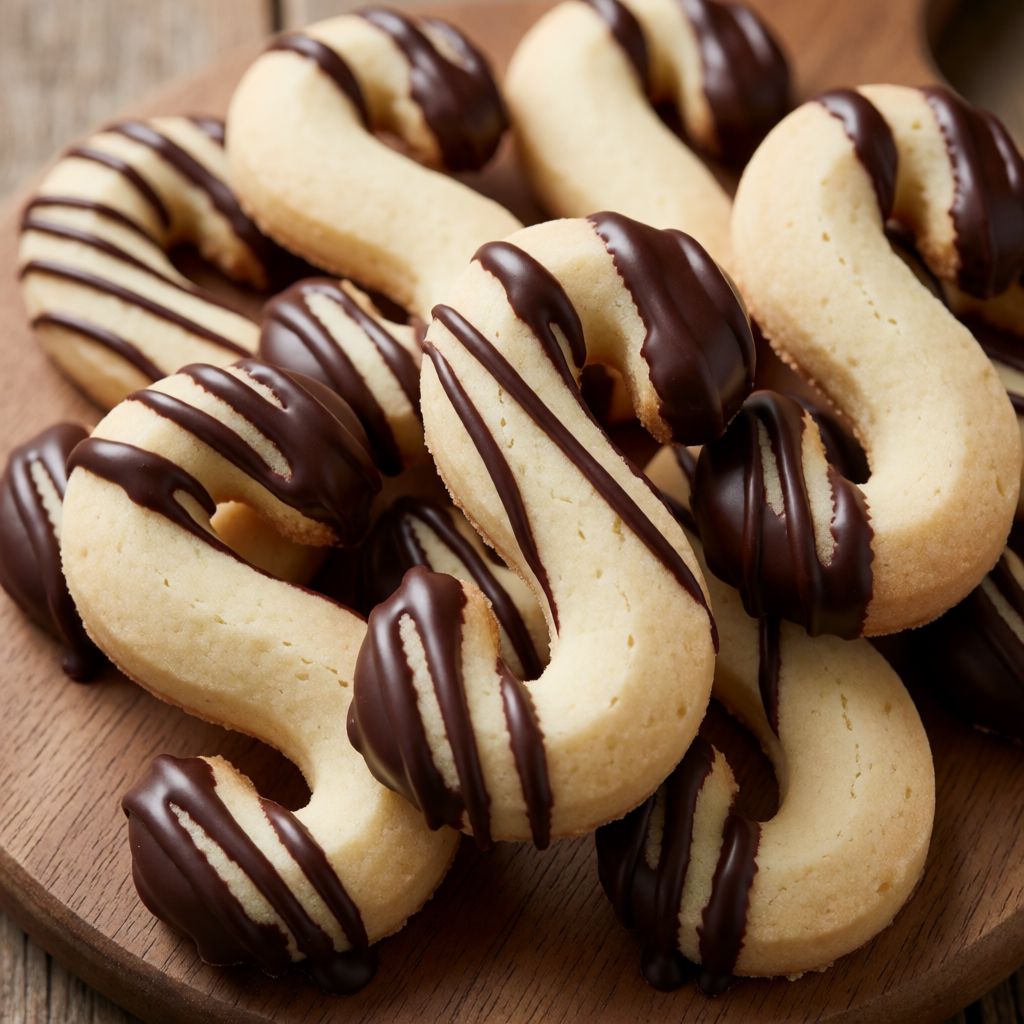
S-Shaped Biscuits
Soft butter biscuits shaped like the letter "S" and dipped halfway in melted dark chocolate.
Labels are worked out automatically from the ingredients and can be wrong. Check the packaging if it matters to you.
Ingredients
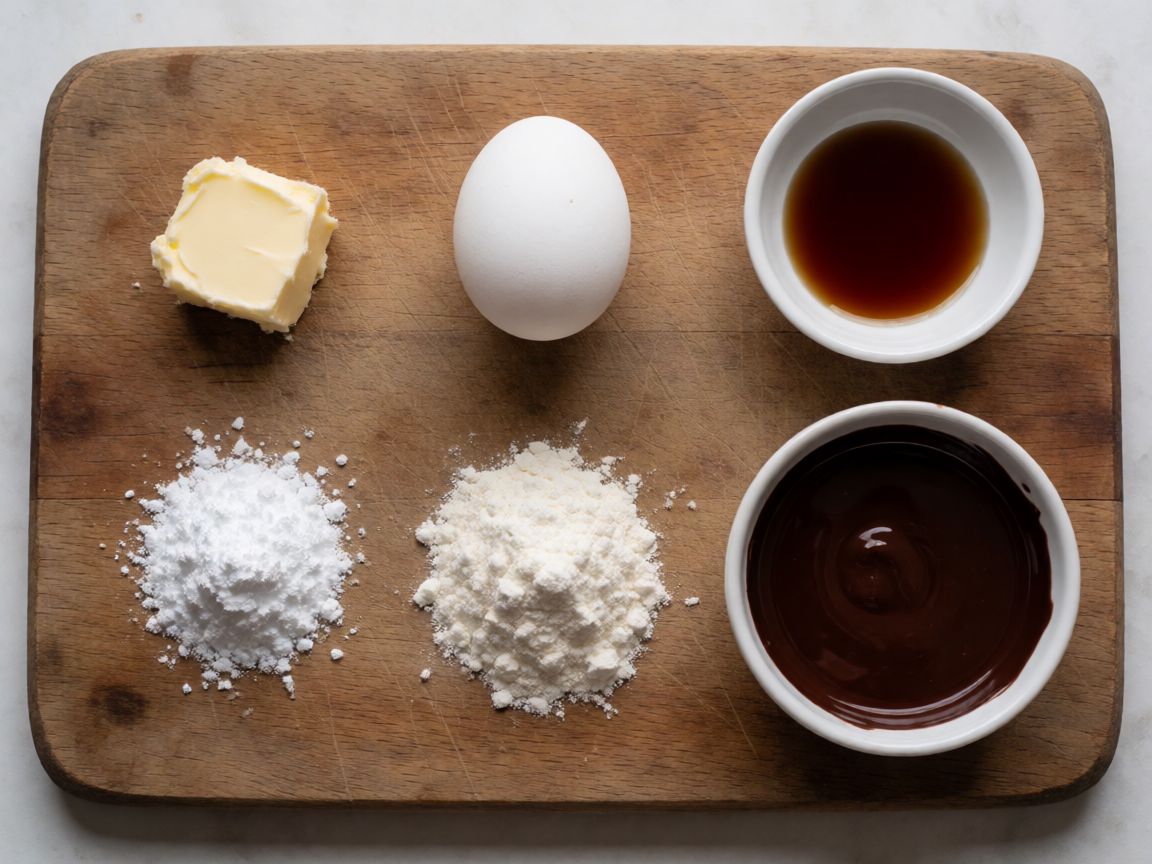
- 150 g Butter softened
- 1 pcs Egg
- 80 g Icing sugar
- 240 g Plain flour
- 1 tsp Vanilla extract
- 200 g Dark chocolate melted






Steps
Soften the butter at room temperature by taking it out of the fridge at least an hour beforehand.
In a bowl, mix the softened butter, egg and icing sugar, beating with a mixer.
Add the vanilla extract and gradually mix in the flour, stirring until you get a soft, compact dough.
If needed, add a little milk to get the right consistency.
Transfer the dough to a piping bag fitted with a star nozzle and shape the biscuits into the letter "S" on a baking tray lined with parchment paper.
Bake in a preheated oven at 180°C for about 8–10 minutes.
10 minLet the biscuits cool slightly, then dip each one halfway into the melted dark chocolate.
Leave the chocolate to set.
This is piped butter dough, not rolled dough — and that difference is the whole point of the shape. A dough this rich in butter and sugar is too soft and too short to roll out and cut with a cutter; it would tear. So instead of rolling, you force it through a star nozzle and let the press do the shaping. The "S" isn't decoration for its own sake — it's simply a shape easy to lay down in one continuous squeeze without the tip losing contact with the tray. Round blobs, letters, swirls — all come from the same economic logic: rich dough, piped not rolled, individual biscuits with no waste trimmings to re-roll.
What decides whether it works is the state of two things: the fat, and the heat. The butter has to be soft like a paste you can dent with a finger — not melted, not oily. Melted butter has already lost the air it would otherwise trap when beaten with sugar, and a dough made from it spreads flat in the oven before the edges have a chance to set the shape. Softened butter, beaten properly, holds structure long enough for the oven's heat to lock the ridges of the piping in place before gravity wins.
Butter is the one ingredient you cannot fake your way past. The criterion is: a fat solid at room temperature but soft enough to cream into sugar without resistance. Unsalted is traditional because you control the salt yourself, but salted butter works fine — just don't add any more salt elsewhere, there isn't any in this recipe to begin with. Margarine will pipe and bake, technically, but it carries more water than butter, and that water fights the dough's shortness — you'll get a biscuit that's a little tougher, a little less "melts, doesn't chew." If butter is what you've got, use it soft, not microwaved to a puddle — a puddle is not soft, it's a different ingredient.
Icing sugar earns its place by dissolving without grit — it's sugar already ground fine enough to vanish into the butter rather than sit in it as crunch. Caster sugar can stand in; the bite will be very slightly sandier, nothing dramatic. Don't reach for granulated — it simply won't break down in the time you're beating, and you'll taste little crystals in the finished biscuit.
Flour here is doing a containing job, not a rising one — that's why it's plain, not self-raising. You want the piped ridges to hold their shape in the oven, not puff and blur into a dome. The real risk with flour is overmixing: gluten develops the moment flour meets liquid and gets worked, and a dough beaten too long after the flour goes in turns from short and tender to tough and bready. Stir just until it comes together as a dough — stop there. If it's too stiff to pipe cleanly through the nozzle, a spoon of milk loosens it; the test isn't a number of millilitres, it's whether the dough holds a ridge when you stop squeezing rather than melting flat.
The egg binds the fat and sugar into something that won't crumble apart when piped, and one is enough — this isn't a cake needing lift, just cohesion. Vanilla extract is flavour, nothing structural; use the real extract if you can, because the essence version tastes thinner and more chemical, but the biscuit survives without it if that's all you have.
For the chocolate, the criterion is cocoa solids you can actually taste — proper dark chocolate, not a "chocolate-flavoured" baking coating, which is mostly vegetable fat and sets as a dull, waxy film instead of a clean snap. Melt it gently — a bowl over simmering water, not direct heat, and keep every drop of water away from the bowl, because a single splash will seize melted chocolate into a grainy, unworkable clump; that's not a myth, that's just what water does to suspended cocoa particles. And once dipped, let the chocolate set at room temperature, not in the fridge for speed — some do put biscuits in the fridge to hurry things along, but a fast, cold set crystallises the cocoa fat unevenly and leaves that pale, chalky bloom on the surface. It's not dangerous, it just looks like you rushed — because you did. Patience here isn't poetic, it's the difference between a glossy dip and a dusty-looking one. Give it the time it needs on the counter and it will set clean on its own.