
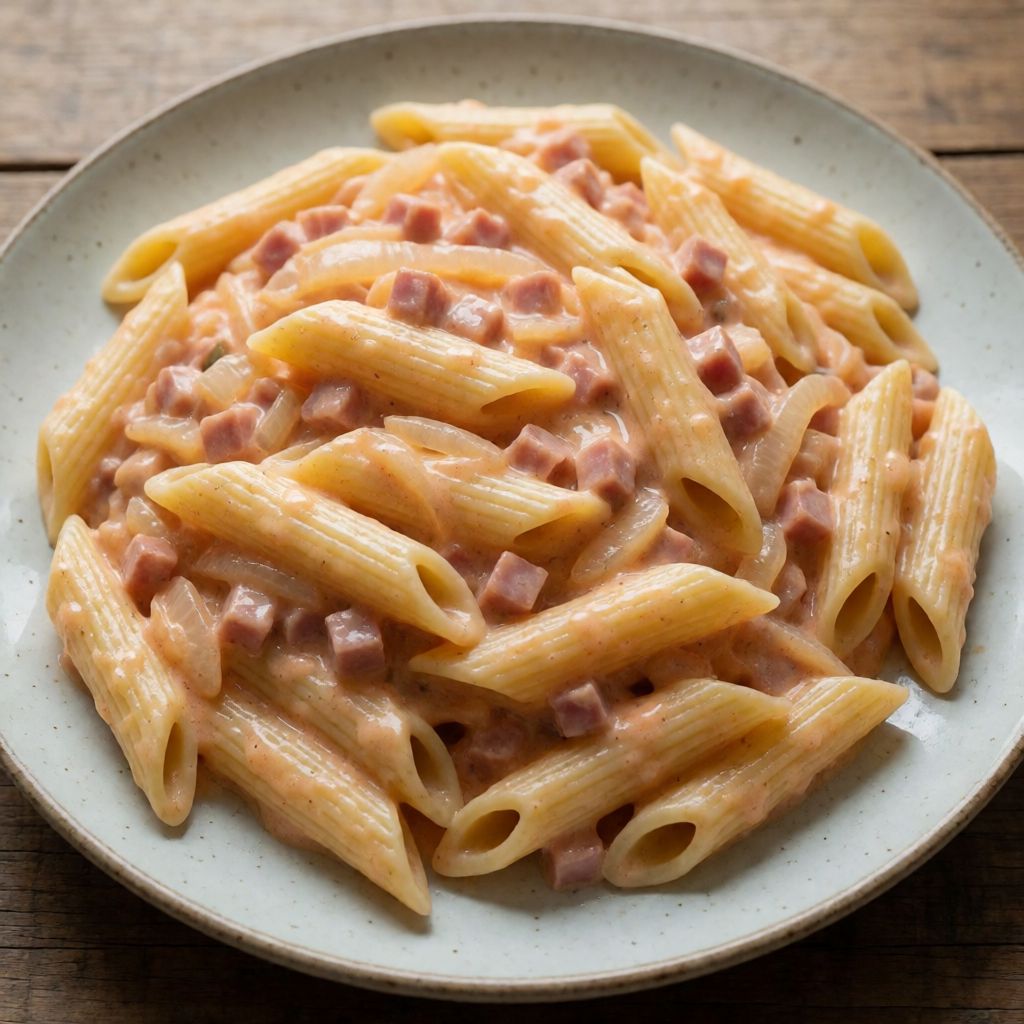
 AI photo
Penne al Baffo
A creamy penne pasta with onion, ham and tomato passata, finished with parsley and grated cheese.
Labels are worked out automatically from the ingredients and can be wrong. Check the packaging if it matters to you.
Ingredients
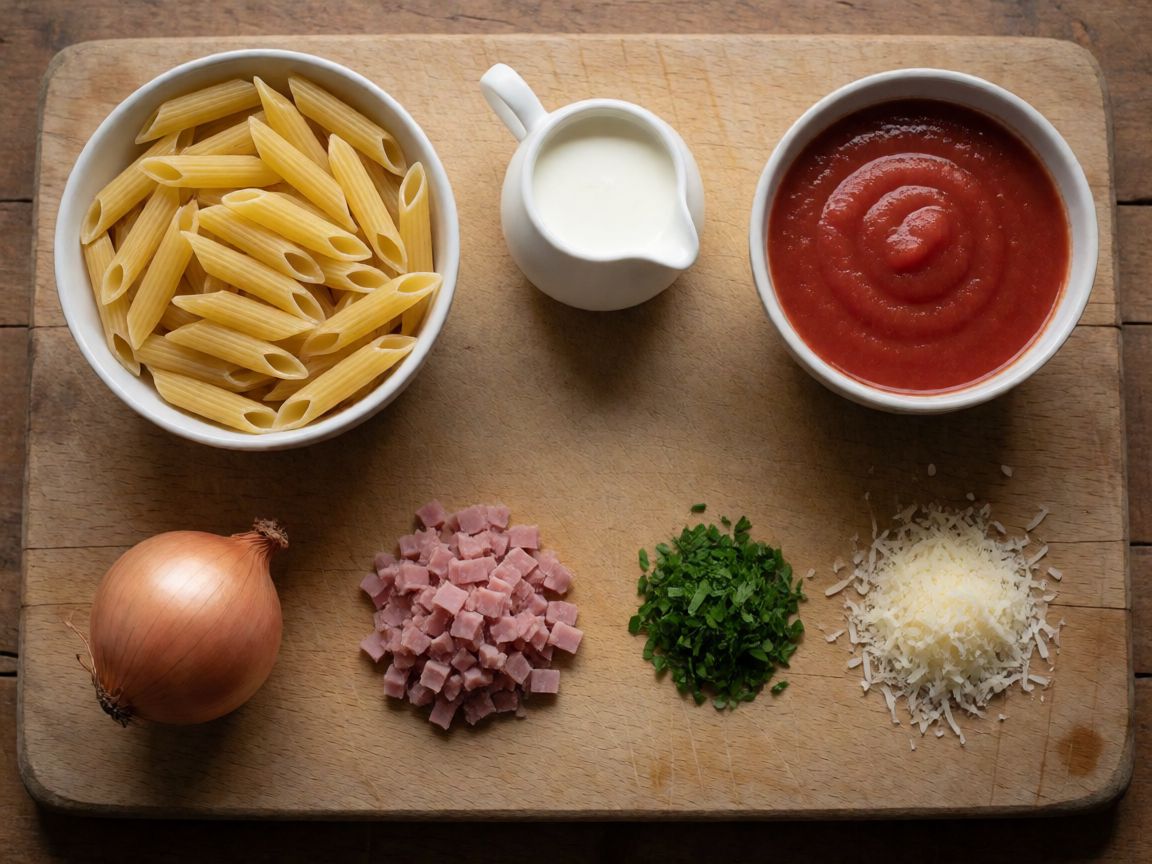
- 400 g Penne
- 1 pcs Onion
- 150 g Ham
- 300 ml Double cream
- 100 ml Tomato passata
- Olive oil to taste
- Salt to taste
- Black pepper to taste
- Parsley to taste
- Hard cheese to taste










Steps
Peel the onion and finely chop it with a sharp knife.
Heat the olive oil in a frying pan over medium heat, add the onion and fry until golden.
Cut the ham into cubes or thin strips, and finely chop the parsley.
Add the ham and parsley to the pan with the onion and cook for a few minutes.
Pour in the double cream and tomato passata, add salt and black pepper to taste, and cook for a couple of minutes, stirring.
Keep cooking the sauce until it thickens.
Bring a large pot of water to the boil, salt it, and cook the penne according to the packet instructions until al dente.
Drain the pasta, keeping a little of the cooking water, then transfer the penne to the pan with the sauce and mix well.
Serve the penne al baffo garnished with chopped parsley and grated cheese.
Penne al baffo — "moustache pasta" — is pink pasta, and the name is the whole joke: eat it carelessly and you walk away with a pink moustache. It's a child of the trattoria kitchen, built to turn a tin of tomatoes, some cheap ham, and a dribble of cream into something that looks richer than it costs. Four people, thirty minutes, one pan.
What decides whether it works is the colour of the sauce before the pasta goes in. Cream and tomato are not friends by nature — pour them together over raw heat and you risk the cream splitting into little curds floating in orange water. The fix is sequence: the onion goes soft and sweet first, the ham renders its salt into the fat, and only then does the liquid go in, onto a base that's already warm and savoury rather than a bare hot pan. Low, steady heat after that — you're not boiling the sauce, you're letting it thicken by patience, watching it go from runny-pink to coating-the-spoon pink. That's doneness here: not a clock, a texture.
Some say you need double the cream to get it properly rich. No — more cream just dilutes the tomato and mutes the colour; what makes it taste like something is the ham's fat and salt doing the seasoning work, not a flood of dairy.
The onion is doing more than flavour — it's the fat's first job, softening into the oil so there's something sweet underneath the salt of the ham, rather than raw onion sharpness sitting on top of cream. Chop it fine and give it real time to go gold, not just translucent; a half-cooked onion stays assertive and fights the sauce instead of melting into it.
Ham here means the cheap, smooth, pre-sliced kind sold for sandwiches — not prosciutto, not gammon joint. It's cut into cubes or strips so it browns a little at the edges and salts the fat it sits in; that rendered fat is what seasons the cream later, so don't skip frying it a few minutes before the liquid goes in. If you only have bacon, use less salt elsewhere — bacon is saltier and smokier, and it'll push the dish toward a different, heavier dish entirely.
Double cream is the standard British one for a reason: full fat, it thickens on contact with heat rather than thinning and splitting the way lower-fat creams do when they meet acidic tomato. If you're using single cream, expect a looser, more forgiving-to-ruin sauce — go gentler with the heat.
Tomato passata is just strained, cooked-down tomato with no lumps — it's there for colour and a background tang, not to dominate. A tin of chopped tomatoes blitzed smooth works as a stand-in; tomato paste thinned with water is thinner in flavour but will do in a pinch, use less of it since it's concentrated.
Olive oil should have no flavour of its own strong enough to fight the cream — a basic olive oil, not an extra-virgin finishing one you'd save for a salad. Any neutral oil works if that's what's in the cupboard; you lose nothing essential.
Hard cheese at the end means Parmesan or a similar aged, salty grating cheese — a sharp, mature Cheddar will do the job of cutting through the cream even if the flavour note shifts away from Italian toward something more like a Sunday-roast cheeseboard; that's fine, the dish survives the substitution.
Keep back a splash of the pasta's cooking water before you drain it — that cloudy, salty starch is your safety net if the sauce has thickened past "coats the spoon" into "glue." A spoonful loosens it without watering down the flavour, which plain water would do.
The pasta itself only needs to meet the sauce al dente, with a bite left in it, because it keeps cooking for a few seconds once it's tossed through the hot pan — pull it too soft from the pot and you've nothing left to give.