
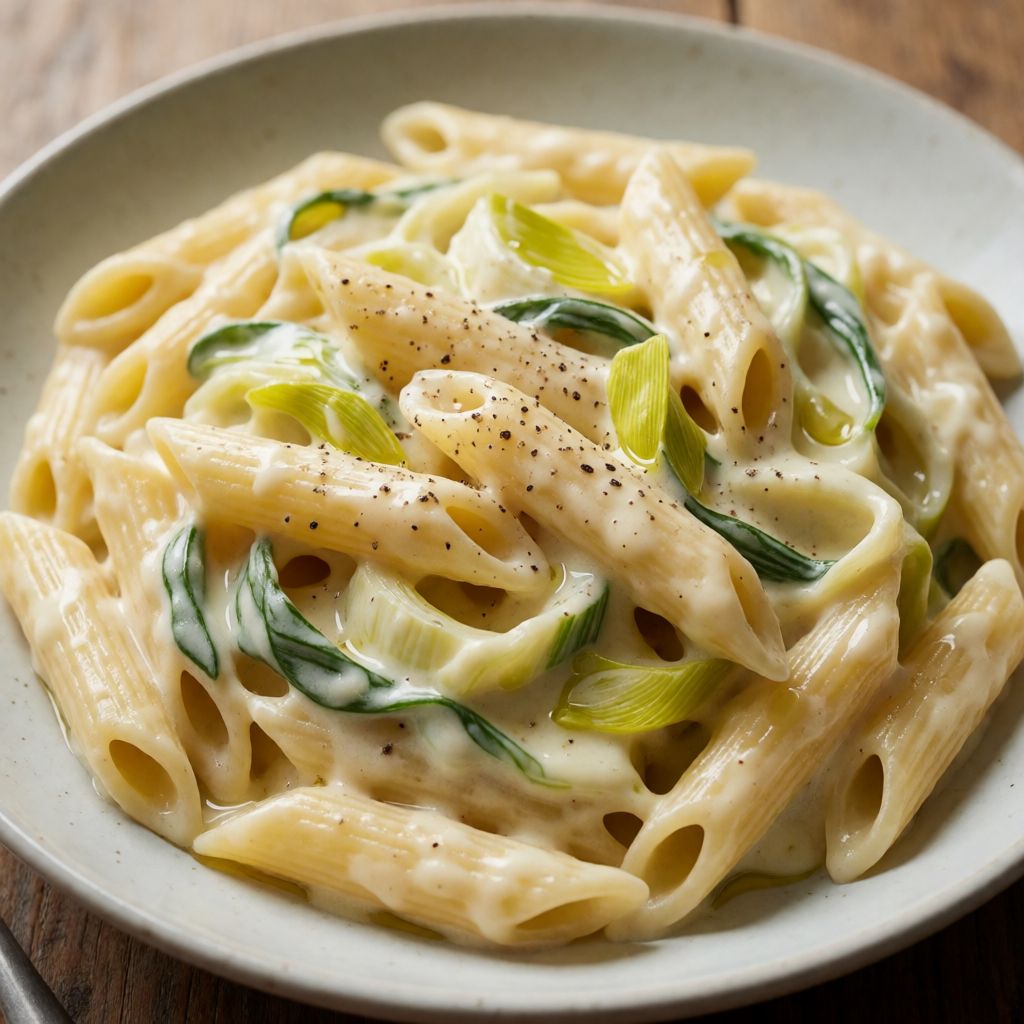
 AI photo
Winter-Style Penne Carbonara
A cosy winter take on classic penne carbonara, with crispy pancetta and softened leeks.
Labels are worked out automatically from the ingredients and can be wrong. Check the packaging if it matters to you.
Ingredients
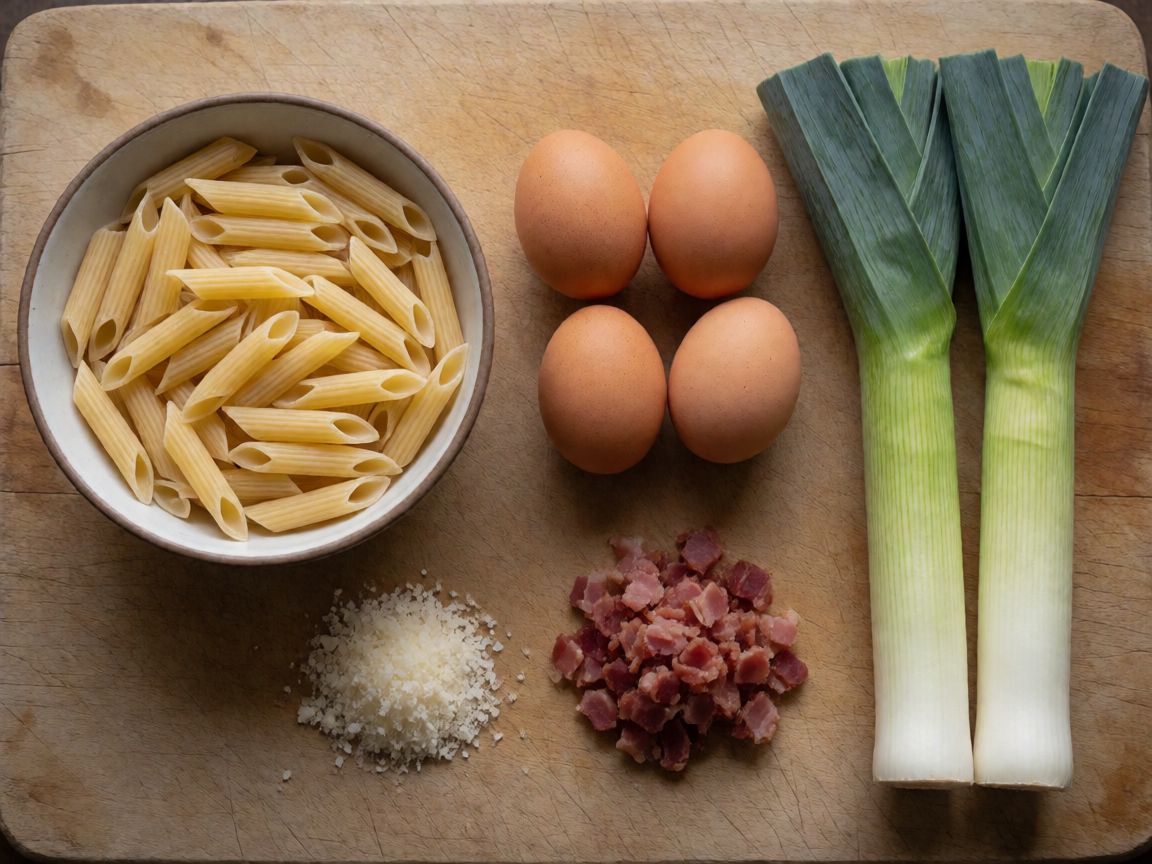
- 400 g Penne Rigate
- 4 pcs Eggs
- Olive Oil to taste
- Salt to taste
- Black Pepper to taste
- 2 pcs Leek
- 150 g Smoked Pancetta
- Pecorino Romano to taste







Steps
In a non-stick pan, fry the pancetta without oil until crispy, then set it aside; for food safety, cook it to an internal temperature of 70°C.
8 minIn the same pan, using 2 tbsp of olive oil, sauté the leek, sliced lengthways into thin strips, until soft.
5 minCook the penne in plenty of salted water.
10 minIn a bowl, whisk 4 egg yolks with 2 tbsp of pecorino and freshly ground black pepper.
3 minDrain the pasta al dente and tip it into the pan with the leek, pancetta and egg mixture.
1 minMix well, cook for a few minutes, sprinkle with grated pecorino and serve.
3 min
Call this carbonara wearing a scarf. The classic Roman version runs on guanciale and nothing green; here pancetta stands in for the cured pork and a leek takes the place usually left empty, which is where the "winter" comes from — leeks keep through cold months in the ground when little else does, so this is less a departure and more a local answer to what the larder holds in January.
What decides whether this plate works has nothing to do with the leek and everything to do with a few seconds at the end, when raw yolk meets hot pasta. Too hot, and the yolk seizes into scrambled egg threaded through penne — a common enough disaster on a first attempt, and the reason so many home cooks reach for cream "just to be safe." You don't need cream. The yolk, the rendered pancetta fat and a little pecorino, worked together off any open flame, do the emulsifying that cream is only brought in to fake.
Second decision: the pancetta's own fat has to be the only fat in that pan while it crisps. Add oil alongside it and the fat you're trying to render stays diluted, the meat turns leathery instead of brittle. Oil carries heat differently than rendering fat does, and the two don't crisp the same cut at the same rate.
Third: the leek wants softness, not colour. Push the heat the way you might for an onion going into a Sunday gravy, and its sulphur compounds turn bitter instead of sweet. Gentle heat and a bit of patience turn it translucent and mild — the backdrop the egg sauce needs, not a competing flavour.
Penne rigate, not a smooth tube: the ridges hold the egg sauce once it's clinging rather than pooling. "Al dente" is the finish line here, not the clock — the pasta should still have a faint resistance at the centre when you bite it, because it keeps softening a little in the hot pan afterward. The recipe doesn't ask you to save pasta water, and you genuinely don't need to: enough starch travels on the drained pasta itself to help the sauce come together. If your sauce ever looks tight and won't loosen, a splash of hot water from the kettle does the same job pasta water would.
Four yolks, no whites. The yolk is fat and colour and almost no water; the white is mostly water and a protein that sets hard when it gets hot, which is precisely the texture you're guarding against. Leaving whites out isn't waste, it's defence. If you only have whole eggs to hand, use them — the sauce will be thinner and lighter, not wrong, just a different animal. Whisk the yolks properly before they meet anything hot; a lazy whisk leaves strands that cook unevenly.
Pancetta is salted, smoked pork belly, and its fat content is why it crisps rather than merely heats through. British bacon, cured wet for the Sunday roast table, carries more water than pancetta and will hiss and steam before it browns — give it time over a heat gentle enough not to scorch the edges while the middle still renders, rather than cranking the ring to force a sizzle that won't come. Any salted, fat-marbled cured pork that holds its shape in a hot pan will stand in: guanciale if you can get it, thick bacon lardons if you can't.
One small mercy for a kitchen with a sink built for two: this whole dish uses one pan — pancetta, then leek, then the final toss — so there's no second pot to scrub.
The olive oil here has one job: carrying heat to the leek so it doesn't catch on bare metal, and its mild fruitiness doesn't argue with the smoke already in the pan from the pancetta. Any fat with little flavour of its own will do the same work — a knob of butter, a neutral vegetable oil — the thing to avoid is an oil assertive enough to compete with the pork.
Leek, sliced lengthways rather than into rings, so more surface meets the pan and it softens faster. It's milder than onion by nature, which is the whole reason it fits a dish built on egg and cheese rather than tomato — those can take a sharper allium, this one can't. No leek in the house is not a crisis: a thinly sliced shallot or the white of a spring onion gets you close enough.
Pecorino Romano is sharp and properly salty, and it's doing most of the seasoning work here — which is why "salt to taste" really means taste before you reach for the shaker, since the cheese and the pancetta may already have covered it. Parmesan substitutes fine but runs sweeter and less salty, so adjust by hand if that's what's in the fridge. Grind the pepper at the last moment: the aromatic oils in a peppercorn start fading within minutes of grinding, which is the actual reason "freshly ground" matters and isn't just kitchen theatre.