
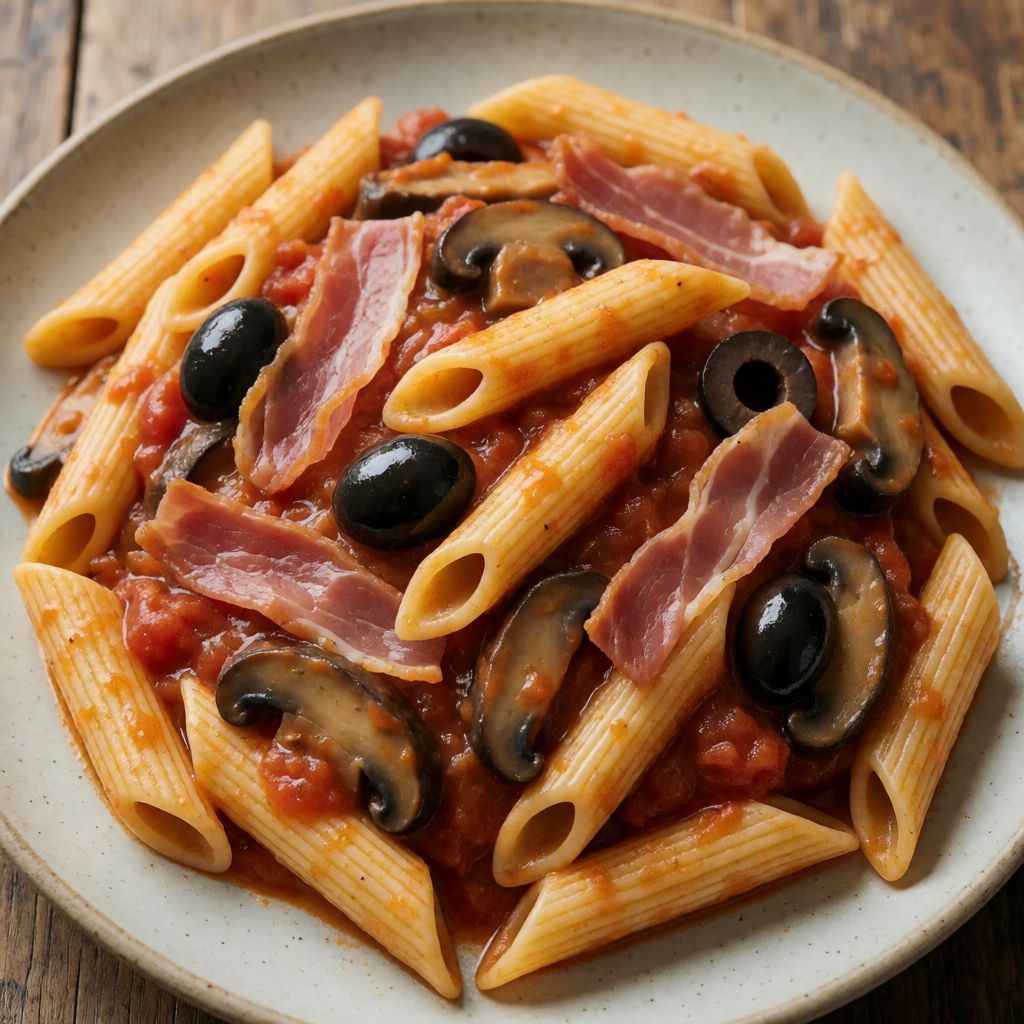
 AI photo
Tuscan-Style Penne
A rustic pasta with tomatoes, dried porcini, prosciutto and black olives, Tuscan-style.
Labels are worked out automatically from the ingredients and can be wrong. Check the packaging if it matters to you.
Ingredients
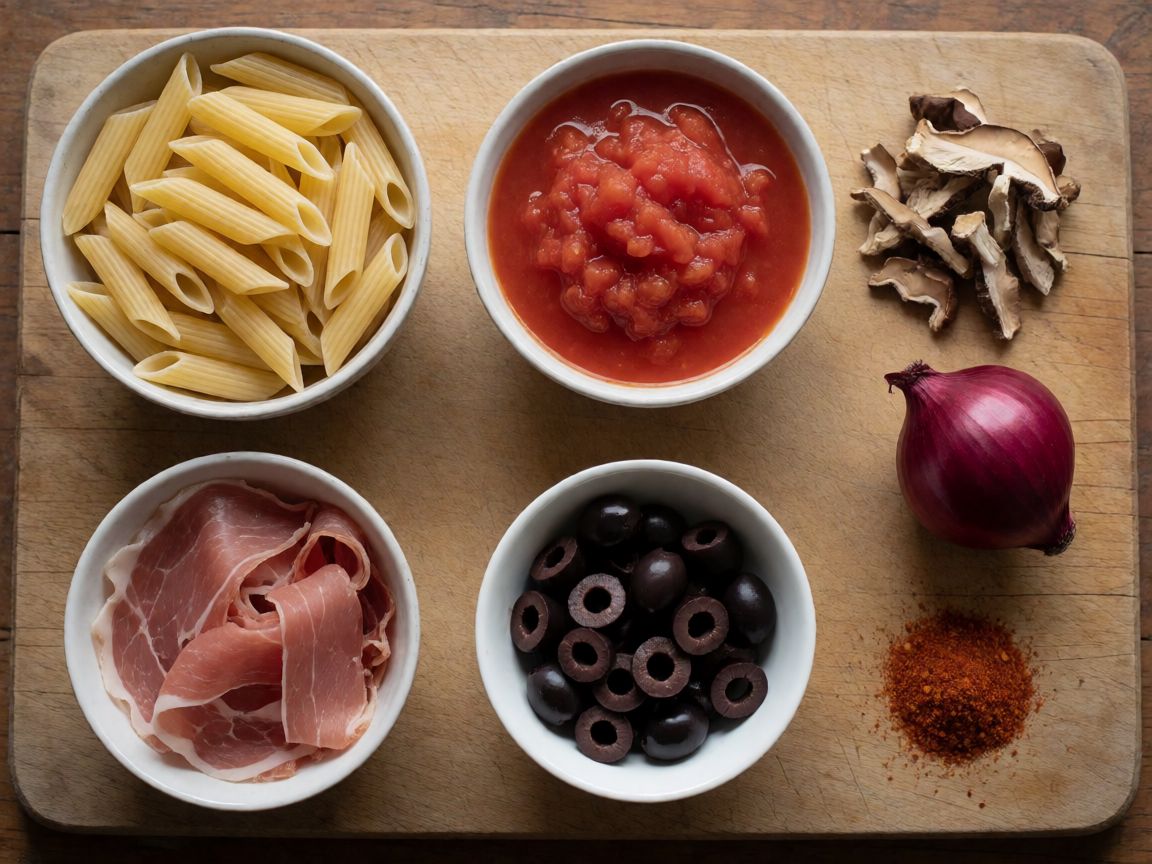
- 400 g penne rigate
- 1 can tinned chopped tomatoes
- 150-200 g dried porcini mushrooms dried
- 200 g prosciutto
- 200 g pitted black olives
- salt to taste
- olive oil to taste
- 1 pcs red onion
- chilli powder to taste








Steps
Heat a little olive oil in a large pan and lightly fry the thinly sliced red onion.
Dice a thick piece of prosciutto (about 200 g); the end piece of a ham joint also works well.
Soak the dried porcini mushrooms in water.
Halve the pitted black olives.
Once the prosciutto is nicely browned, pour in a little white wine and let it evaporate.
Add the well-squeezed, roughly chopped mushrooms and the contents of the tin of tomatoes.
Season with salt and chilli powder to taste, then stir in the chopped olives at the end.
Simmer the sauce for about 15-20 minutes.
15 minCook the penne until al dente, drain and toss in the pan together with the sauce.
Forget "Tuscan" as a licence to throw in rosemary and call it rustic. This is a sauce built on two kinds of concentrated savour — cured ham and dried mushroom — and everything else is there to carry them. The red onion goes in first because it needs the longest, gentlest cooking: sliced thin, it has to soften and sweeten before anything else hits the pan, and it's the base that stops the sauce tasting like tinned tomato with extras floating in it.
What decides whether this works is the browning of the prosciutto and the wine deglaze straight after. You want the fat rendering and the meat catching slightly at the edges of the pan — that's where the savour actually lives, not in the meat itself but in what sticks and caramelises. The wine isn't a flavour you taste later; it's a solvent. It lifts that stuck-on browning off the metal before it burns, and "let it evaporate" means exactly that — wait until the sharp alcohol smell is gone and you're left with a loosened, winey liquid, not a puddle.
The dried porcini are doing something tinned or even fresh mushrooms can't: they've lost their water, so the flavour compounds are concentrated, and soaking them brings some of that back into a liquid you could use (though this recipe doesn't ask you to — don't throw the soaking water away by instinct, it's good stock for another day). Squeeze them well before chopping; wet mushrooms just dilute the sauce you've spent effort building.
Penne rigate specifically, not smooth penne — the ridges hold sauce that would otherwise slide off, which matters here because this sauce is chunky rather than silky. If all you've got is smooth penne or even rigatoni, use it; the dish survives, it just clings a little less. Cook it in plenty of well-salted water, and pull it before it's fully soft — "al dente" means it still resists a bite, because it finishes cooking for a few seconds in the hot sauce when you toss them together, and that's the only cooking it should get after draining.
Prosciutto here isn't the thin, almost translucent stuff you'd drape over melon — it's asked for as a thick piece, diced, specifically so it can brown and render rather than just curl and go leathery in seconds. The recipe's own suggestion — the end piece of a ham joint — is the honest version of this: that odd knuckle end of a roast ham, the bit nobody wants to carve neatly, has exactly the fat-to-meat ratio you need, and it's usually cheaper. If you're in the UK with a Sunday roast habit, that's not a workaround, that's the better source. Thin prosciutto slices will only dry out and shatter where you wanted them to crisp.
Dried porcini are not a cosmetic substitution for fresh mushrooms — they bring an umami depth fresh ones don't have at this concentration, because drying intensifies the flavour compounds rather than just removing water for storage. If you genuinely have none, a mix of fresh chestnut mushrooms with a small spoon of mushroom or beef stock paste gets you closer than fresh mushrooms alone ever will — but know you're trading for a different, flatter flavour, not an equivalent one.
Pitted black olives: use any dry-cured or brine-cured black olive without a sweet or overly perfumed flavour of its own — Kalamata is fine, the ones in jars labelled "pitted black" from a UK supermarket work too. Don't reach for the tinned ones packed purely in water with almost no taste; they'll add texture and nothing else, and this sauce already has enough texture.
The olive oil here is a cooking medium, not a seasoning oil — any oil with no smell of its own will do the job of softening the onion and browning the meat; olive oil is traditional because it's what was on hand and cheap where this dish comes from, not because the dish fails without it. Save a fruitier, stronger olive oil for drizzling at the table if you want that flavour, rather than cooking with it and losing most of its character to heat anyway.
Chilli powder and salt are both "to taste" for a reason — the saltiness of the prosciutto and olives varies a lot batch to batch, so taste before you add more salt, not after, or you'll end up correcting a mistake you didn't need to make. On a domestic hob, this all happens in one wide pan rather than a proper Tuscan testo or earthenware pot — a pan with a decent surface area so the prosciutto actually browns instead of steaming in its own juice is the real requirement, not any particular kind of cookware.