
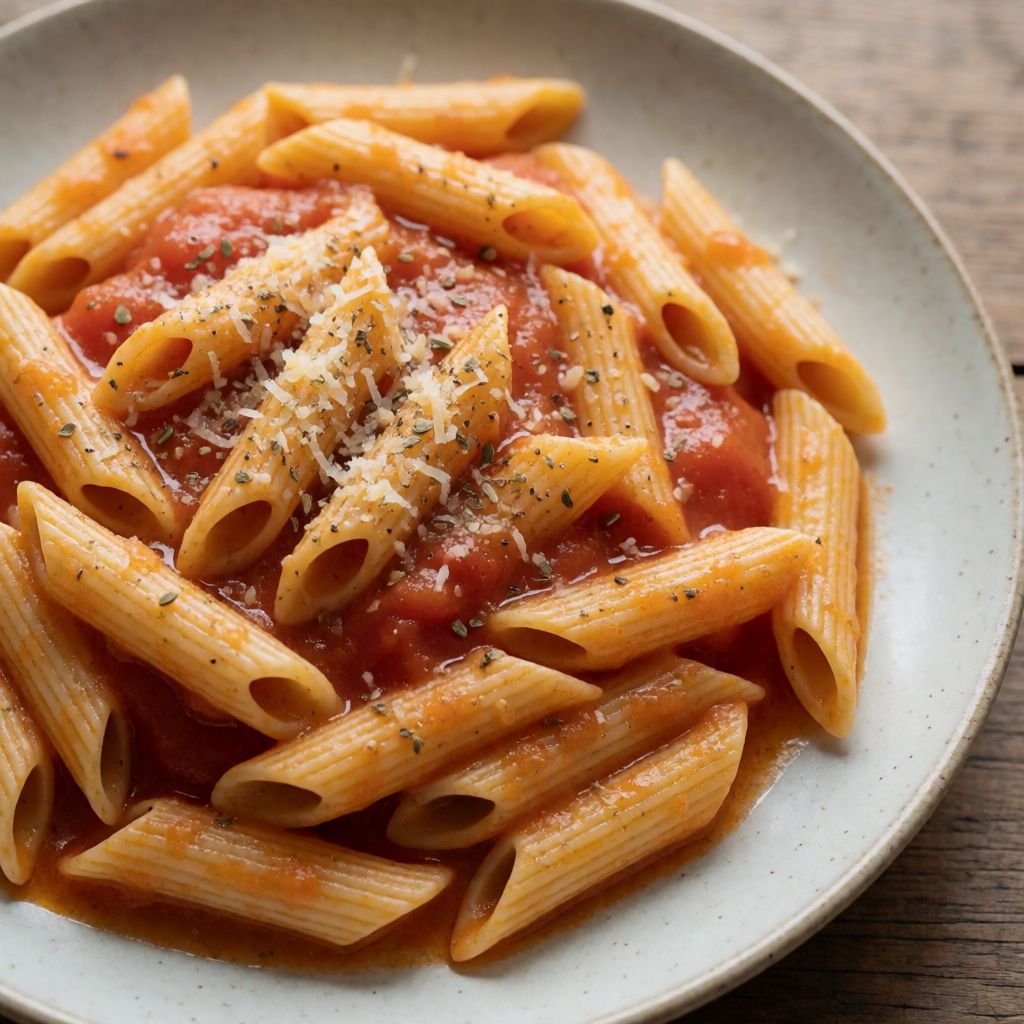
 AI photo
Penne with Datterini Tomatoes and Oregano
A quick, simple pasta dish with a sweet datterini tomato sauce, garlic, oregano and pecorino.
Labels are worked out automatically from the ingredients and can be wrong. Check the packaging if it matters to you.
Ingredients
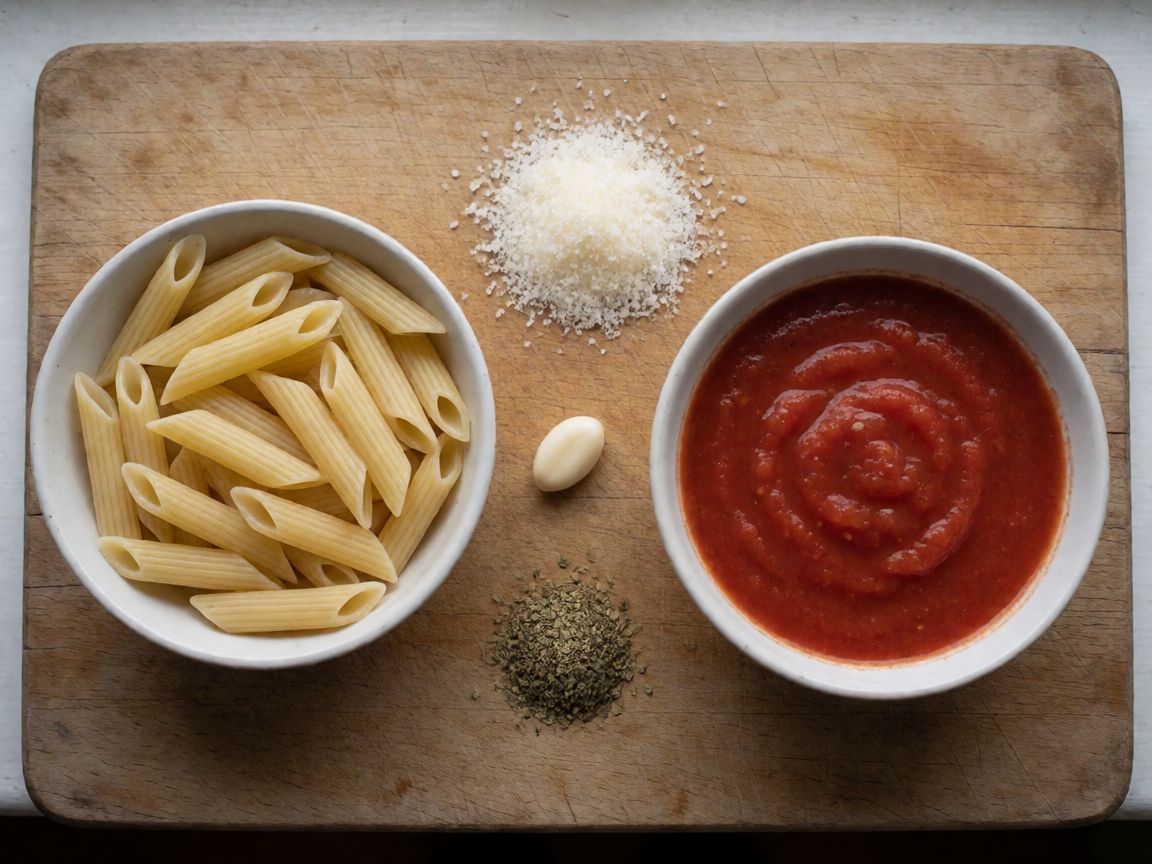
- 400 g Penne
- 200 g Datterini tomatoes
- Salt to taste
- Black pepper to taste
- Olive oil to taste
- Pecorino to taste
- 1 tbsp Oregano
- 1 clove Garlic








Steps
Heat the olive oil in a pan, add the garlic clove and fry until it starts to colour, then remove it from the pan.
2 minAdd a tablespoon of oregano.
1 minSlice the datterini tomatoes into rounds, add to the pan with a tablespoon of warm water and simmer gently.
5 minSeason with salt and add ground black pepper.
1 minCook the penne until done, then transfer to the pan with the sauce and heat through, stirring, for a few minutes.
10 minBefore serving, sprinkle with pecorino and a pinch of oregano.
1 min
This is a pasta you make on a Tuesday when you want something that tastes like more effort than it took. Six ingredients beyond the pasta itself, no cream, no long braise — so there's nowhere for a mistake to hide. Whether it works comes down to two things: what you do to the garlic in those first two minutes, and what the tomatoes give up in the five minutes after.
The garlic goes in to flavour the oil, not to be eaten. "More golden, more flavour" — some say, pushing it toward brown. No: past gold, garlic turns bitter, and that bitterness is in the oil now, permanent, flavouring everything that follows. You take it out the moment it colours because that's the only window where it's given everything and taken nothing back.
Then oregano, dried, into the same hot oil — not into the tomatoes later. Dried herbs carry their aroma in oils that need fat and a little heat to open up; thrown cold onto a finished sauce, oregano tastes of dust, not of itself. A minute in hot oil is the difference between the smell of a herb and the memory of one.
The tomatoes get a spoon of warm water, not a splash of stock, not a tin of passata. Datterini are small and sweet because they're built that way — low water, concentrated sugar in a thin skin — so a tablespoon of water and a gentle simmer is enough to coax them into a sauce. If you boiled them hard you'd drive the water off before the skins broke down properly, and you'd end up with tomato confetti in a thin puddle instead of a sauce that coats the penne.
Olive oil here isn't a neutral cooking medium you could swap for sunflower — it's doing flavour work, infusing the garlic and later carrying the oregano's aroma into the tomatoes. If you ever do need a stand-in, the rule is any oil with no smell of its own, so sunflower or a mild rapeseed, never something strongly flavoured that fights the garlic. But for this dish specifically, use the olive oil — it's not decoration, it's the solvent for everything else in the pan.
One clove of garlic is deliberately modest. This isn't a dish built on garlic punch, it's built on tomato sweetness with garlic as background hum. Bruise it or crush it lightly before it goes in the oil, so it has some broken surface to release oil into the fat — a whole untouched clove barely perfumes anything in two minutes.
Datterini tomatoes are a UK supermarket staple now, but they weren't bred for a British garden — they're grown in warmer soil, picked for sugar content and sold on the vine because that's what sells. If you can't find them, cherry tomatoes work on the same principle: small size, high skin-to-flesh ratio, more concentrated sweetness than a big beefsteak tomato that's mostly water and acid. What you're buying for, whatever the name on the punnet, is sweetness without having to add sugar to fake it — so taste one before you buy if you can, because out-of-season supermarket tomatoes are sometimes grown for shelf life, not for flavour, and no amount of simmering fixes a tomato that was never sweet to begin with.
Pecorino at the end, not stirred into the hot sauce. It's a firm, salty sheep's cheese that holds its texture when scattered over finished pasta — grate it straight onto the plate so it keeps some bite instead of melting into a slick. Parmesan works as a substitute, but it's milder and less salty, so taste before you add more; pecorino's saltiness is doing some of the seasoning work that the recipe's modest salt otherwise leaves light.
Penne specifically because its ridges and hollow centre grab a thin, oily tomato sauce that would otherwise slide off something smooth. Any short ridged pasta does the same job — the point is surface area, not the brand name.
The only patience this dish asks for is timing: get your pasta water on before you start the sauce, so the penne finishes roughly when the tomatoes have gone soft and let go of their shape. Step five, tossing the pasta through the sauce off the heat for a few minutes, isn't filler — it's where the starchy pasta water left clinging to the penne binds with the oil and tomato juice into something that coats rather than pools. Skip that stirring and you've got pasta sitting next to a sauce, not pasta in one.