
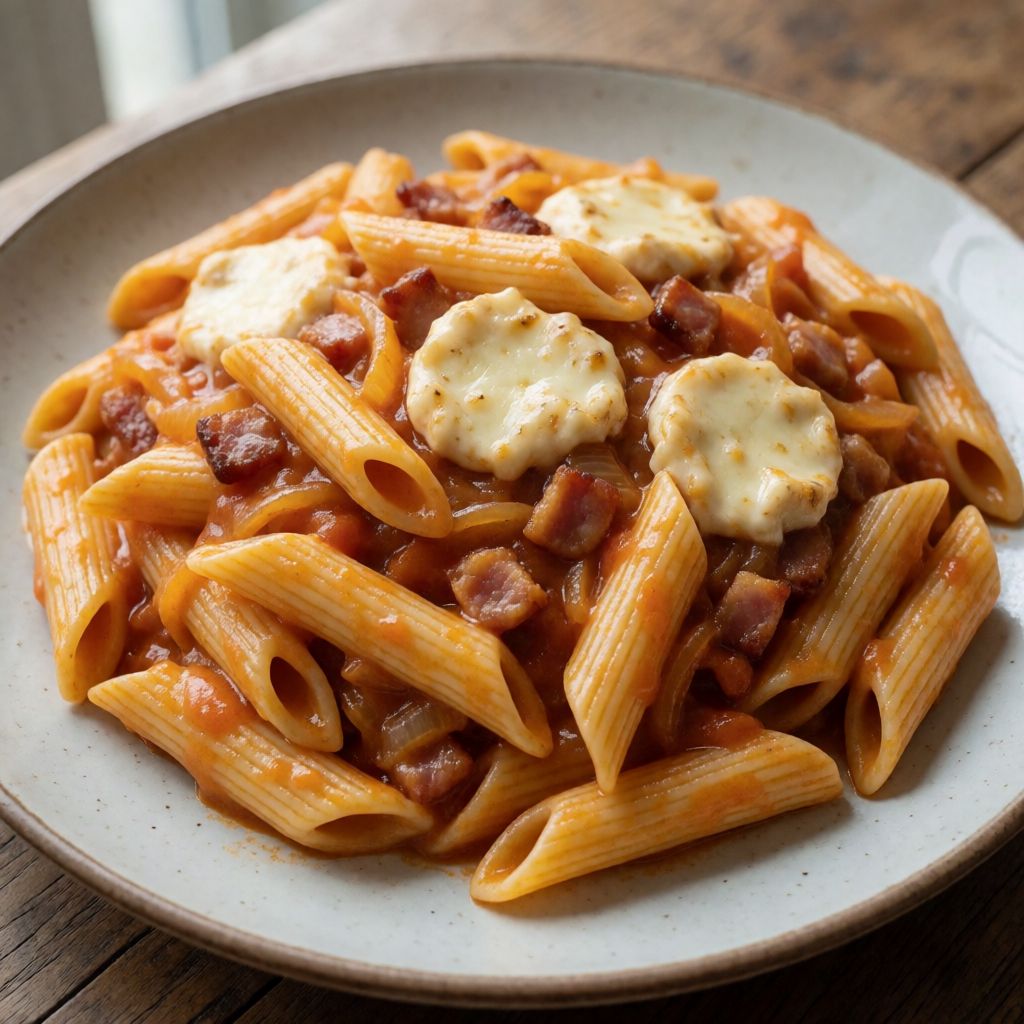
 AI photo
Smoky Penne with Pancetta and Scamorza
A smoky pasta dish with pancetta, melted scamorza cheese and a simple tomato sauce.
Labels are worked out automatically from the ingredients and can be wrong. Check the packaging if it matters to you.
Ingredients
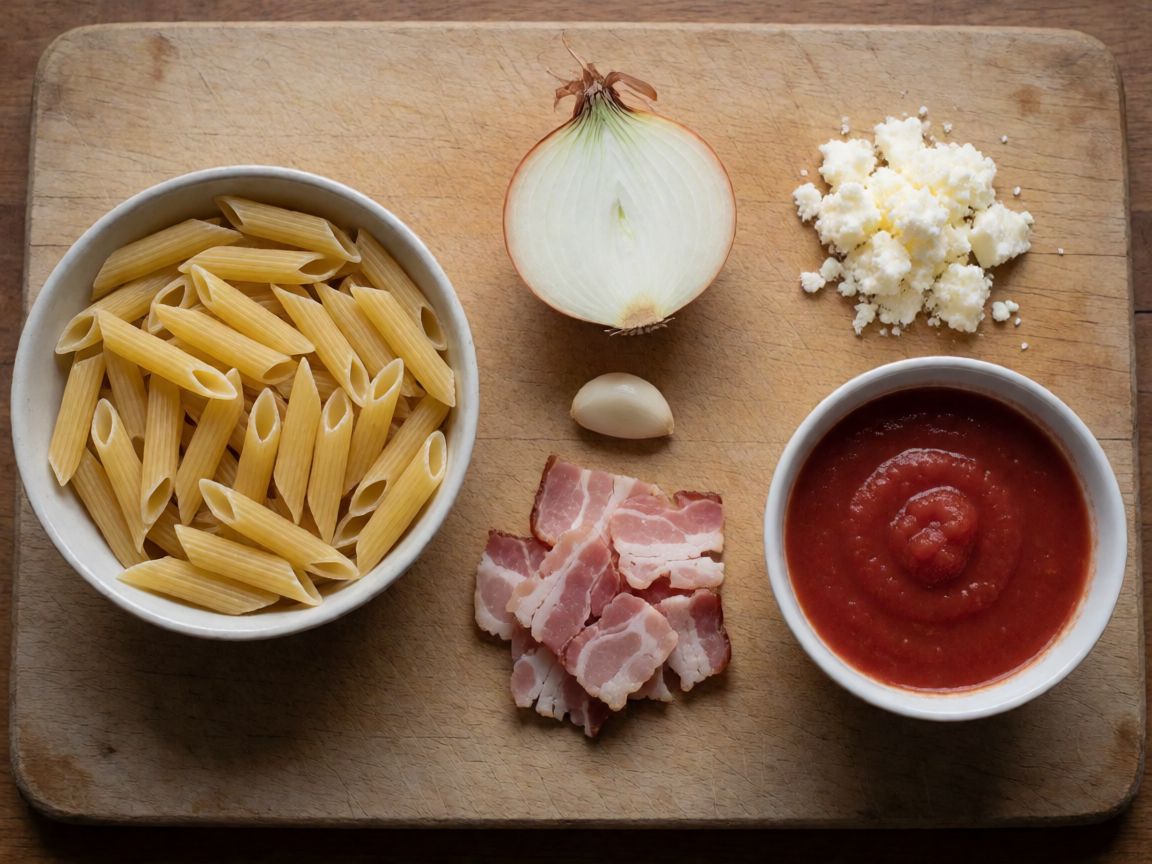
- 400 g penne rigate
- 0.5 pcs onion
- 1 clove garlic
- 1 package smoked pancetta
- smoked scamorza to taste
- tomato passata to taste
- vegetable oil to taste





Steps
Blend the onion, garlic and smoked pancetta until finely chopped.
Tip the mixture into a frying pan with the oil and fry until cooked through; the pancetta should reach an internal temperature of 70°C. Add the tomato passata.
Simmer the sauce while the water comes to the boil and the pasta cooks.
Once the pasta is cooked, drain it, return it to the pan, then stir in the sauce.
Add the diced smoked scamorza, return to the heat and warm through until the cheese melts.
Serve hot.
This is fast ragù logic borrowed and sped up. Instead of chopping onion, garlic and pancetta and giving them twenty minutes to soften into each other the slow way, you blitz them into one paste and fry that. It's the same chemistry — fat rendering, sugars browning, garlic losing its rawness — just compressed, because a food processor does in ten seconds what a knife and patience usually do over heat.
What decides whether this dish works is smoke, doubled. Smoked pancetta going in, smoked scamorza coming out the other end. That's a lot of wood-smoke flavour stacked on itself, and nothing in the method stops it piling up except the tomato passata — its acid is the only thing standing between "nicely smoky" and "tastes like the inside of a chimney". So don't be shy with the passata if your pancetta or your scamorza is on the heavy, resinous side. Taste the sauce before you commit the pasta to it.
Pancetta: the whole reason it gets blended rather than diced is your hob, not a style choice. A proper kazan or a restaurant burner gives you fierce, direct heat that will cook a small lardon through in the time it browns. A domestic ring — gas or electric, and most UK kitchens have one or the other, rarely both — is gentler and slower, so a chunk of pancetta can brown outside and stay raw inside before you notice. Minced fine and spread thin across the pan, it cooks through evenly on exactly the heat you've got. If you can't get smoked pancetta, any cured, smoked pork with a decent fat content works on the same principle — smoked streaky bacon, guanciale if you can find it, even a smoked kielbasa in a pinch, though that last one brings its own spice along for the ride.
Onion and garlic go in raw with the pancetta for the same reason — one paste, one cooking time, nothing left half-raw because you forgot to add it in stages. Half an onion for 400g of pasta is a light hand; it's there to soften the smoke and carry the fat, not to be a vegetable course.
Scamorza, smoked: pick it by what it does on heat, not by name. You want something that melts stringy and glossy rather than grainy and separating — semi-soft, enough moisture in it to loosen rather than seize. If smoked scamorza isn't on the shelf, provola affumicata is the same cheese by another name, or a mild smoked cheddar will get you there, though cheddar sheds fat more readily so keep the heat lower and the stirring gentler. Plain scamorza plus a pinch of smoked paprika in the sauce is a reasonable stand-in if smoke is what you're missing rather than melt.
Tomato passata: this is the ingredient doing quiet, unglamorous work — cutting the richness of two lots of cured, smoked fat, and stopping the dish tasting of one note only. "To taste" here isn't vagueness, it's telling you the balance depends on how smoky your particular pancetta and cheese turned out to be, which varies by brand more than most tomato sauces admit.
Oil: vegetable oil is specified because it has no flavour of its own to compete with the smoke — any neutral oil does the same job, sunflower, rapeseed, groundnut. Its only task is to stop the pan sticking before the pancetta's own fat starts rendering out; once that fat is running, the oil has already done its work.
One honest bit of arithmetic: this is listed as one serving, but 400g of dry pasta is a three-to-four person plate by any normal UK measure — closer to a Sunday-roast-sized gathering than a solo supper. Scale the pancetta, cheese and passata with the pasta if you're actually feeding one, or invite people round.