
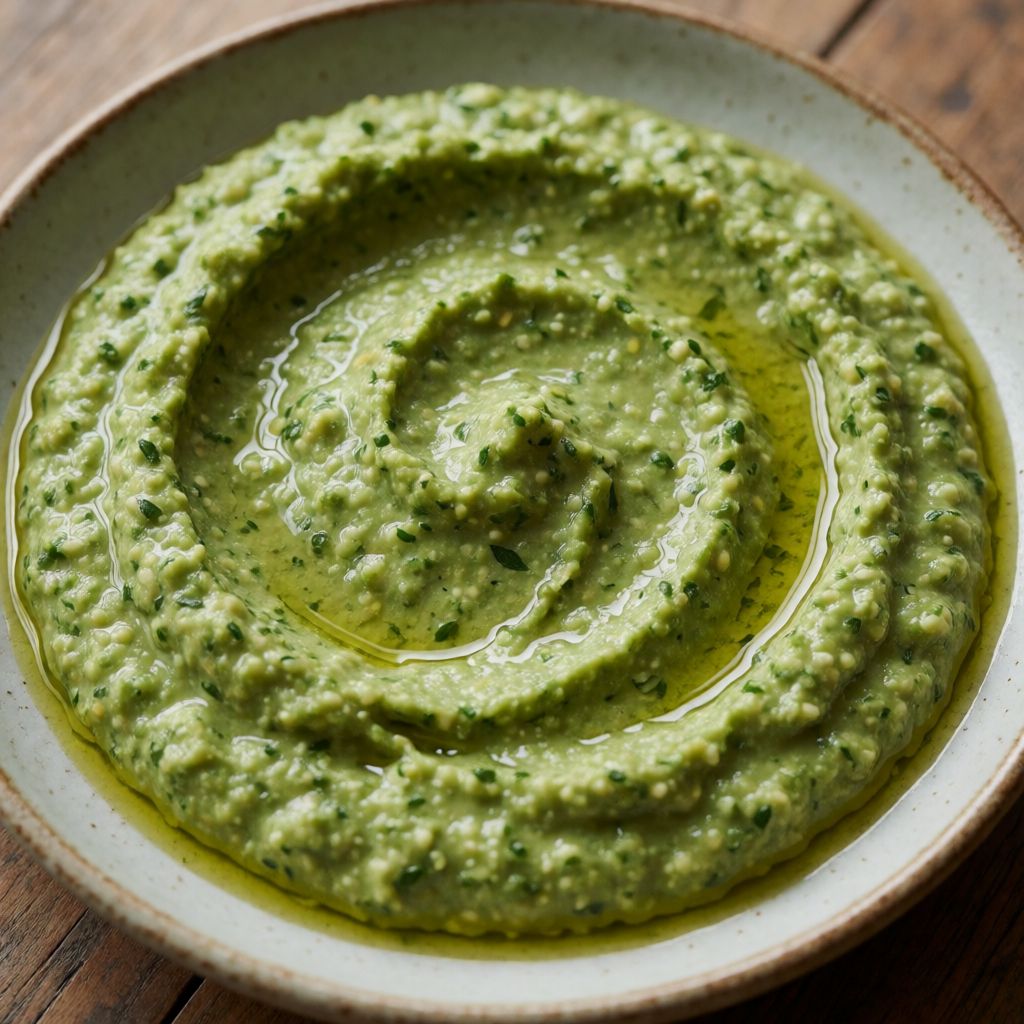
 AI photo
Pea Pesto
A fresh, creamy pesto made with sweet peas, almonds and pecorino romano, lovely on pasta or spread on bread.
Labels are worked out automatically from the ingredients and can be wrong. Check the packaging if it matters to you.
Ingredients






Steps
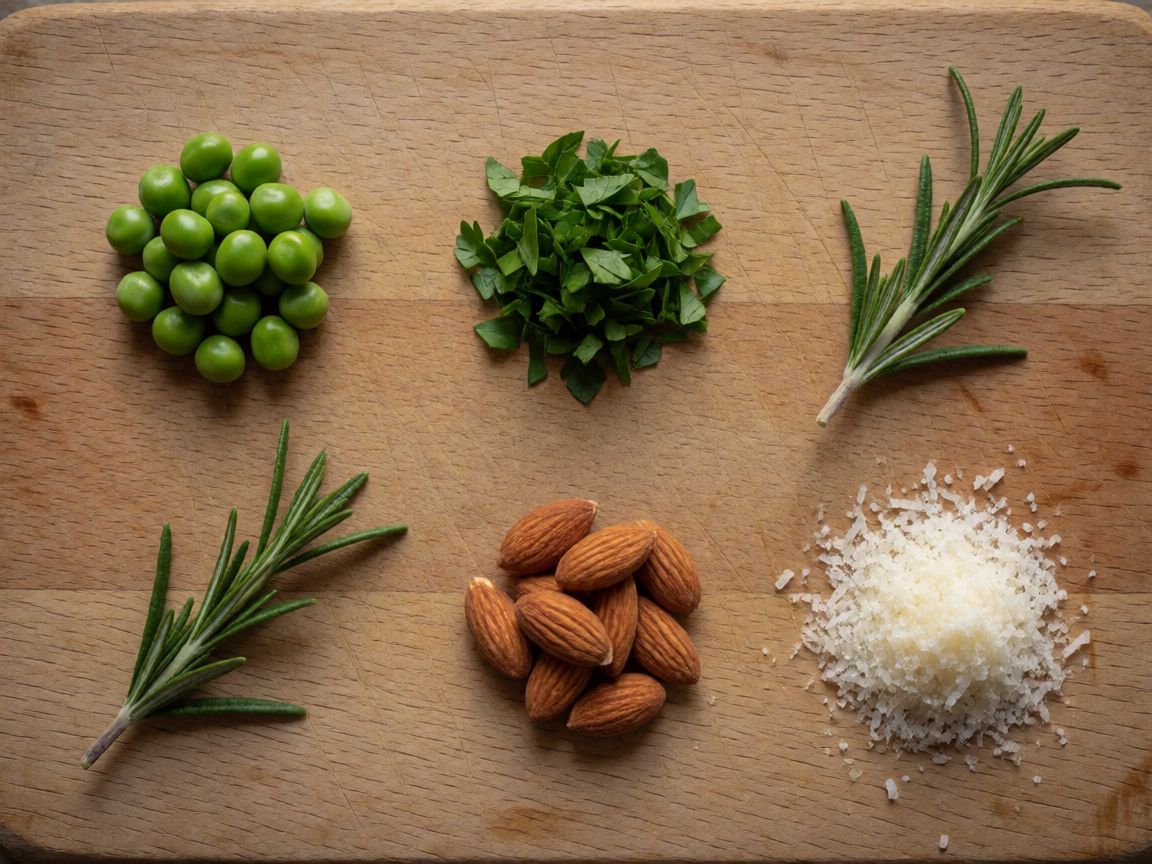
Bring a pan of salted water to the boil and cook the peas with the rosemary for about 10 minutes (or 5–6 minutes if using frozen peas).
10 minDrain in a colander and leave to cool.
Transfer the peas to a blender, then add the almonds and the grated pecorino romano.
Blend, then add the chopped parsley, olive oil and salt to taste.
Blend again until you get a smooth, creamy, even paste.
This is pesto logic borrowed, not basil pesto translated. Something green and sweet, something fatty and nutty, something salty and aged, all bound into a paste with oil — that's the whole architecture of pesto, and peas can carry it just as well as basil. It feeds four as a sauce, not as dinner on its own: toss it through pasta, spread it on toast, spoon it next to something plain that needs waking up.
What decides whether this works is the temperature of the peas the moment they meet the blender. Hot peas sweat into the cheese, the cheese seizes into little curds instead of melting smoothly through, and the oil separates rather than binding — because fat and hot water don't cooperate, they fight. So the peas need to be properly cool, not "a few minutes off the boil" cool. If the inside of the blender jug feels warm against your hand, wait longer.
Some say pesto must be basil and pine nuts, full stop — no, because "pesto" just means pounded, that's all the word promises. Basil-and-pine-nut became the famous version because basil grew everywhere round Genoa and pine trees cost nothing to harvest from — economics, not scripture. Swap the green bulk for whatever's cheap and on hand: peas, wild garlic, rocket, even carrot tops. The method survives the swap; the ingredient list never had to be sacred.
Peas, fresh or frozen, both work, and frozen isn't the lesser choice here — it's blanched briefly before freezing precisely to lock the colour and stop the enzymes that turn it grey, so it only needs reheating, which is why the recipe halves the time for frozen. Fresh peas are a short, lovely season; frozen ones are what's in every British freezer the rest of the year, and for a sauce like this, nobody will know the difference once it's blended.
The rosemary goes in with the boiling water, not into the blender. Its aromatics are oil-soluble and need heat and time to leach out slowly into what the peas are sitting in — that's the whole job, a background note, not a flavour you taste directly. Pull the sprig out before draining; raw rosemary needles blended in are woody and bitter, and that defect — a gritty, resinous bite in an otherwise smooth paste — traces straight back to someone forgetting to fish the sprig out.
Almonds do the work pine nuts do in a basil pesto: fat and body, something to carry the paste and stop it being just wet purée. The criterion for swapping them is simple — any raw, mild nut or seed with its own fat will do: walnuts, cashews, sunflower seeds, even plain peanuts. Skip the roasted and salted versions; they tip the whole balance of salt and flavour sideways, and the recipe is already counting on the cheese to supply most of the salt.
Pecorino Romano is sheep's milk, hard, aged, sharp — it's there for the savoury backbone, the thing that makes the paste taste of something rather than just green and nutty. Any hard cheese that's aged, grates fine, and has real character will stand in: parmesan is the obvious one, grana padano close behind, even a mature cheddar if that's what's in the fridge — less traditional, same function.
Olive oil here isn't neutral padding, it's a flavour you're choosing on purpose. A fruity extra virgin will come through in the final taste; a bland refined one just binds without adding anything. If you want the oil to disappear and let the peas and cheese speak, a mild cold-pressed rapeseed oil — common enough in a British kitchen — does the binding job honestly, no pretending it's Ligurian.
Salt goes in last, after tasting, because the cheese has already salted the dish for you, and adding blind on top of that is how pesto ends up too salty to use. And patience belongs on the ingredient list too: letting the peas cool properly, not rushing the blend because the kettle's on for tea and the roast needs checking, is what keeps this bright green and smooth instead of grainy, split, and a disappointing khaki colour.