
 AI photo
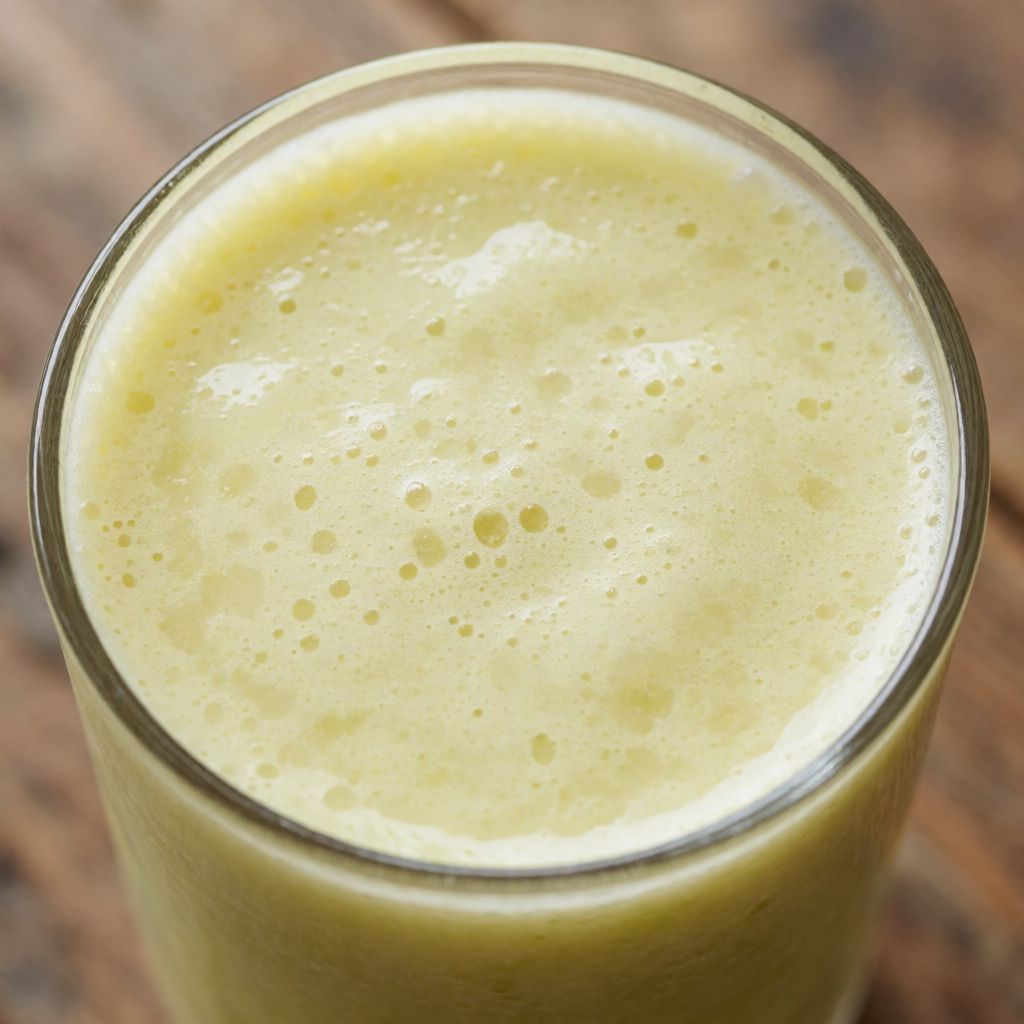
Pineapple and Celery Smoothie
A refreshing pineapple and celery smoothie, quick to blend for a light vitamin boost.
Labels are worked out automatically from the ingredients and can be wrong. Check the packaging if it matters to you.
Ingredients
- 4 pcs Pineapple slices
- 1 pcs Celery stick
- 1/2 pcs Apple
- 1 tsp Orange juice
- 1 pcs Date
- 250 ml Water






Steps
Peel the pineapple and cut four slices, then trim the ends of the celery stick and chop it into small pieces.
Peel and dice half an apple.
Put the fruit and celery into a blender, add the chopped date, pour in the water and add a teaspoon of orange juice.
Cover with the lid, turn on the blender and blitz everything until as smooth as possible.
Pour into a glass and enjoy your smoothie.
This isn't a drink you make by following steps — it's a drink that falls out of what a blade does to plant cells. Juicing throws the fibre away and keeps the liquid. A smoothie does the opposite: it rips the walls open and keeps everything, pulp and juice together. That's the whole idea here — pineapple, apple, celery, a date, torn apart until the blender can't find anything left to chew on.
What decides whether it works isn't a recipe number, it's balance. Pineapple brings sugar and a sharp little acid bite. Apple brings more acid and body. Celery brings bitterness and a mineral, almost grassy note that stops the whole thing tasting like dessert. One date is there to round the edges, not to sweeten from scratch — the fruit is already doing that job. If you taste only sweetness, the celery has lost its argument; if you taste only celery, the fruit hasn't woken up yet.
Some say celery in a smoothie needs a spoon or two of sugar to be drinkable — no, because ripe pineapple and a squeeze of citrus already carry enough sugar and acid between them to carry the celery's bitterness along for the ride. Add more sweetener and you don't fix anything, you just mute the one vegetable that was supposed to be there.
The other test is texture, not time. Run the blender until you can't find a celery string with your tongue — that's doneness here, not a stopwatch. Ten minutes prep, as the recipe says, is really about chopping small enough that the blade has a fair fight.
Pineapple: look for one that gives slightly under your thumb and smells sweet at the base — that's ripeness, and ripeness is doing your sugar-and-acid work for you. Unripe pineapple is sourer and its fibres are tougher, which means more blending to get smooth and a sharper edge in the glass than you want. No fresh pineapple, no problem — tinned in its own juice works, just don't use the syrup-packed kind, that's sugar water doing the sweetening instead of fruit, and it flattens the acid balance the recipe is built on.
Celery: the stalk is basically a bundle of long fibres running head to foot — that's why it's chopped small first and blended properly after, otherwise you end up drinking string. Outer stalks are the stringiest; the paler inner ones near the heart are milder and break down easier if you want a gentler celery note. The same test you'd use for a stir-fry carrot works here too — a fresh stalk bends a little before it snaps; a limp one has already lost its crunch and most of its flavour with it.
Apple: peeled, as the recipe has it, because the skin carries tannin and a slight bitterness that muddies the drink's colour and taste — peeling buys you a cleaner, smoother result at the cost of a bit of fibre. Any apple with real acid in it does the job; a flat, sugary apple won't give you the lift this drink needs. No apple at all — a pear will stand in, but it brings less acid and more sweetness, so you'll want to lean harder on the orange juice to compensate.
The date: this isn't just sugar, it's sugar with a mineral, almost caramel depth, and that's what makes it a better choice here than a spoonful of white sugar would be. The criterion for substituting it is simple — any soft, sticky dried fruit with concentrated natural sugar, not a dry or crystallised one. A soft prune or a couple of raisins will sweeten just as well, though each brings its own flavour shadow into the glass, so expect a slightly different drink, not an identical one.
Orange juice, one teaspoon: it's not there for volume, it's there for acid — a small jolt that sharpens the sweetness instead of just adding to it. The criterion is any fresh citrus with real tartness — lemon or lime juice does the same job, just adjust the amount by taste, since they're sharper than orange.
Water is your thickness dial, not a filler. Too little and the celery strings never get pulled properly into the blade's path, so they survive the blend; too much and you've made a thin juice instead of a smoothie. 250ml is a starting point — in your own kitchen, with your own blender, add it a splash at a time until the blade spins freely and the mixture falls off a spoon rather than running off it. A jug blender with real height creates a vortex that pulls fibrous bits down into the blade on its own; a stick blender in a narrow glass can struggle with celery specifically, so chop it smaller and be patient with the extra few seconds it needs — that patience is the only thing standing between a smooth drink and a stringy one. No heat involved anywhere here, so the only temperature choice you're making is how cold the fruit and water are going in — cold from the fridge gives you a thicker, slushier result, room temperature a looser one. Neither is wrong; it's a preference, not a rule.