
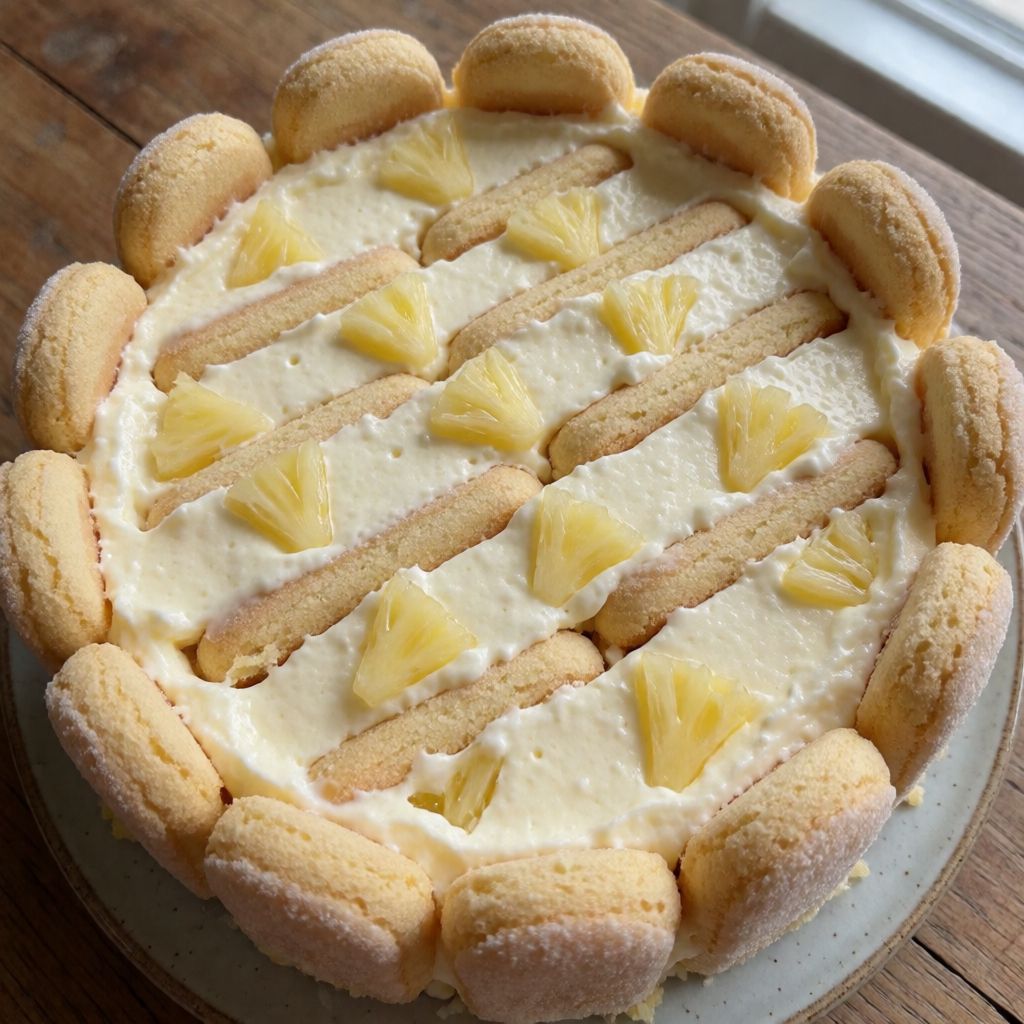
 AI photo
No-Bake Pineapple Cake
A no-bake chilled dessert with a crushed biscuit base and a pineapple mascarpone cream topping.
Labels are worked out automatically from the ingredients and can be wrong. Check the packaging if it matters to you.
Ingredients
- 250 g sponge finger biscuits
- 120 g butter melted
- 150 g mascarpone
- 200 g double cream
- 100 g icing sugar
- 3 pcs pineapple fresh or tinned
- 3 tbsp coconut flour
- 8 g gelatine leaf
- milk as needed







Steps
Blitz the sponge finger biscuits in a food processor and combine with the melted butter.
Press the mixture evenly into a springform tin lined with baking paper, pressing down firmly.
Put the base in the fridge.
Soak the leaf gelatine in cold water, then squeeze it out and dissolve it in warm milk.
Whip the double cream with the icing sugar until thick, then add the mascarpone and mix well.
Cut the pineapple into small pieces and fold into the cream along with the coconut flour and gelatine.
Spread the cream over the base and smooth with a palette knife.
Chill the cake in the fridge for at least 3 hours.
180 minBefore serving, decorate the top with pieces of pineapple.
This is a fridge cake, not a baked one — a biscuit base held together by butter, and a pineapple-mascarpone cream held together by gelatine. Nothing here sees an oven. What decides whether it works is two separate questions of structure: can you cut the base without it crumbling, and will the cream actually set firm enough to hold a slice upright.
The base is the easier of the two. Melted butter binds crushed biscuit the way mortar binds brick — it's not flavour you're adding, it's glue. Press it down hard into the tin, properly firm, because a loose base is the single most common failure in no-bake cakes: people treat "press" as a suggestion, scatter the crumbs in, and wonder later why the first slice falls apart on the plate. You're building a floor, not sprinkling a topping.
The cream is where the real engineering sits. Whipped double cream plus mascarpone plus pineapple is wet, heavy, full of fruit sugar and juice — left alone it would slump, not slice. Gelatine is what turns a soft mousse into something you can cut clean edges from. That's its whole job here: not flavour, not richness, structure. Get the gelatine wrong — too little, or added when the mix is too cold to disperse it evenly — and you get a cake that tastes right and falls apart on the plate anyway, pineapple cream oozing out from under a biscuit lid.
Sponge finger biscuits (savoiardi, or any dry, crisp biscuit with little fat of its own) are chosen for being dry. A soft, buttery biscuit already carries fat, and adding melted butter to that gives you a base that's greasy rather than firm — it won't bind, it'll slide. Digestive biscuits work as a substitute for the same reason they work in a cheesecake base: dry, crumbs easily, takes on butter without turning to paste. Anything already soft or jammy in the middle is the wrong choice here, whatever the cupboard offers.
The butter: melted, not softened, because melted butter flows into every gap between crumbs and sets hard again in the fridge, locking the crumb structure together like a cold-set concrete. Softened butter would just coat the crumbs unevenly and never grip. Any neutral butter does the job — unsalted is the safer default so the base doesn't fight the sweetness of the cream above it, but a pinch of salted won't ruin anything.
Leaf gelatine over powdered isn't tradition for its own sake — leaf gives a cleaner, more predictable set with less risk of grainy undissolved specks, which matters in a cream you're not going to bake or boil afterwards to smooth out mistakes. Soaking it in cold water first is not decorative: cold water lets the sheets swell and soften gently; drop dry gelatine straight into hot liquid and it can clump, sealing its own surface before it ever dissolves properly. If you only have powdered gelatine, bloom it in a little cold water the same way, then warm it through — same principle, different shape.
Mascarpone and double cream together give you fat and body without the sourness of something like cream cheese — mascarpone is essentially just cream cultured lightly, so it folds into whipped cream as an ally, not a fight. Icing sugar rather than caster dissolves without that faint grit you sometimes catch on the tongue from undissolved caster sugar in a cold, unbaked cream — a small thing, but it's the difference between a cream that reads as smooth and one that reads as "nearly right."
Coconut flour here isn't for coconut flavour — it's a dry, absorbent ingredient added to the cream to soak up some of the moisture that pineapple brings with it, fresh or tinned, fighting the same looseness that gelatine is fighting. If you drain tinned pineapple properly, pressing out the juice rather than tipping it in wet, you're already halfway to solving that problem before the coconut flour even gets involved — which is the real lesson: every ingredient in that cream step is there to stop one specific kind of sogginess.
The 3 hours in the fridge is a floor, not a target — gelatine sets by temperature and time together, and a thick cream in a full tin cools from the outside in. Push a finger gently at the edge before you decide it's ready: if it gives like set jelly, you're there; if it still feels like thick cream, it isn't, however many hours the clock says you've waited. Patience is the one ingredient with no substitute — you cannot rush a set by freezing it hard and hoping, because then you get ice crystals and a grainy bite instead of the smooth one you were aiming for.
A springform tin matters because this cake has no structural strength of its own until it's fully set — try to turn it out of a solid tin while soft and you'll tear the base clean in half. If you don't own one, line a normal cake tin generously with cling film with enough overhang to lift the whole thing out once it's properly firm; it's slower and fussier, but it's not a different cake, just a different afternoon.