
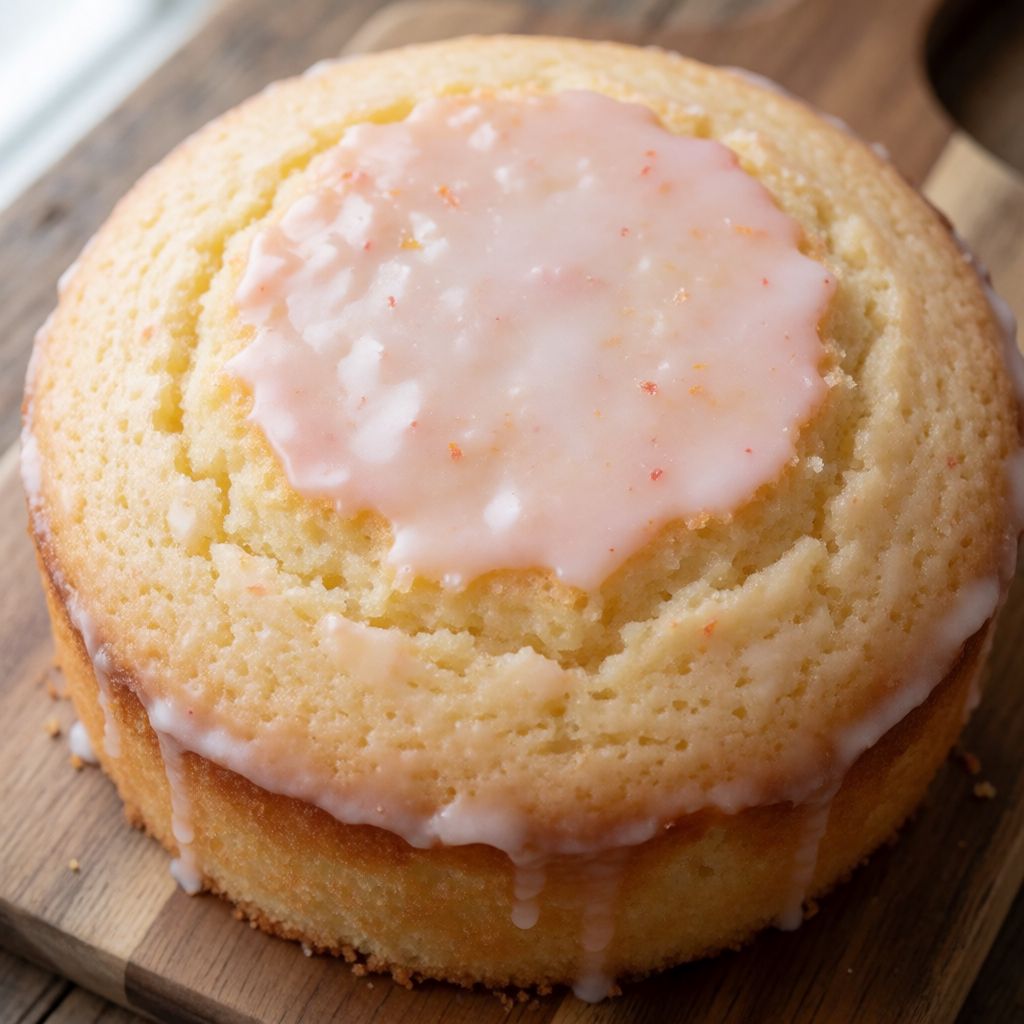
 AI photo
Pink Grapefruit Cake
A light, fluffy sponge cake flavoured with the juice and zest of pink grapefruit.
Labels are worked out automatically from the ingredients and can be wrong. Check the packaging if it matters to you.
Ingredients
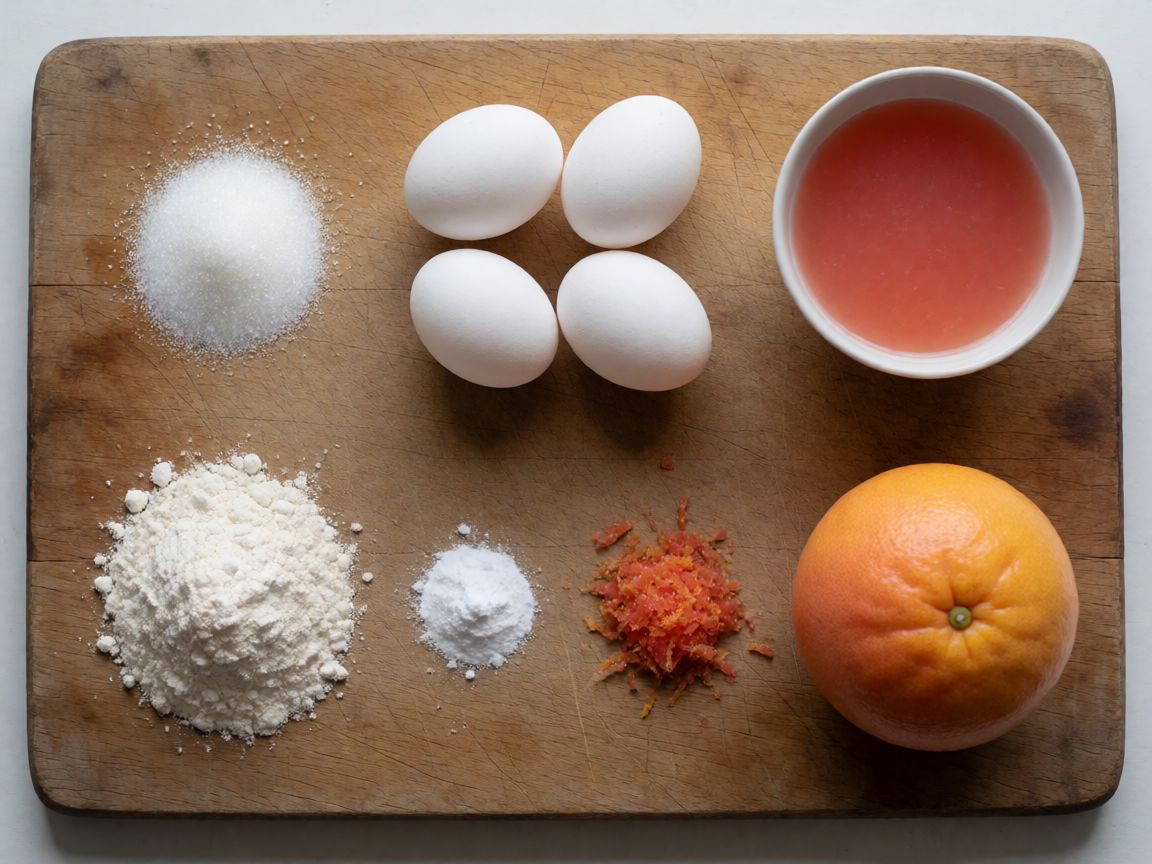
- 200 g Caster sugar
- 4 pcs Eggs
- 180 g Vegetable oil
- 300 g Plain flour
- 15 g Baking powder
- 100 ml Pink grapefruit juice
- 1 pcs Pink grapefruit
- Pink grapefruit zest from the grapefruit above







Steps
Beat the sugar and eggs together with an electric mixer until light and fluffy.
Wash the grapefruit, finely grate the zest, then halve it and squeeze out the juice.
Continue beating while gradually pouring in the oil, then add the baking powder and sifted flour, and mix well.
Flavour the batter with the grated grapefruit zest.
Grease a baking tin with oil and dust it with flour, then pour in the batter.
Bake the cake in an oven preheated to 200°C.
40 minLeave the cake to cool before transferring it to a serving plate.
This is an oil cake, and that single fact decides almost everything about it. No butter is creamed here — the lift comes from two places only: the air you beat into the eggs and sugar, and the baking powder waking up in the oven's heat. Oil cakes stay soft for days because oil never sets hard the way butter does when it cools; that's not a modern trick, it's just chemistry, and it's why Mediterranean households built whole repertoires of citrus-and-oil cakes long before anyone worried about fridge space.
What makes it work or fail happens in the first two minutes, at the mixer, not in the oven. Beat the eggs and sugar until the mixture is pale and holds a ribbon when you lift the whisk — that's not decoration, that's the scaffolding of the whole cake, because there's no butter-sugar structure to fall back on if you skip it. Pour the oil in gradually while still beating, the way you'd build a mayonnaise: oil dumped in all at once can split the mixture, and a split batter bakes into something dense and greasy at the base, never light.
Some say a hot oven is what makes a cake rise. No — the rise is already happening, from the air in the eggs and the gas from the baking powder; what 200°C does is set a crust fast enough to trap that rise before it escapes. Too cool an oven, and the cake spreads sideways instead of climbing. Too hot, and the crust seals before the inside has caught up, so you get a dome that cracks.
Sugar here isn't just sweetness — beaten with egg it dissolves into tiny pockets of air, each one a future air cell in the crumb. Caster sugar matters more than people think: its small crystals dissolve fast under the whisk, where coarser granulated sugar would need longer beating and risk deflating the foam before the oil even goes in.
Eggs do the structural work a creamed butter would normally do. Let them come to room temperature first if you remember — cold egg resists whipping, holds less air, and a cake that starts with less air has nowhere to go but flat. Four eggs for this amount of flour is a generous ratio; it's what lets the cake stay tender without butter's fat to soften the crumb.
Oil must be a thing with no smell of its own — sunflower or rapeseed, both easy to find in any UK shop, do the job without arguing with the citrus. Olive oil would fight the grapefruit for attention; keep it for savoury bakes. The function of oil is purely physical: it coats the flour's gluten strands, keeps them from linking into a tough net, and that's the real reason this cake stays soft on day three when a butter sponge has already gone dry.
Flour and baking powder together: 15g of baking powder against 300g flour is a strong dose, stronger than most cakes carry, and it's carrying extra weight because there's no creamed butter aerating things from below. Sift it with the flour so the powder distributes evenly — unevenly mixed baking powder gives you one bloated corner and one flat one, which looks like a baking failure but is really a mixing one.
The grapefruit does two separate jobs and the recipe treats them as separate for a reason. Zest holds the aromatic oils — they live in those little dots on the skin, not in the juice — so grate it fine and stop the moment you hit the white pith underneath, which is bitter and brings nothing good. The juice brings acidity and moisture, softening the crumb and balancing the sugar; if pink grapefruit isn't in the shop, any orange or a mix of orange and lemon juice will do the same acidic job, though the colour and perfume change.
Grease and flour the tin properly — it's not fussiness, it's insurance against the cake tearing in half when you try to turn it out, since there's no paper liner mentioned here to save you. And let the cake cool fully before moving it: hot, it's still mostly egg-and-starch jelly, barely holding its own weight: patience here is not optional, it's the last ingredient, and it's free.