
 AI photo
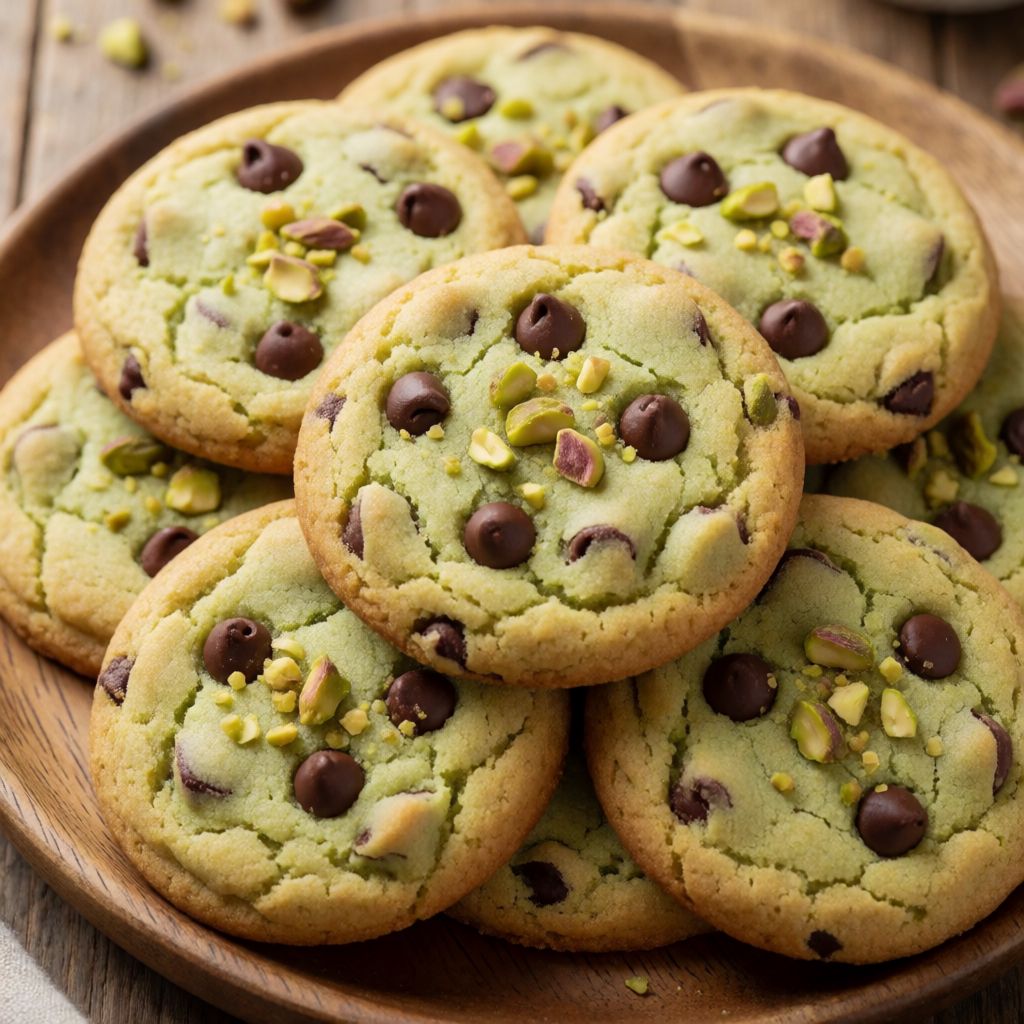
Pistachio Cookies
Soft pistachio cookies studded with dark chocolate chips, a sweet treat for any afternoon.
Labels are worked out automatically from the ingredients and can be wrong. Check the packaging if it matters to you.
Ingredients
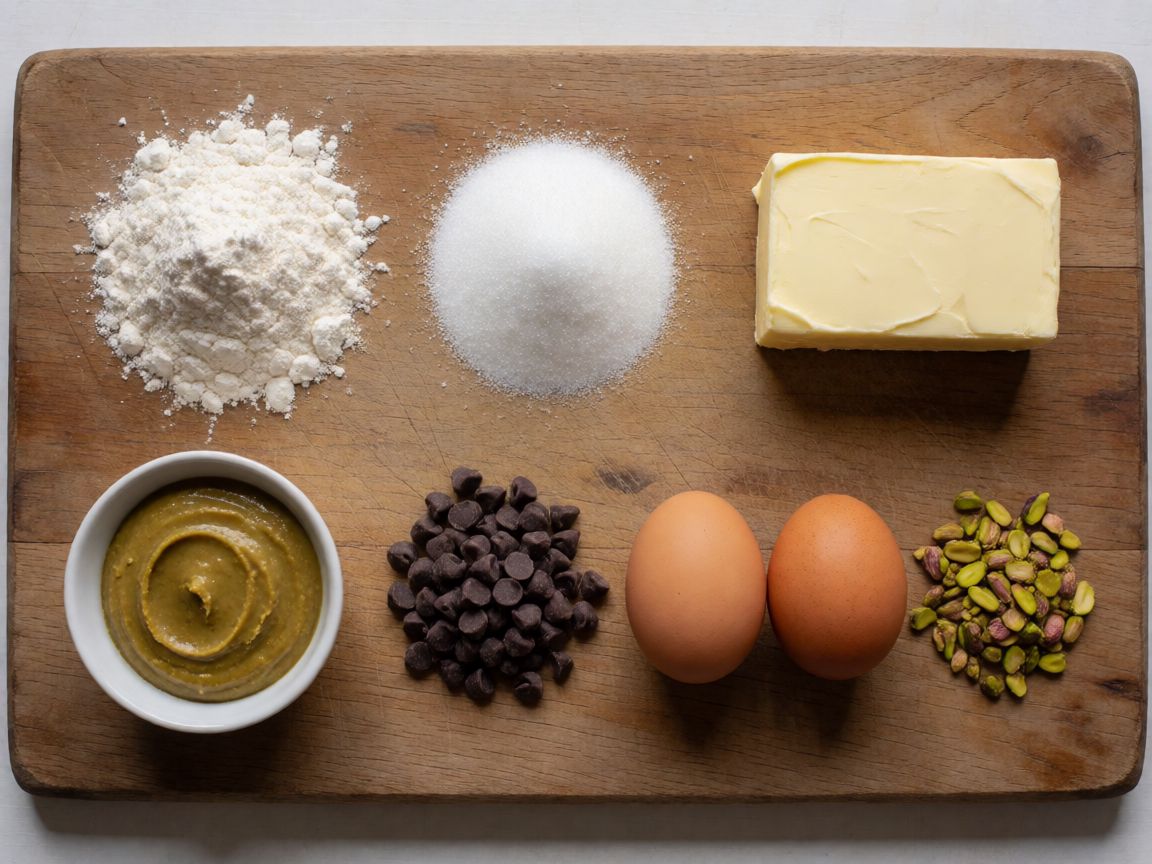
- 60 g Plain flour
- 70 g Caster sugar
- 40 g Butter
- 1 pcs Egg
- 30 g Pistachio paste
- 40 g Dark chocolate chips
- 40 g Pistachios shelled, unsalted






Steps
Shell 40g of unsalted pistachios. Bring water to the boil in a pan and add the pistachios.
Drain the pistachios, rinse with cold water, remove the skins and set aside in a separate bowl.
In a large bowl, combine the flour and sugar.
Add the egg and melted butter, and mix all the ingredients together.
Add the pistachio paste, chocolate chips and roughly chopped pistachios to the dough, and mix well.
Chill the dough in the refrigerator for about 30 minutes.
30 minShape the dough into balls and place them on a baking tray lined with parchment paper.
Bake in an oven preheated to 180°C for about 10 minutes.
10 minRemove the cookies from the oven, let them cool, and serve to your guests.
This is a small batch of chewy, dense cookies — more praline wafer than crisp biscuit — carried by pistachio in two forms at once: a paste that melts into the dough as fat and flavour, and roughly chopped nuts that stay whole for bite and colour. Dark chocolate chips are there to cut the sweetness of the paste, not to be the main event.
What decides whether these work is temperature at two separate moments, not one. First, boiling water on the raw pistachios — the heat makes the thin skin swell and let go of the nutmeat underneath, so it slips off instead of being scraped off. Skip this and you get bitter, tannic flecks through the dough and a grey-green rather than a bright one. Second, the fridge before the oven: melted butter needs to go solid again, or the dough slumps flat the moment oven heat hits it and you get a thin lacy puddle instead of a cookie with a centre.
Some say you must cream butter and sugar for any proper cookie, beat air in, or it won't rise. No — not here. This dough melts the butter on purpose. You lose the aeration, and you gain a flat, fudgy, slightly chewy disc that's closer to a blondie cut into rounds. That's not a shortcut gone wrong, that's the texture the recipe is built around.
Start with the pistachios, because they carry the whole dish. You want raw, shelled, unsalted ones for the blanch to make sense — the boil loosens a skin that's still attached. If your shop only sells roasted, salted pistachios, don't walk away: rinse the salt off under the tap, pat them dry, and skip the blanching altogether, the skins on roasted nuts are usually already loose enough to rub off by hand. You'll lose a little of the raw grassy edge and gain a roasted one — a fair trade, not a failure.
Pistachio paste is the expensive line on this list, and it's expensive for a reason that has nothing to do with marketing: pistachio trees bear fully only every second year, the nuts are hand-harvested, and a good paste — the kind sold in small jars from Italian or Middle Eastern grocers, deep green, barely sweetened — is mostly ground nut and very little filler. The criterion for a substitute is simple: a nut paste that's mostly oil and nut, with sugar added sparingly if at all. In a pinch you can grind your own from raw shelled pistachios with a spoon of neutral oil — rougher, but it's pistachio, not a compromise dressed up as one. Marzipan will work in the dough mechanically, since it's also a nut-and-sugar paste, but be honest with yourself: that's an almond cookie wearing a pistachio's chopped nuts on top, a different dish, not a swap.
The butter is melted, as said, not softened and beaten — any butter with a clean, unsalted taste does the job, since the salt in this recipe mostly comes from nowhere, which is exactly why unsalted is specified: nothing here is designed to balance saltiness, so adding it yourself just muddies the sweetness. One whole egg binds everything into the melted fat without the two separating — add it to butter that's cooled a little past hot-to-the-touch, or you'll half-cook the egg into the butter before it ever meets the flour.
Flour is kept deliberately low, 60g against 70g sugar and 40g butter — there's barely enough here to hold things together, let alone rise them. There's no raising agent on the list, and you don't need one: this is a cookie that spreads and sets, not one that puffs. That's also exactly why the chill matters as much as it does — a warm dough with this little flour has nothing to stop it running flat the second it meets oven heat, and the fridge, at an ordinary UK fridge's 4°C or so, is what gives the butter back its shape before the oven takes it away again. Thirty minutes is the floor, not the ceiling — a bigger ball of dough, or a fridge that runs warm, wants longer, because cold has to travel to the centre, and that takes the time it takes.
Chocolate chips, not a chopped bar, hold their shape through baking — chip-grade chocolate is formulated with a firmer cocoa butter so it keeps its disc shape rather than running into the dough. Chop up an eating bar instead and you'll still get good cookies, just streakier ones, with ribbons of chocolate through the dough rather than discrete chips — no harm in it, just a different look on the plate.
Six is a modest number of servings on purpose — this isn't a dish built for a full biscuit tin, it's built for a pot of tea with guests, two cookies each and done. Your oven's dial reading 180°C and its actual temperature are not always the same thing in a domestic kitchen — if cookies brown at the edge far faster than ten minutes, or far slower, that's your oven telling you where it really sits, and a cheap oven thermometer settles the argument once and not every time you bake.