
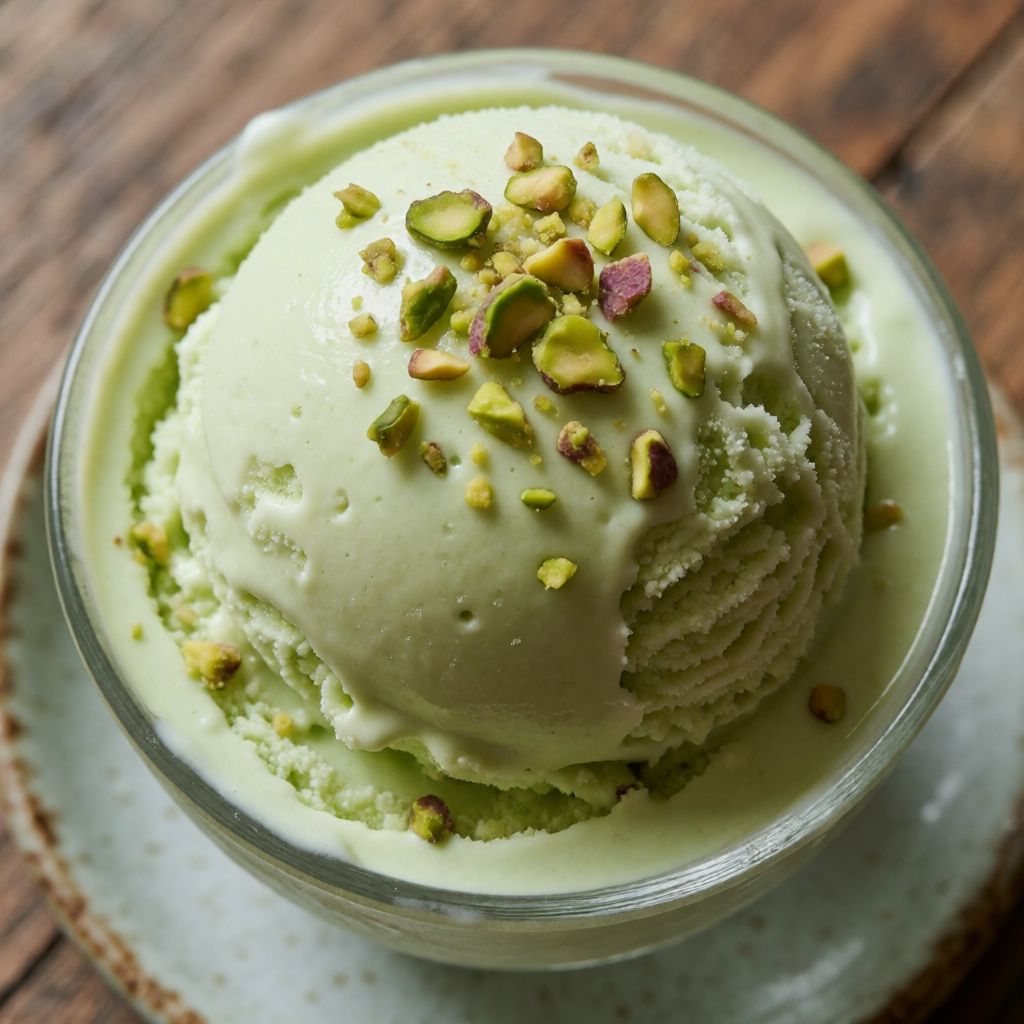
 AI photo
Pistachio Ice Cream
A rich pistachio ice cream made with an egg custard base, enriched with cream for a silky finish.
Labels are worked out automatically from the ingredients and can be wrong. Check the packaging if it matters to you.
Ingredients
- 100 g Pistachios
- 400 ml Milk
- 1 pinch Salt
- 75 g Caster Sugar
- 5 pcs Egg Yolks
- 300 ml Whipping Cream




Steps
Finely grind the pistachio kernels in a food processor or mini chopper.
Put the pistachios, milk and salt in a saucepan and heat gently, stirring, up to 85°C, then blend with a stick blender.
Whisk the egg yolks with the sugar until pale and fluffy.
Heat the cream and pistachio milk to 70°C, pour into the egg mixture, return to the pan and heat to 80°C.
Chill the pistachio custard for 1 hour or until the next day.
60 minChurn the custard in an ice cream maker.
Put the finished ice cream in the freezer for at least 2 hours before serving.
120 min
This is a frozen custard, not a frozen milk — that distinction decides everything. You're building crème anglaise first, and only once that custard is right do you freeze it. People think ice cream is a freezer problem. It isn't. The freezer just holds what you already got right in the pan.
The pistachio flavour lives in the oil of the nut, and oil doesn't jump into milk on its own — it needs heat and time together. That's why you warm the ground nuts in the milk gently rather than blitzing cold milk with cold nuts and hoping. Heating to 85°C and no further matters because milk starts to taste cooked, slightly caramelised, past that point — fine in a sauce, wrong here where the nut should be the only voice.
The custard stage is where most people lose the batch, scrambling egg yolks into sweet omelette flecks. Egg proteins start linking up around 70°C and are fully set, rubbery, by the mid-80s. You've got maybe ten degrees of working room. Sugar beaten into the yolks beforehand buys you a little insurance — it coats the proteins and slows the set — but it doesn't make you immune to carelessness. Pour hot liquid onto yolks slowly, keep stirring over gentle heat, and stop at 80°C, not a number past it. If you don't have a thermometer: watch the custard coat the back of a spoon and hold a line when you drag a finger through it. That's the same signal, just read by eye instead of a dial.
Pistachios: buy them raw and unsalted if you can find them — salted, roasted ones fight the pinch of salt you're adding deliberately for balance, and roasting pushes the flavour toward something closer to roasted peanut than fresh green pistachio, which isn't the point here. The green colour you want in the finished ice cream comes mostly from the skin under the shell, so don't over-blanch or peel them bare if you want colour as well as taste. No pistachios at all, and you want something in the same family: a nut oily and fine-flavoured enough to infuse milk the same way — almonds get you there in texture, not in colour or character, so call it a different ice cream, not a substitute.
Milk and cream together, not cream alone: milk carries the pistachio flavour because it's mostly water and a little fat, which is exactly what lets the nut's oil disperse through it evenly. The cream comes in later for richness and for mouthfeel — fat coats your tongue and slows meltdown, which is why low-fat versions of this always taste thinner and melt to a puddle faster. If you're cutting corners on fat, know what you're trading away: smoothness, not flavour.
Salt: a pinch isn't seasoning for saltiness, it's seasoning for sweetness — it mutes the sugar's one-note sweetness and lets the nut flavour register instead of being drowned. Skip it and the ice cream tastes flatter, not less salty.
Egg yolks and sugar: the yolks are your thickener and your emulsifier, holding fat and water together so the custard doesn't split when churned. Sugar does two jobs — sweetens, obviously, but also lowers the freezing point of the mixture, which is why a custard with the right sugar stays scoopable instead of freezing into a brick. Whisking the yolks and sugar together until pale isn't about looks; it dissolves the sugar crystals into the yolk so you don't get a gritty custard later, and it starts the process that lets them survive the hot liquid without curdling outright.
On equipment: a stick blender for the pistachine milk is doing the job a kazan and patience would do in a bigger batch — breaking the nut down fine enough that you don't get grit in the final texture. If your ice cream maker is the no-compressor, pre-frozen-bowl kind, know its limit: it can only hold the custard cold enough for one batch before the bowl warms back up, so don't try to double the recipe in one go. And if you have no machine at all, you can still get there — pour the chilled custard into a shallow container, put it in the freezer, and drag a fork through it every half hour or so as it sets at the edges. It's more work and less even than proper churning, but the mechanism is the same: keep breaking up ice crystals as they form instead of letting the whole thing freeze still and solid.
The final two hours in the freezer aren't dead time. The custard comes out of the churn soft, more like a thick mousse than ice cream, because churning only gets it to roughly -5°C. It needs the extra hours in the freezer to drop further and set firm enough to scoop cleanly. Pull it out too soon and you've got soft serve, not a mistake exactly, just a different stage of the same dish — patience is the last ingredient on the list, and it's the one most often skipped.