
 AI photo
Pizza Bagels
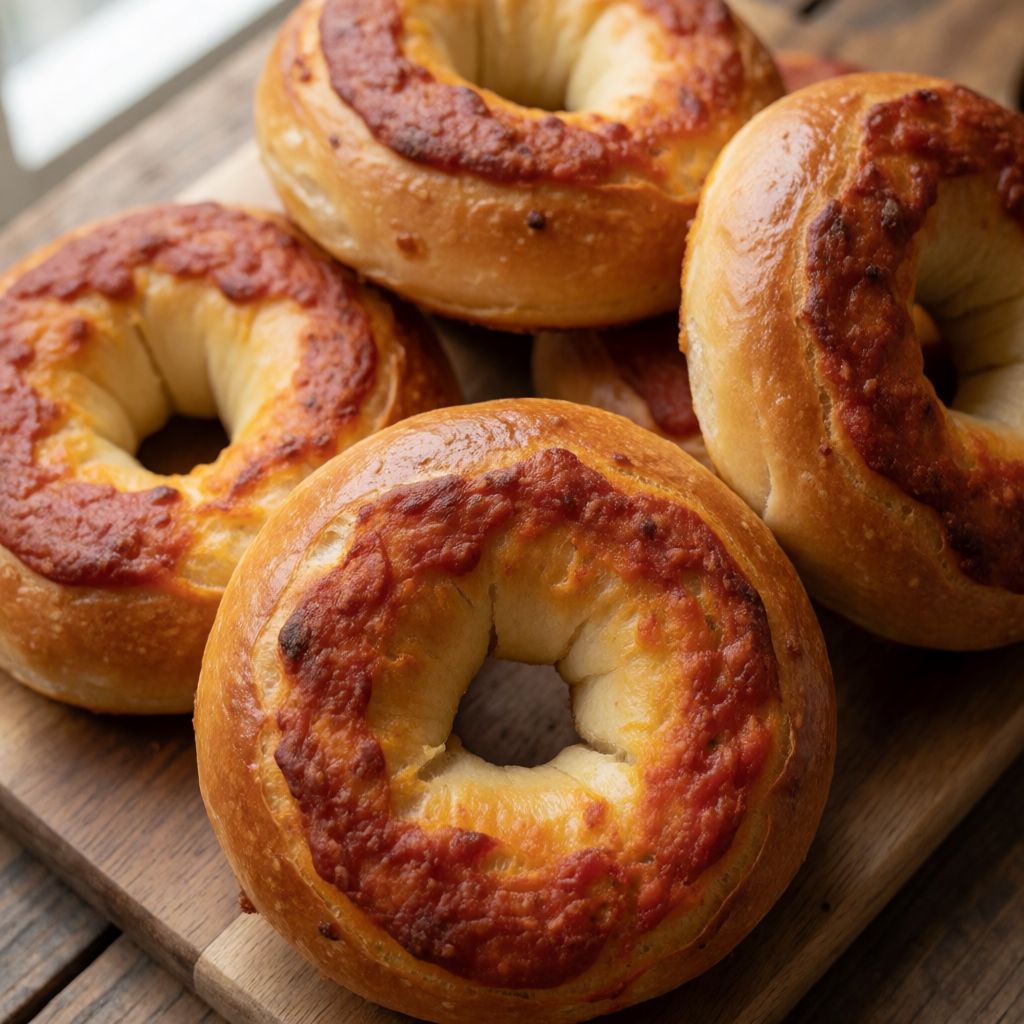
Soft dough bagels shaped into rings, baked until golden, then topped with tomato, mozzarella and oregano for a fun pizza-style bite.
Labels are worked out automatically from the ingredients and can be wrong. Check the packaging if it matters to you.
Ingredients
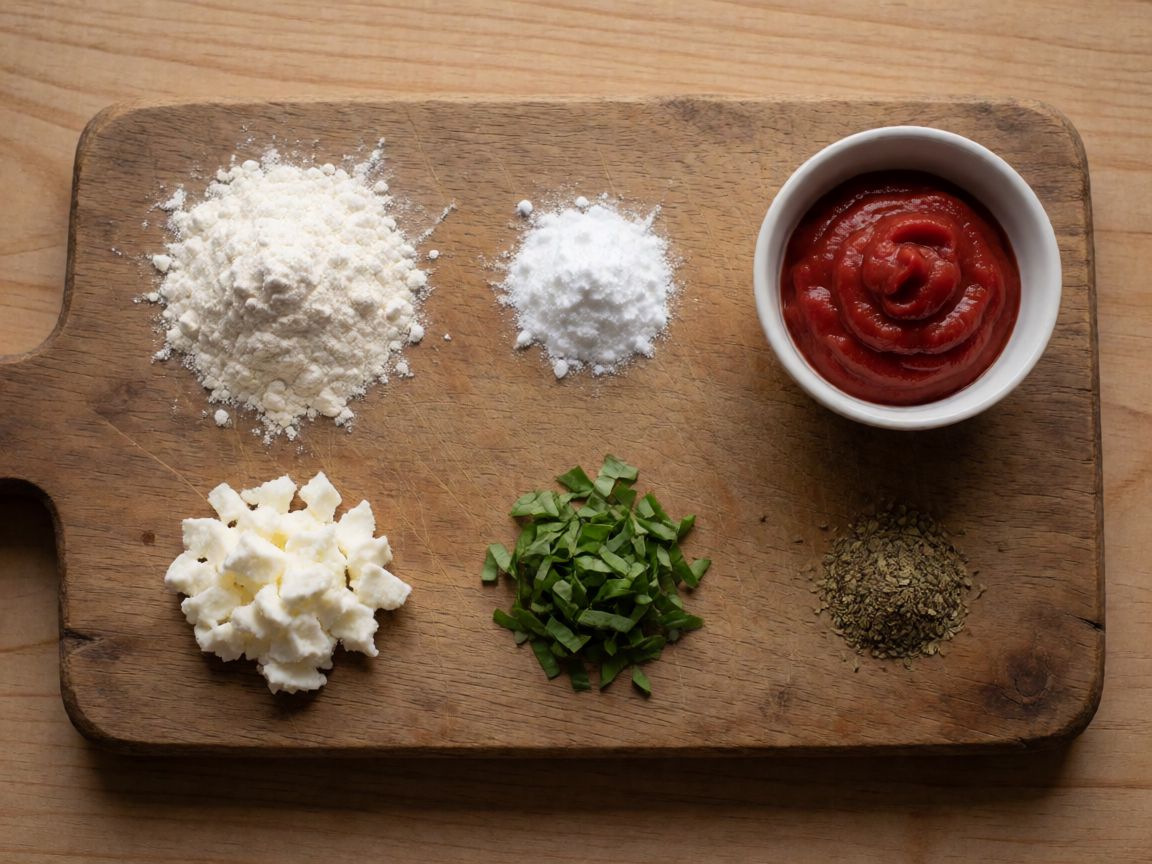
- 400 g Plain flour
- 230 ml Water
- 15 g Baking powder for savoury baking
- 25 g Olive oil
- 10 g Salt
- Tomato paste
- Mozzarella
- Basil
- Oregano









Steps
In a large bowl, combine the flour, water, salt, baking powder and olive oil.
Knead the dough in the bowl, then on a lightly floured surface, until firm and elastic.
Divide the dough into 50 g portions and roll into balls.
Roll each ball into a rope and join the ends to form a ring.
Wet your fingers with water and press the edges firmly so the seam holds well.
Place the rings on baking paper and brush with olive oil.
Bake in a fan oven preheated to 180°C.
25 minSpread tomato paste, mozzarella and oregano on the bagels.
Return to the oven for a few minutes until the mozzarella melts.
Serve, garnished with basil leaves.
A pizza bagel is a cheat built into the name. You get the boiled-then-baked chew of a real bagel without ever touching boiling water, because this dough isn't bagel dough at all — it's a soda-bread trick wearing a bagel's clothes. Baking powder, not yeast, is what lifts it, and that single swap decides everything about how this goes in your kitchen: no proving, no waiting for a sluggish dough to double on a cold windowsill, no "is my yeast even alive" anxiety. You mix, you shape, you bake. The whole thing from bowl to table sits well inside an hour.
What actually makes or breaks it is the ring, not the topping. A bagel is a ring because a ring cooks evenly — no thick dead centre, no raw middle while the edges char. Roll your rope too thin and it dries to a cracker before the crumb sets; too thick and the middle stays gummy under a crust that looks done. You're aiming for something like a fat finger, not a pencil and not a sausage.
The seam is where people lose it. Press two wet, floury ends together without wetting your fingers first and they just sit touching, not bonded — the oven's heat will force that joint open as the dough springs, and you'll pull out a bagel that's unrolled itself into a comma. Water on the fingertips lets the flour on each end dissolve just enough to fuse into one surface rather than two surfaces pretending to be one.
Plain flour here, nothing stronger. You're not chasing the elastic, chewy gluten network a yeasted bagel needs to survive boiling and a long oven — this dough never gets wet-boiled, so it doesn't need that kind of strength. Plain flour gives enough structure to hold the ring's shape and enough softness that kneading it on the counter doesn't turn into an arm workout. A strong bread flour isn't wrong, it just makes you work harder for no real gain here.
Baking powder is doing the job yeast usually does, and it's worth saying plainly why it's labelled "for savoury baking": some baking powders carry a faint sweetness or vanilla note meant for cakes, and in a savoury dough that reads as slightly off, a background sweetness fighting the tomato and oregano. Use a plain, neutral one. Some say baking powder can't give you that proper bagel chew — no, because the chew in a boiled bagel comes mostly from the crust gelatinising in hot water, and you're deliberately skipping that step to save time; what you get instead is a soft, bready ring, which is a different and perfectly honest thing, not a failed bagel.
Water just binds the flour — nothing to choose here, tap is fine, don't overthink it. Olive oil in the dough keeps the crumb from drying out into something biscuity, since there's no fat-rich enriched dough here to fall back on; any neutral or mild oil with no strong smell of its own works the same way — sunflower, rapeseed, whatever's in the cupboard — though olive oil brushed on the outside before baking also helps the surface colour rather than just dry out, so don't skip that brushing even if you've swapped the oil inside.
Salt in bread dough isn't seasoning first — it's control. It tightens the gluten and slows the lift slightly, which matters even with baking powder's quick chemical rise, because without it the rings can spread sideways into flat discs before the oven sets them. Ten grams against 400 of flour is a normal bread ratio; don't eyeball it down because "it's just a snack."
For the topping, use tomato paste rather than a loose passata or chopped tinned tomato — anything wetter will soak into the bread during that second short bake and leave you with a soggy patch under the cheese instead of a topped bagel. Mozzarella should be patted fairly dry if it's the ball-in-brine kind; that same logic applies, water is the enemy of a short second bake. If you only have a drier, pre-grated mozzarella, that's actually an advantage here, not a compromise — it melts faster and weeps less, which is exactly what this quick second pass in the oven wants.
On the UK kitchen itself: an ordinary domestic oven runs hotter at the back and uncovered on top compared to the all-sides heat of a kazan or a professional deck oven, so rotate the tray partway if you notice one side colouring faster — there's no shame in checking halfway through, a glance costs you nothing and saves the batch. And treat the "25 min" on the first bake as a floor, not a target: look for the ring holding its shape with no pale, dull patches and a little give when pressed, not a stopwatch going off. That's the whole point of baking by eye — the oven doesn't know your dough's exact thickness, and a timer never will either.