
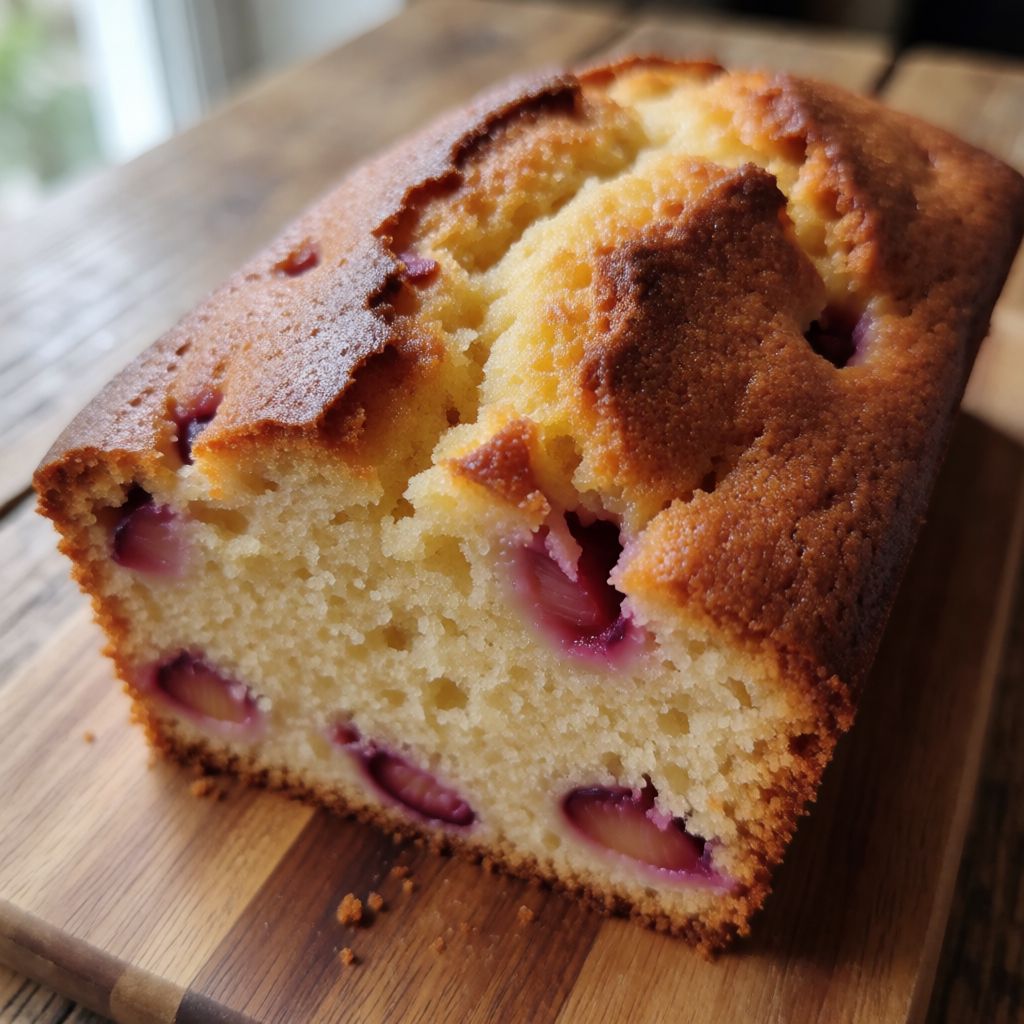
 AI photo
Plum Cake
A moist plum cake with a hint of lemon zest, lovely for an afternoon treat.
Labels are worked out automatically from the ingredients and can be wrong. Check the packaging if it matters to you.
Ingredients
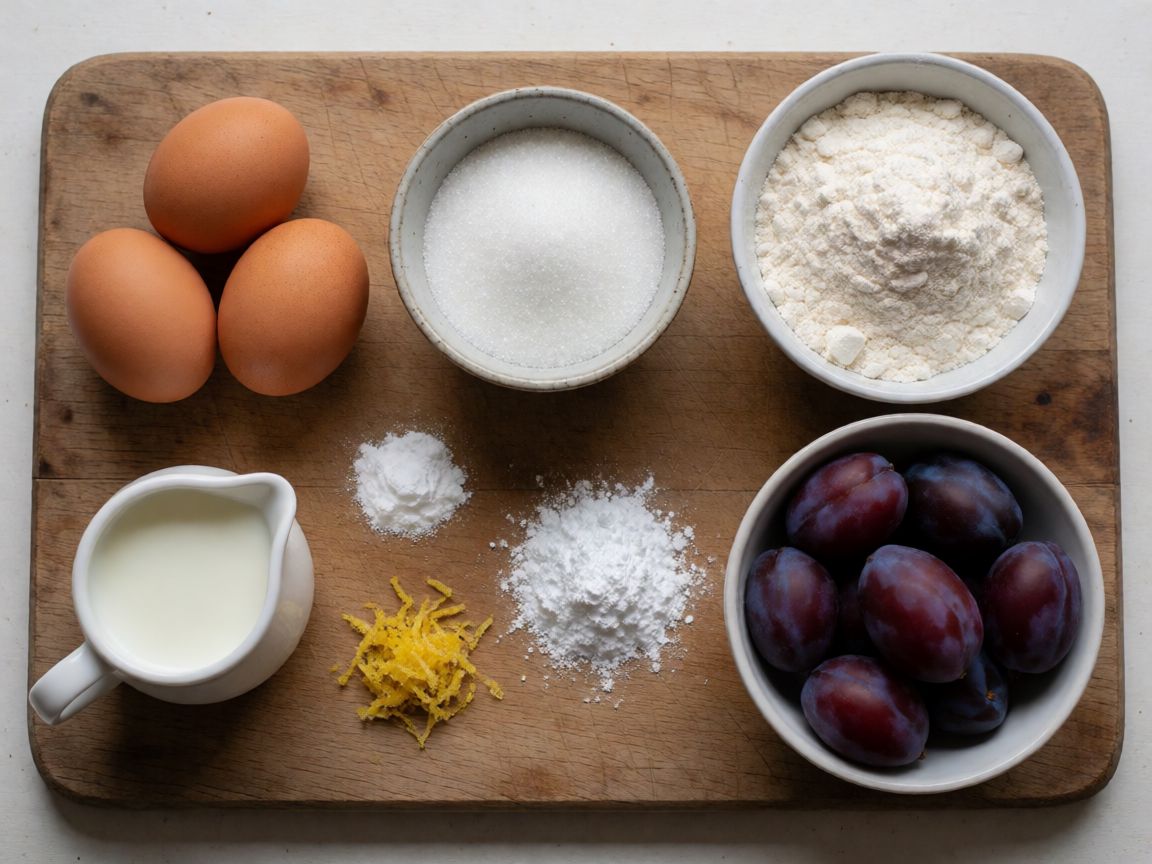
- 3 pcs Eggs
- 170 g Caster sugar
- 75 ml Vegetable oil
- 300 g Plain flour sifted
- 100 ml Milk
- 1 tsp Baking powder
- 1 pcs Lemon zest zest of 1 lemon
- 400 g Plums
- Icing sugar to taste









Steps
Whisk the eggs with the sugar, add the vegetable oil, then the sifted plain flour. Mix well and stir in the milk, baking powder and lemon zest.
Toss the sliced plums in a little flour and fold them into the batter.
Pour the batter into a greased tin, decorate with plum wedges and bake for 40 minutes.
40 minLet the cake cool, turn it out of the tin, and dust with icing sugar.
This is a quick batter cake with whole plum wedges baked right into it — the kind of thing a flat with one bowl and one tin can manage inside an afternoon, no stand mixer, no drama. Eggs and sugar whisked together build the foam that does most of the lifting; the baking powder is only there to help it hold its nerve once the oven heat sets in. Oil instead of butter is not a shortcut, it's a decision: oil stays liquid at room temperature, so the crumb stays soft the next day too, where a butter sponge goes firm and a bit sad once the fat sets hard again in the fridge.
What decides whether this works is a race between two things: how fast your batter firms up around the fruit, and how fast the plum releases its juice. Sliced plum is mostly water held in a loose net of flesh — the moment it's in a warm oven that water starts to leak. If the batter underneath is too thin, or your oven is sluggish, the slices drop through the mix before it sets and you get a wet seam at the bottom with dry cake on top. That's why the plums get a dusting of flour before they go in — not for flavour, that coat of flour grips the batter around each slice like a tiny anchor, slows the sinking down.
Some say you must peel stone fruit before baking it in a cake — no, because the skin is exactly what holds the slice together as the inside softens and weeps. Peel it and you're left with mush suspended in batter instead of a wedge you can actually see when you cut a slice.
Eggs first: three of them, whisked with the sugar until the mixture pales and thickens, holds a ribbon for a second when you lift the whisk. That's not decoration, that's the air you're folding in — the main lift in a cake with only a teaspoon of baking powder. Skip this stage and go in with cold, barely-mixed eggs and you're asking a teaspoon of chemical rise to do a job meant for mechanical foam. It won't manage alone.
Oil, 75ml, any kind with no character of its own — sunflower, rapeseed, a neutral vegetable oil, nothing that smells of itself when poured. Butter would bring flavour, yes, but butter is roughly a fifth water and solidifies as it cools, which is exactly why cakes made with it go dense and a little dry by the second day. Oil has no melting point to worry about — it's liquid at any kitchen temperature you'll meet, so the crumb stays tender for longer. This is a cost decision as much as a texture one: oil was, and still is, cheaper than butter, which is half of why plain oil sponges are the everyday cake across half of Eastern Europe and the Caucasus, and butter sponges are the Sunday-best version.
Flour, 300g, sifted — sifting isn't fussiness, it breaks up the little clumps that would otherwise sit as a dry pocket in the finished crumb. Mix it in just until it disappears into the batter; working it longer than that builds gluten you don't want here; this isn't bread, you're not after chew, you're after a short, tender crumb. The milk goes in after, to loosen what the flour has just tightened — without it the batter would be too stiff to pour, and a stiff batter is exactly what lets plum slices sit on the surface instead of settling into it properly.
Lemon zest, not juice — the zest carries the aromatic oils of the peel without adding the acid and extra liquid that juice would, which would throw off how the baking powder behaves and loosen a batter that's already been loosened once by the milk. Grate it fine, avoid the white pith underneath, that part is just bitter with nothing to offer.
Plums, 400g — Victorias if you can get them, which in Britain means August, firm flesh, not watery. Out of season, any firm stone fruit will stand in — apricot, nectarine, even a firm eating apple in a pinch — the criterion is flesh that holds a wedge shape rather than one that collapses into pulp the second it meets heat. Toss the slices in a spoonful of flour before folding them in; that's the step that stops them sinking, as said, and it's worth doing properly rather than a token dusting.
On the oven: the recipe gives you forty minutes and nothing else, and I won't invent a number it doesn't have. Go by what you can see and feel instead — the top should be rising and setting steadily, not racing to brown while the middle stays wet underneath. A skewer in the centre should come out without wet batter clinging to it, and the cake should spring back gently when you press the top with a finger rather than leaving a dent. Forty minutes is where you start checking, not where you stop. Grease the tin properly before any of this — a bare tin lets the egg protein in the batter bond directly to the metal as it cooks, and that's the whole reason cakes stick and tear on turning out, not bad luck.
Icing sugar goes on only once the cake is properly cool. Dust it onto a warm cake and the moisture still coming off the crumb will melt it into a wet shine instead of the soft white it's meant to be — a small thing, but it's the difference between a finished cake and one that looks like it's sweating.