
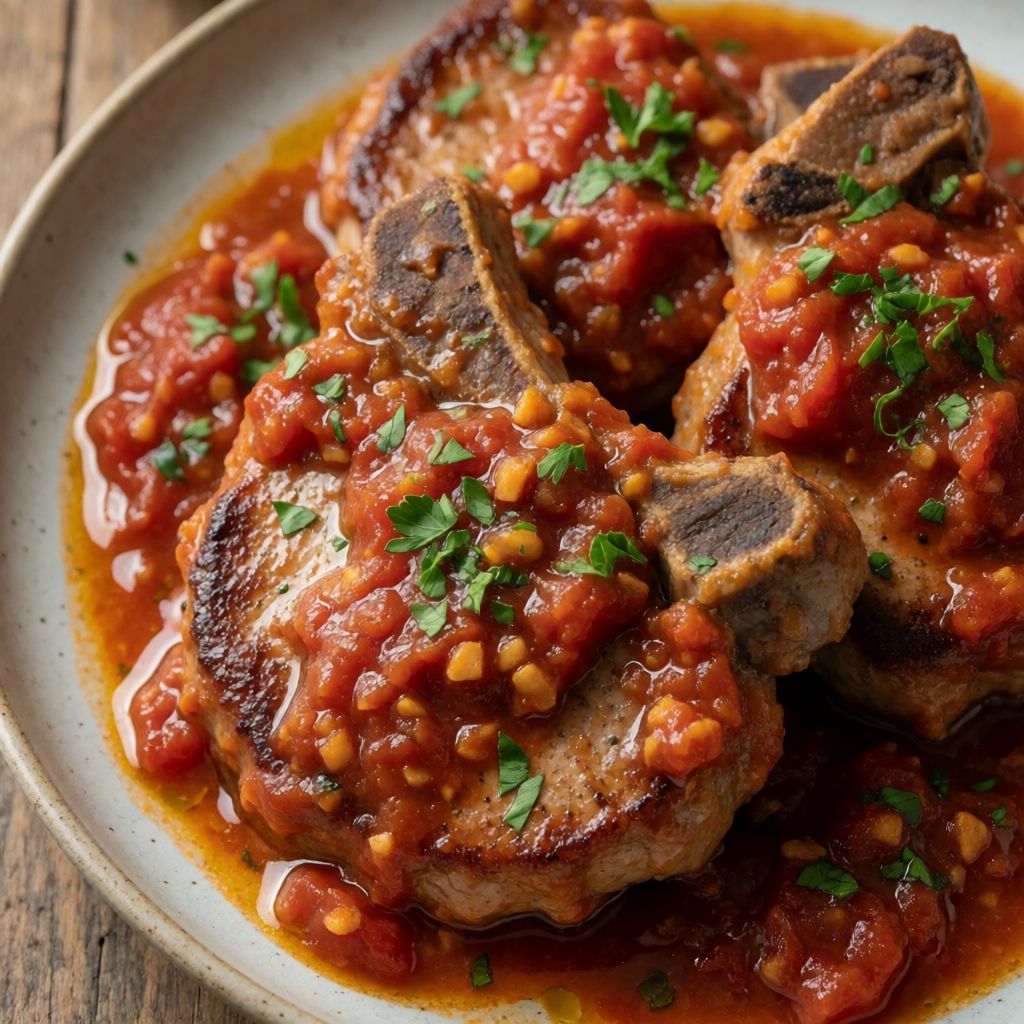
 AI photo
Pork Chops Pizzaiola
Pork chops braised in a rich tomato, garlic and basil pizzaiola sauce.
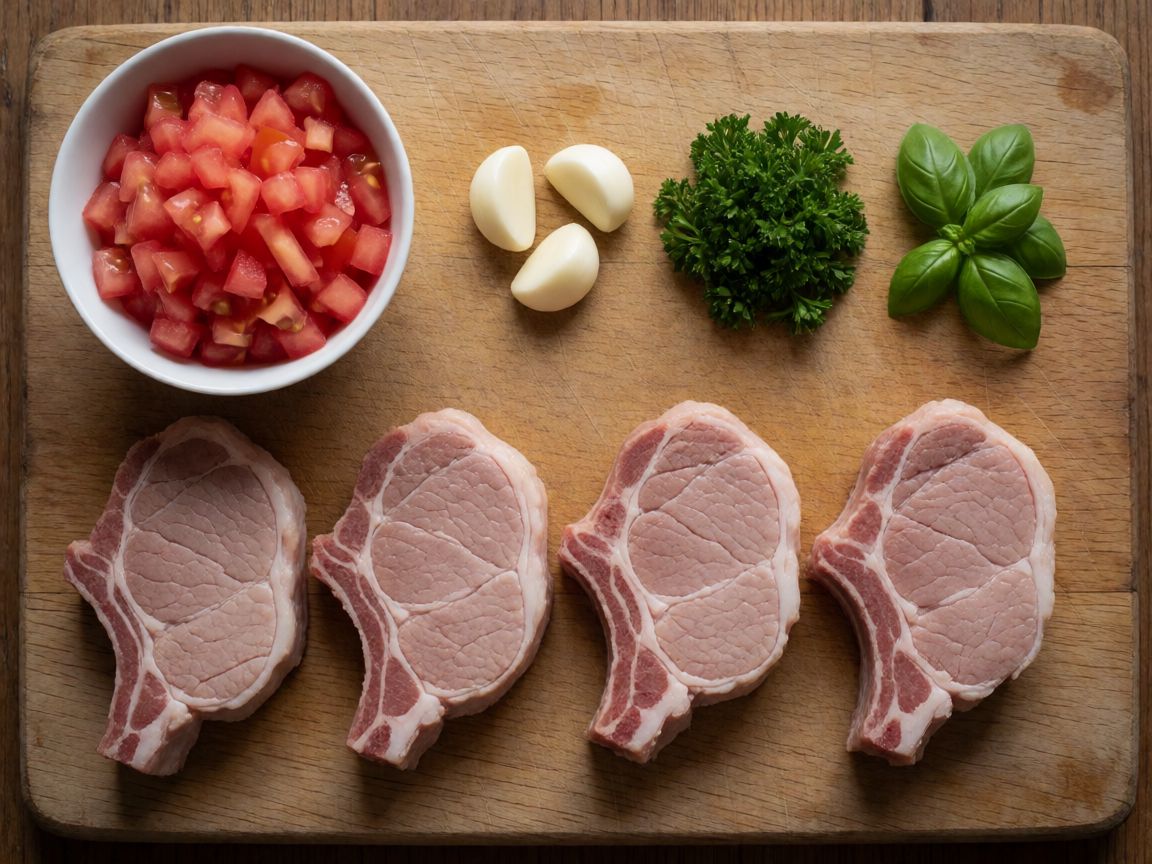
Ingredients







Steps
Trim any excess fat from the pork chops using a sharp knife or kitchen scissors.
Wash the tomatoes, remove the stem end and score a cross in the base. Blanch in boiling water, cool under running water, then peel and chop.
Peel the garlic cloves, slice thinly and fry in the olive oil in a saucepan.
Add the chopped tomatoes, season with salt, bring to the boil and simmer gently with the basil.
10 minPour olive oil into a large lidded frying pan and let it heat up.
Fry the pork chops on both sides over high heat until golden brown.
Spoon the tomato sauce over the chops, cover with the lid and simmer. Ready when the internal temperature reaches 70°C.
Garnish the pork chops with fresh parsley leaves before serving.
This is pizzaiola — not a stew, not a roast, but a sear-then-simmer method the Neapolitans worked out for cheap cuts: hit the meat hard and fast in a pan to build colour and flavour, then let a quick tomato sauce finish the cooking for you, gently, with the lid on. The name just means "pizza-style" — tomato, garlic, basil, the same short list that goes on a pizza base, used instead as a sauce for meat that needs tenderising without an afternoon in the oven.
What decides whether this works is the order of heat, not the clock. First a hard sear, dry pan hot enough that the chop hisses and browns within a minute or two on each side — this is where the flavour is made, by the Maillard browning on the surface, not inside the meat. Some say searing "seals in the juices." No — it doesn't, juice still leaves the meat as it cooks, you can watch it collect in the pan. What searing actually does is build a crust of flavour compounds that no amount of simmering afterwards will give you, because simmering is wet heat and browning only happens in dry heat. Skip the sear and go straight to the sauce, and you get boiled pork in tomato — edible, but not this dish.
Pork chop: buy them with a decent bit of fat still attached — not trimmed to the bone by the butcher, you want to do that trimming yourself, thinly, for the reason above. Bone-in holds shape and flavour better than boneless through a hard sear; if all you can get is boneless, fine, just watch it more closely, it cooks a touch faster with no bone to slow the heat reaching the centre.
Tomato: 600 g for four chops is roughly 150 g each once reduced, so don't buy watery, pale supermarket tomatoes out of season expecting body in the sauce — you'll be simmering forever trying to drive off water that shouldn't have been there. Ripe, dense, in-season tomatoes, or tinned plum tomatoes if it's winter in Britain and the fresh ones taste of nothing, work just as well and are honestly more reliable most of the year. The cross cut in the base before blanching isn't decoration — it gives the skin somewhere to split cleanly when the heat shocks it, so it peels off in one go instead of tearing flesh away with it. Skip that cross and you lose half the tomato to the peel.
Olive oil: here it's doing double duty, carrying the garlic's flavour into the sauce and searing the meat, so it needs to taste of something — this isn't the place for "any neutral oil," the olive flavour is part of the dish, not incidental. A basic olive oil for the frying stage is fine; save anything more expensive for drizzling at the end if you want it, though the recipe doesn't ask for that.
Garlic: sliced thin and fried slowly enough to turn pale gold, never brown. Brown garlic is bitter garlic — the sugars in it have gone past caramelising into burning, and there's no rescuing a sauce once that bitterness is in the oil. Thin slices cook through gently without needing high heat, which is the whole point: low, patient heat here, not the hard sear heat you'll use later for the chops.
Basil and parsley: basil goes in with the simmering tomato, which does mellow it — it won't taste as sharp and green as basil torn over a finished dish, it becomes part of the sauce's background sweetness instead. That's deliberate here, not a mistake to fix by adding more at the end, though a few torn leaves scattered on top at serving will give you back some of that fresh top-note if you want contrast. Parsley at the very end stays raw and bright on purpose — it's the one herb in this dish that's meant to taste of itself, not of the sauce.
On equipment: you won't have a proper heavy kazan lid, and that's fine — a wide frying pan with a tight-fitting lid, or even a large plate set over the top while the sauce finishes, does the same job of trapping steam so the chop finishes by gentle moist heat rather than drying out under an open pan. What you can't fake is the hard sear stage — that wants a pan properly hot and dry before the meat goes in, and patience to leave the chop alone once it's down rather than poking it, so it actually browns instead of stewing in its own first few drops of juice.