
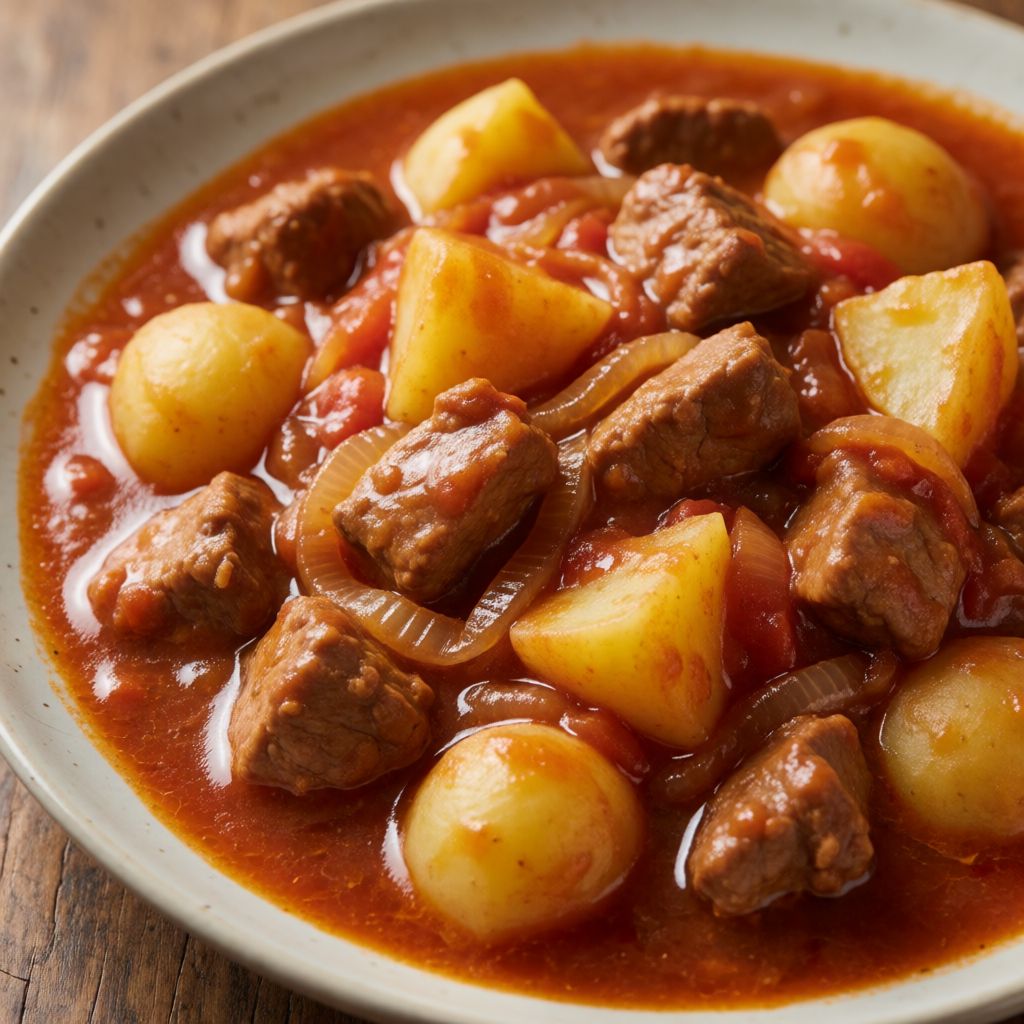
 AI photo
Pork and Potato Stew
A hearty pork and potato stew simmered with tomatoes and red wine.
Labels are worked out automatically from the ingredients and can be wrong. Check the packaging if it matters to you.
Ingredients










Steps
Thinly slice the onion and fry in a pan with olive oil and butter until soft.
Pour in the wine and cook over medium heat until it has completely evaporated.
Add the pork loin, cut into roughly 2 cm cubes, and sear over high heat until golden, stirring occasionally.
Add the potatoes, peeled and cut into roughly 2 cm cubes.
Add the peeled canned tomatoes and 1–2 ladles of hot water. Season with salt and black pepper to taste.
Bring to the boil and simmer for at least 1 hour over medium-low heat, stirring as little as possible. Done when the internal temperature reaches 70°C.
60 minTowards the end of cooking, gently shake the pan rather than stirring with a spoon.
Serve garnished with freshly chopped parsley.
This is a one-pan stew where the pork does the easy part and the potato does the hard part. Pork loin is lean — it cooks fast and tolerates almost nothing. Potato, cut the same size, is dense and stubborn, so it needs the long simmer. The whole hour of cooking is really there for the potato; the meat was done long before the clock says so.
What decides whether it works is the order you add things and how little you touch the pan once it's bubbling. Onion first, slow, until it goes soft and sweet rather than brown — this is sofrito logic, the same base under half of Mediterranean cooking, because onion fried gently releases sugar instead of just going limp. Wine goes in next and must disappear completely, not just reduce — raw alcohol sitting in a stew tastes sharp and unfinished, and "a splash of wine for flavour" without burning it off is exactly how you get that.
Then the pork gets seared hard and fast, high heat, until it's properly golden, not just pale and sweating. Browning here isn't decoration — it's the fond, the stuck-on bits at the bottom of the pan that become the backbone of the sauce once the tomatoes and water hit. Skip the sear and you get grey meat in a thin sauce; the dish will taste of nothing in particular.
Pork loin is the right cut precisely because it's lean — no long-cooking connective tissue to break down, unlike shoulder or belly. That means it's not really a braising cut in the usual sense; it's added late-ish and seared hard, then left mostly alone so it doesn't dry out before the potato catches up. If you only have shoulder, you can use it, but expect to need real patience with it — low heat, longer than the hour, and accept the texture will be different: softer, more forgiving, less "steak-like."
The potato is doing the structural work of the dish. Two whole potatoes, cut to match the meat at roughly 2cm, means they cook at a similar rate and look like they belong on the same plate. Waxy potatoes hold their cube shape through an hour of simmering; floury ones (your classic baking potato) will start sloughing starch into the sauce and thickening it unevenly. If you've only got floury potatoes in the cupboard, that's not a disaster — just know the sauce will go cloudier and starchier, and treat that as a feature, not a failure.
Canned peeled tomatoes exist for a reason beyond convenience: they're picked and tinned at peak ripeness, so you get consistent acidity and sweetness no matter the season — useful in a country where a "fresh tomato" in January has travelled further than you have this year. Fresh tomatoes work in summer if you peel them yourself (score, blanch, skin slips off), but out of season you're trading convenience for a thinner, sourer result.
The wine's job is acidity and depth, not strength — by the time it's fully evaporated, the alcohol is gone and what's left is concentrated flavour clinging to the onion. Any dry red does this; don't reach for something precious. If you don't drink wine or don't have any, a splash of red wine vinegar loosened with a bit of water gets you partway there, though you lose some of the fruit-driven roundness.
Butter alongside olive oil isn't fussiness — butter browns the onion with a rounder, slightly nutty flavour that oil alone doesn't give, while the oil raises butter's smoke point so it doesn't burn before the onion softens. Any neutral oil with no smell of its own will stand in for the olive oil if that's what's in the cupboard; butter has no real substitute here beyond margarine, which will do the job but not the flavour.
The 70°C mark for the pork is a genuine useful number, not a decorative one — it's where lean pork is cooked through without being dry rubber, and a probe thermometer removes all guesswork. But treat the hour as the floor, not the target: the real test is the potato. Push a knife or the edge of a spoon into a cube — it should give without resistance, no crunch at the centre. If it still fights you, it needs more time regardless of what the clock says. Some say stew always needs "at least an hour" as if that's a law — no, because it needs however long it takes the potato you bought, cut the size you cut it, to go from raw to yielding; the hour is just a reasonable guess for a domestic hob and a 2cm cube.