
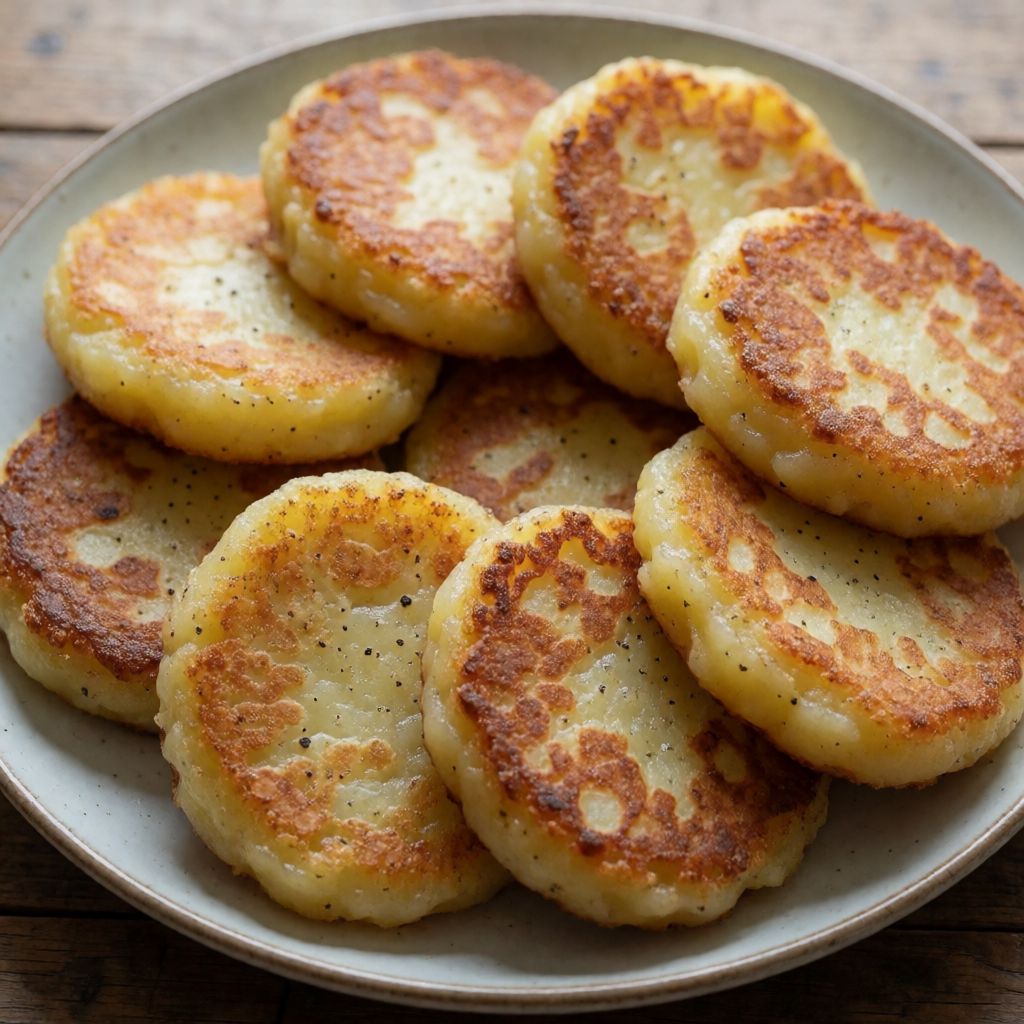
 AI photo
Potato Focaccine
Soft potato focaccine made from mashed potato, eggs and Parmesan, pan-fried or baked until golden.
Labels are worked out automatically from the ingredients and can be wrong. Check the packaging if it matters to you.
Ingredients
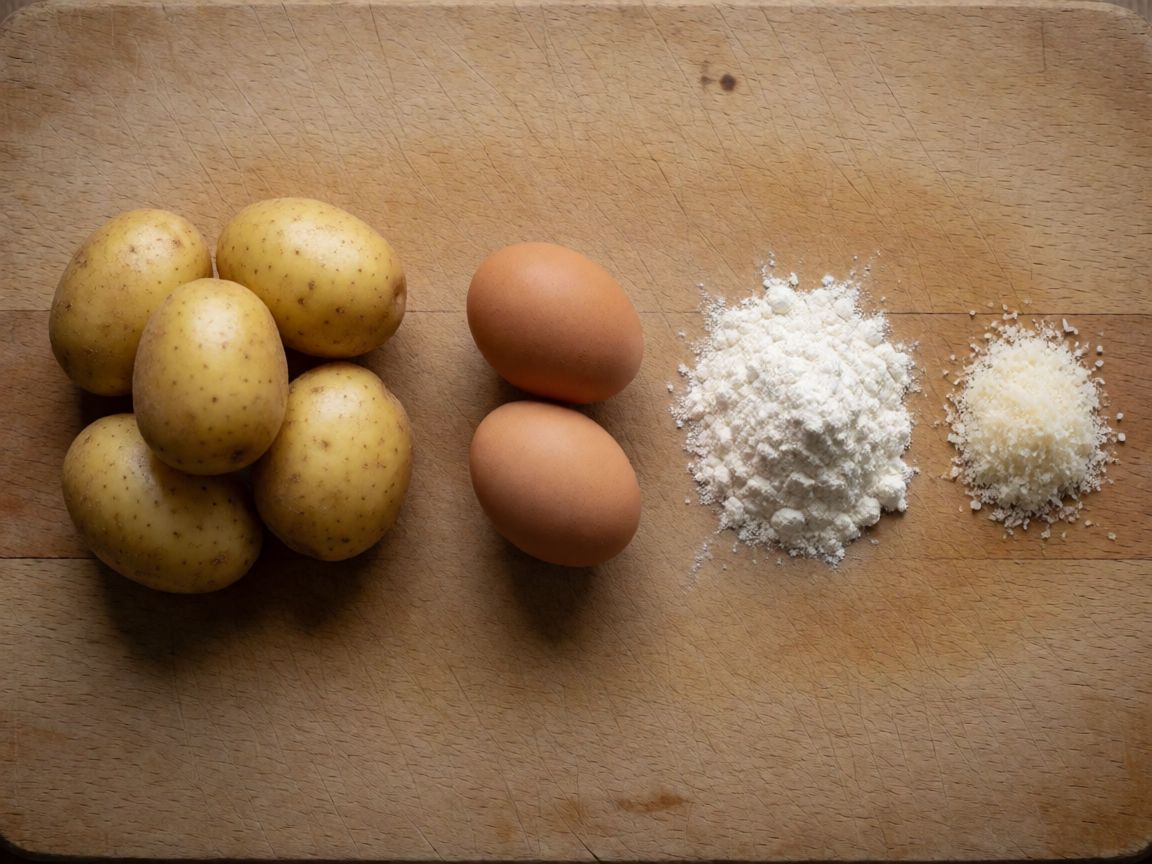
- 1 kg Potato
- 2 pcs Eggs
- 200 g Plain Flour
- 100 g Parmesan
- Salt to taste
- Black Pepper to taste
- Olive Oil to taste







Steps
Boil the potatoes until tender, peel them, then mash well with a potato masher or ricer.
Tip the mash into a bowl and add the eggs and Parmesan.
Pour in the olive oil, season with salt and pepper to taste, add the flour and mix everything thoroughly.
Take a small portion of the dough and shape it by hand as you like.
Fry in a non-stick pan for a few minutes on each side, until golden on the surface.
Alternatively, place the focaccine on a baking tray lined with parchment and bake at 180°C.
10 minServe while still warm, sprinkled with a little oregano.
This is a potato cake wearing an Italian name — focaccina, little flatbread, though there's no yeast and no rise here at all. What you're actually making is cooked potato turned into a dough, then turned back into a crust in a pan. Think of it as what trattorias do with yesterday's mash: egg and cheese bind it, a little flour gives it the strength to hold a shape, and heat does the rest. Nothing exotic, nothing that needs explaining with reverence — just potato, worked twice.
What decides whether this comes out right isn't the order of the steps, it's how wet your mash is when you start. Potato starch is the glue in this dish. Dry, fluffy mash needs very little flour to become a dough you can shape — and a dough with little flour fries up light, with a shell that crisps and a middle that stays soft. Wet mash needs flour to even come together, and flour is what turns these from potato cakes into bread rolls with potato in them. Heavy, dense, a bit sad. So the real work happens before the recipe even starts mixing: at the boiling and the mashing.
Some say you should blitz the potato in a food processor to save time — no, because the blade ruptures the starch cells and releases a gluey paste, the same reason mashed potato made this way turns to wallpaper glue instead of fluff. A ricer or an old-fashioned masher breaks the potato apart without tearing the cells open, which is why it stays dry and floury instead of sticky. That dryness is what buys you a smaller flour quantity, and a smaller flour quantity is what buys you a cake that isn't stodgy.
Potato is the whole dish, so choose a floury one — in the UK that's Maris Piper or King Edward, not Charlotte or a new potato, which are waxy and hold water the floury ones don't. Waxy potato gives you wet mash no matter how carefully you work it, and wet mash means more flour, and more flour means the fault above. Boil them whole, skin on if you can manage it without the texture bothering you — less water gets in through unbroken skin, which again is about keeping the mash dry. Peel while they're still warm; cold boiled potato peels badly and you'll bruise more flesh getting the skin off than the dish can afford to lose.
Let the mash cool a little before the eggs go in — not stone cold, just not scalding. Eggs dropped into potato hot enough to cook them will half-set on contact, and you'll get little flecks of cooked white through the dough instead of a smooth bind. The eggs here aren't for richness, they're structural: they're what sets firm in the heat and holds the shape of your focaccina together once the potato's own starch has done its part.
Parmesan brings salt, fat, and a dry, hard protein that helps the dough stay firm rather than soft and slumping. The criterion if you haven't got it: any hard, aged grating cheese, dry enough to rasp fine and salty enough to season as it melts — pecorino does the job, a well-matured cheddar at a pinch, though it'll pull the flavour toward a different country entirely. Avoid anything soft or fresh; a wet cheese just adds back the moisture you spent effort getting rid of at the mashing stage.
Flour here is a brake, not an ingredient with its own voice — you add just enough to make the dough stop sticking to your hands and hold a shape, and the 200g given assumes a properly dry mash. If yours came out wetter than that, you'll need more, and the cake will be correspondingly heavier; that's the trade you're making, not a mistake in the recipe. Plain flour is right because you want no extra rise and no extra chew — nothing here benefits from gluten doing more work than holding shape.
Oil in the mixture is there to keep things workable and to carry flavour — use anything with no smell of its own if you want the potato and cheese to speak, olive oil if you want its own note alongside them. For frying, whatever's in the pan should be enough to stop sticking without turning this into something swimming; a non-stick pan with a thin film of oil, or a well-seasoned ordinary pan with rather more oil to compensate for the grip it has on food. Don't turn the cakes before the underside has properly set and coloured — a half-set surface tears when you try to lift it, and that's the real cause of focaccine that fall apart in the pan, not bad luck.
Oregano at the end is a lift, not a cooking ingredient — it's why you add it after, scattered on warm cakes rather than into the dough, where frying would just burn off whatever scent it had. Any dried herb you like the smell of will do the same job; this is seasoning as a last word, not a foundation. And give yourself the twenty minutes the prep time asks for without rushing the mashing — patience here isn't virtue for its own sake, it's what keeps the starch dry and the final cake light instead of dense.