
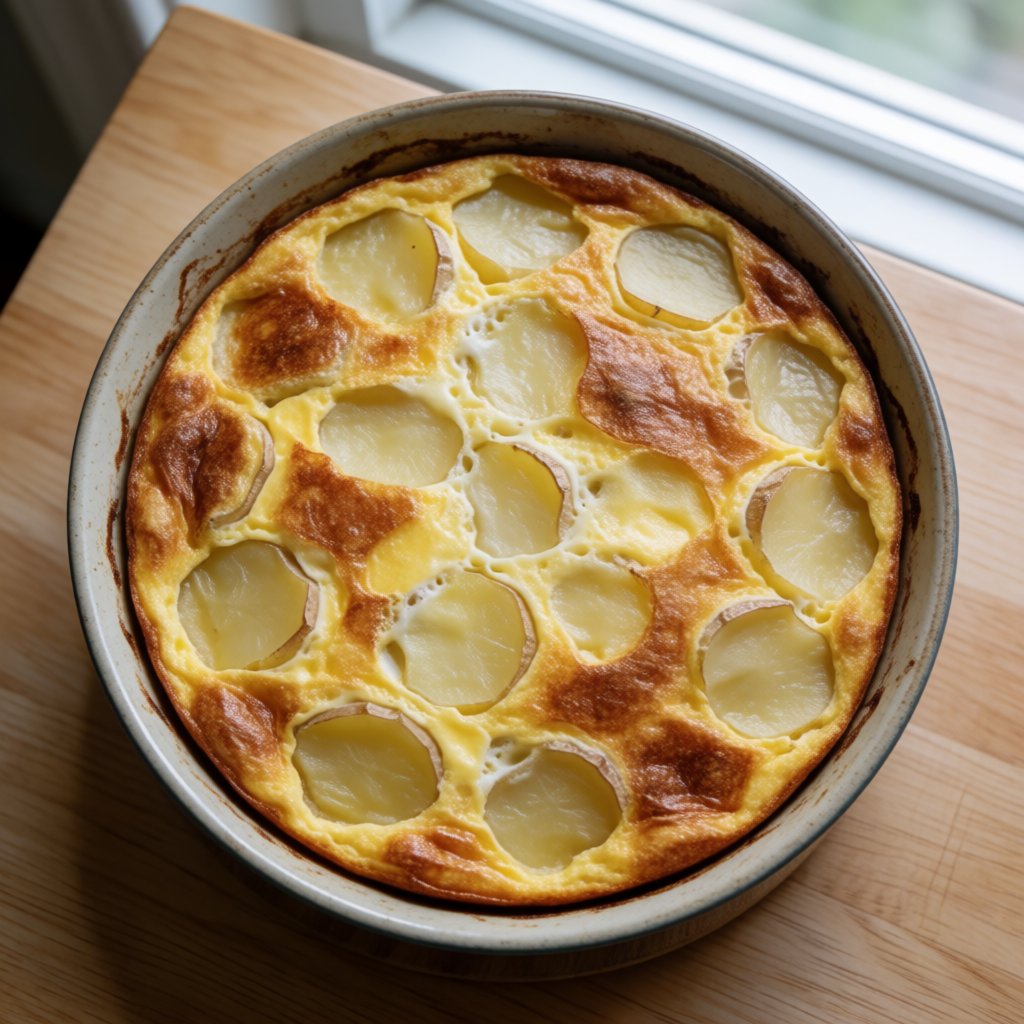
 AI photo
Potato Frittata
A simple potato frittata, baked until set, that makes an easy light lunch or supper.
Labels are worked out automatically from the ingredients and can be wrong. Check the packaging if it matters to you.
Ingredients
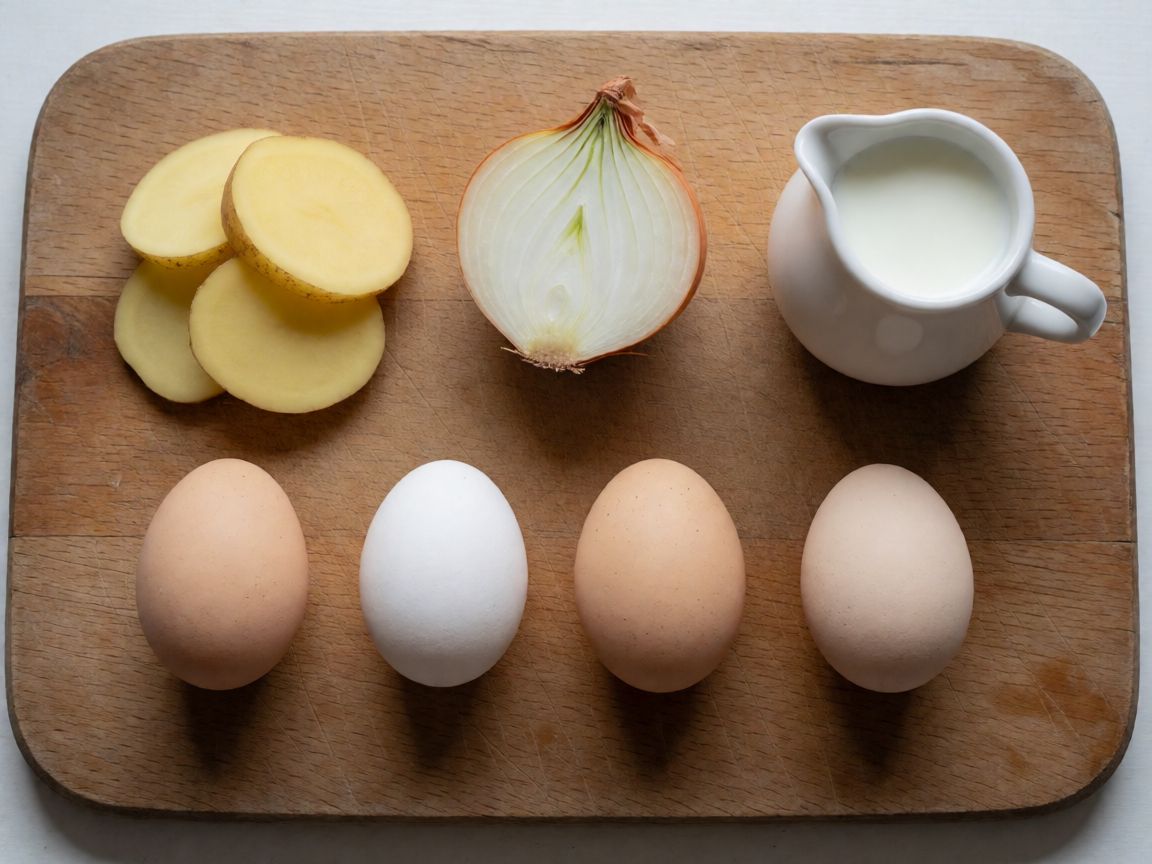
- 200 g potato thinly sliced
- 0.5 pcs onion
- 4 pcs eggs
- 50 ml milk
- 1 tbsp sunflower oil
- 1 pinch salt to taste
- 1 pinch black pepper to taste







Steps
Mix the potato and onion with the oil and salt, then spread into the baking dish.
Put the dish in the oven at 200°C for 15 minutes.
15 minBeat the eggs with the milk.
Pour the eggs over the potatoes and bake for another 15–18 minutes until the centre is set.
18 minRemove the dish from the oven.
A frittata is an omelette that gave up on the stove. Instead of folding the egg around a filling in a hot pan for two minutes, you bake the filling first and pour egg over it, letting the oven finish both together. That's the whole engineering problem here: potato is slow, egg is fast, and the only way to get them to arrive at doneness at the same moment is to give potato a head start.
So the first bake, fifteen minutes at a heat that will colour the edges and drive moisture out of the potato, isn't a formality — it's the part that decides everything downstream. If you skip it and pour raw egg over raw potato, the egg will set hard around the edges of a dish that's still crunchy in the middle, because egg protein firms up in minutes and potato starch needs real heat-soak time to go soft. Some say you can throw it all in together to save a step — no, because you'll get rubber on the outside and bite-through-a-coin potato underneath.
The second stage is about watching, not counting. The centre should wobble like a set custard, not slosh like liquid, and not bounce back dry like a sponge. A knife or a skewer in the middle comes out clean, with maybe a trace of moisture, not egg running off it. That eighteen minutes is a floor, not a clock you set and walk away from — ovens lie about their numbers, especially the free-standing kind most flats here actually have, so trust the wobble over the timer.
Potato: slice it thin, genuinely thin, almost see-light-through-it thin, because that's what lets it cook through in the oven's first fifteen minutes without needing to be boiled beforehand. A floury potato (the kind that falls apart in a stew) will go mushy and lose its shape under the egg; a waxy one — new potatoes, Charlotte, anything sold as 'salad potato' — holds its slice and gives you layers you can actually see when you cut the finished frittata. If your slices come out thick because your knife hand had other plans, give the first bake longer and check by bending a slice: it should fold, not snap.
Onion, half a one, cut thin for the same reason as the potato — there isn't time in this bake for a thick-cut onion to go from sharp to sweet, and a frittata that tastes of raw onion bite is a frittata someone rushed. Thin slices soften in the same window the potato needs, no extra attention required.
Eggs and milk: the milk is there to loosen the egg, so the set centre stays tender rather than turning into the tight, slightly bouncy texture you get from egg baked on its own. Fifty millilitres for four eggs is a light hand — don't be tempted to add more thinking it'll make things creamier, because past a point you're just adding liquid the egg has to cook off, and that's exactly the water-release problem that makes the centre take forever to set. No milk in the flat? Water works at a pinch, cream works better but richer — either way, think of milk here as a ratio decision, not a flavour one.
Oil: one tablespoon, and sunflower is fine because the whole point is an oil with no personality of its own — you want it to carry heat to the potato, not add a taste that competes with egg and onion. Any neutral oil does the job; olive oil will work too, just know it brings its own quiet flavour along, which is no bad thing but is a choice, not a default.
Salt and pepper are 'to taste' because potato's appetite for salt varies with how starchy it is, and because salting the raw potato mix too hard too early pulls moisture out before it's had its heat — season it, don't cure it. A pinch now, taste the dish once it's out, adjust then if you must.
This dish sits in the same family logic as a Sunday roast's Monday leftovers — a way of not wasting potato, not wasting egg, turning both into one pan with almost no active work. The patience it asks for isn't skill, it's restraint: give the potato its own time before the egg arrives, and don't open the oven every two minutes to check, because every open door is heat you have to earn back.
·