
 AI photo
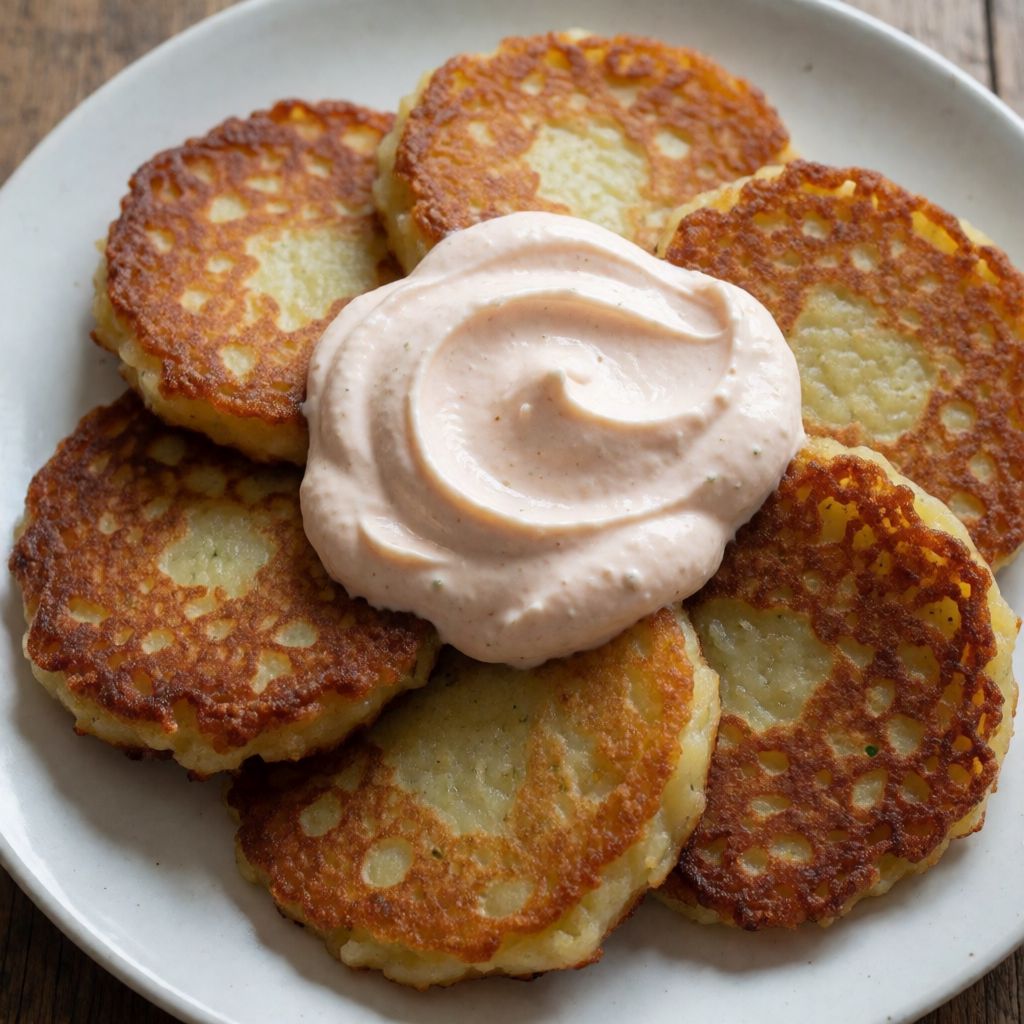
Potato Pancakes with Smoked Salmon Mousse
Soft potato pancakes topped with a creamy smoked salmon mousse, finished with chives, dill and a little roe.
Labels are worked out automatically from the ingredients and can be wrong. Check the packaging if it matters to you.
Ingredients
- 350 g Potato boiled until soft and cooled
- 150 g Crème fraîche 38%
- 2 pcs Eggs separated into whites and yolks
- 40 g Plain flour
- 1 pinch Baking powder
- Salt
- Black pepper freshly ground
- 1 tbsp Butter for frying
- 125 g Hot-smoked salmon
- 1 tbsp Mayonnaise
- 50 ml Crème fraîche 38%
- 50 ml Chives finely chopped
- 1 pcs Lemon juice and a little grated zest
- Salt
- Black pepper freshly ground
- 1 bunch Dill fresh
- 2 tbsp Fish roe (lumpfish or trout roe) optional








Steps
Mash the boiled, cooled potatoes and mix with the crème fraîche and egg yolks.
Mix the flour and baking powder with salt and pepper, add to the potato mixture and stir.
Whisk the egg whites to stiff peaks and gently fold into the batter.
Melt the butter in a large frying pan over medium heat.
Spoon the batter into 12 small portions, turn and fry until golden on both sides.
Mash the hot-smoked salmon, mayonnaise and crème fraîche with a fork until creamy.
Add the chives and season with lemon juice, zest, salt and pepper.
Serve the potato pancakes with the mousse, garnished with dill and roe.
This is a two-part dish pretending to be a snack: a potato pancake that's really a soufflé with ambitions, carrying a mousse that's really a spread with better manners. The whole thing hangs on one decision — do you fold the egg whites properly, or do you stir them in because you're in a hurry. Stir them in and you get a dense, slightly rubbery potato fritter, perfectly edible, nothing special. Fold them and you get something that holds a crust outside and stays soft and lifted inside, closer to a small savoury pancake than a hash brown.
Some say mashed potato pancakes are automatically heavy — no, because the weight comes from the potato-to-egg-white ratio, not from potato itself. Potato is mostly water and starch; it has no structure of its own once it's boiled and mashed. The whisked egg white is what gives it lift, the same way it gives lift to a mousse or a meringue. Skip that step, and you haven't made a worse version of the same thing — you've made a different thing.
The mousse is the easy half, and it's not really a mousse in the French sense — no gelatine, no whipped cream folded in for structure. It's hot-smoked salmon mashed smooth with fat (mayonnaise, crème fraîche) and sharpened with lemon. The "mousse" name is doing marketing work here; what you're actually making is a rich fish pâté, loose enough to spoon rather than spread. That's fine — call it what it is and you'll stop worrying about getting it light and airy, which isn't the point.
Start with the potato, because it's the one ingredient people get wrong before they've even opened the recipe. Boiled and mashed — but boiled whole, in its skin if you can manage it, and only peeled after. A peeled potato boiled in water takes on water, and that extra moisture is exactly what you don't want when you're trying to fold in delicate egg white and hold a batter together. Waxy potatoes are worse here too — they're wetter and don't break down into that dry, fluffy mash a baker's mix needs. Go for a floury variety — Maris Piper or King Edward, the ones that turn to powder when you fork them — and let it cool properly before you touch it. Warm potato will cook the egg yolk slightly when you mix them, and warm batter will deflate your whisked whites the second they meet it.
The eggs do two separate jobs and that's why they're separated. Yolks go in early, with the crème fraîche, for richness and a bit of binding — fat and emulsifiers. Whites go in last, whisked to stiff peaks, for air. Stiff peaks means the whisk comes out and the point stands up without flopping over — if it slumps, you've under-whisked, and the pancake will be heavy; over-whisk until it looks grainy and dry, and the structure collapses when you fold, same result, heavy pancake, different route there. Fold with a large spoon or spatula, cutting down through the middle and turning the bowl, not stirring in circles — stirring knocks the air straight back out, which defeats the entire point of separating the eggs in the first place.
Flour and baking powder are a small amount doing a structural job, not a flavour job — 40g flour to 350g potato is barely a coating. The baking powder gives a second, smaller lift alongside the egg white, insurance against a flat pancake if your whisking was a little shy. Don't double it hoping for extra fluff — too much and you get a chemical aftertaste and a pancake that rises too fast and collapses, same as an over-leavened cake.
Butter for frying, not oil — here butter isn't neutral, it's flavour, and it browns at a point well below smoking, which is exactly the colour you want on the surface of these: gold going toward amber, never past it into brown-black, because that's burnt butter solids talking, not the potato. Keep the heat low enough that you can watch that colour change happen slowly — a domestic hob's medium-low, the kind where the butter bubbles gently rather than spits. These are small pancakes with raw-ish batter inside; if the outside colours fast, the inside never catches up, and you serve something gold outside and gluey in the middle. Patience here isn't optional — it's the only thing standing between a cooked pancake and a browned one.
The salmon for the mousse is hot-smoked, not cold-smoked — meaning it's already cooked through, flaky, more like a cooked fillet than the slippery ribbons you get on a bagel. That's why you can mash it with a fork into the mayonnaise and crème fraîche rather than needing a food processor; cold-smoked salmon would turn stringy and unpleasant worked this way. If you only have cold-smoked, chop it fine first rather than mashing. Chives bring a grassy, oniony note without the bite of raw onion, which would fight the fish — if you've none, the green tops of a spring onion, very finely sliced, do the same job. Lemon juice and zest aren't garnish, they're the acid that keeps a mixture this rich from tasting flat and one-note on the tongue; taste as you add it, because lemons vary wildly in sharpness and a recipe can't account for the one sitting in your fruit bowl. Dill and roe on top are there for the same reason a Sunday roast gets a scattering of fresh herbs at the end — a point of brightness and texture against everything soft and rich underneath — leave the roe off without guilt if it's hard to find or not to your taste; it's decoration, not structure. Feeds four as a starter or light lunch, less if you're serving it as a single course after a big roast.