
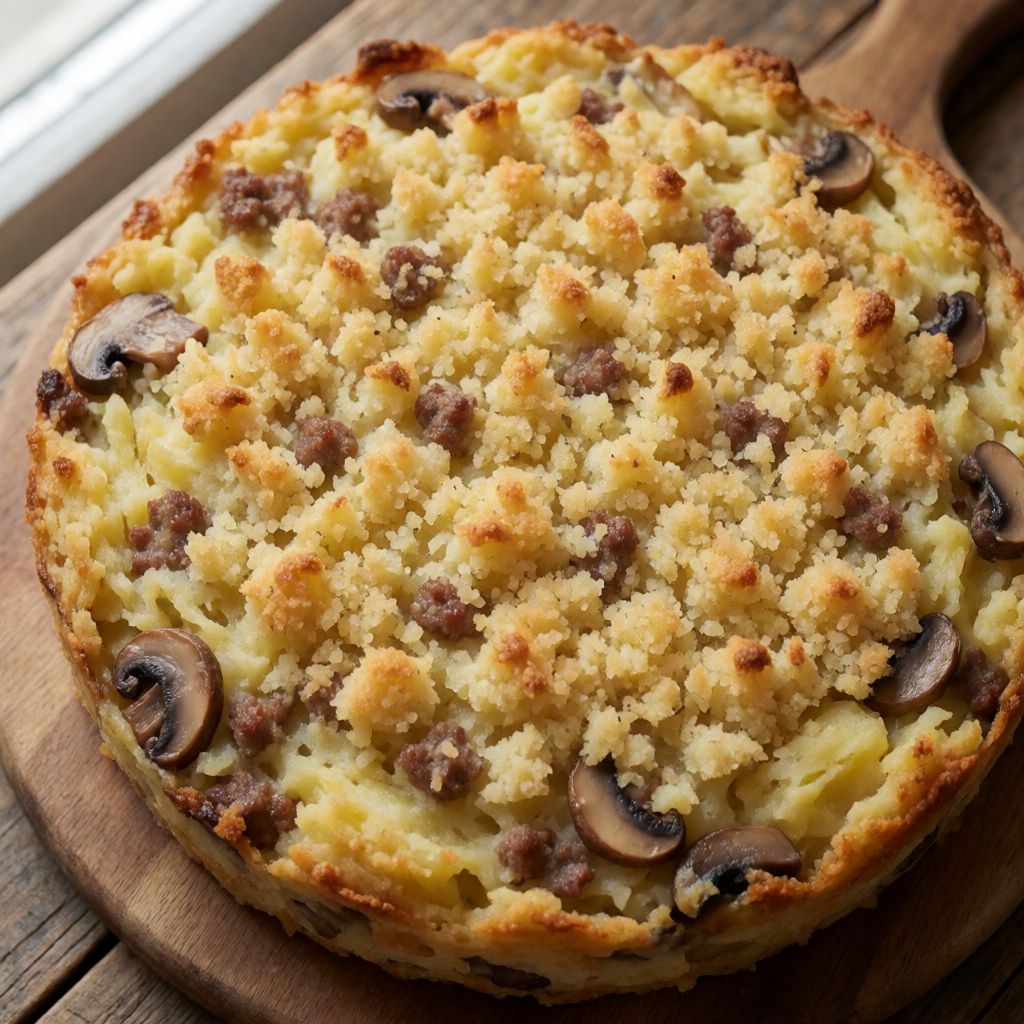
 AI photo
Crumbly Potato Pie with Mushrooms and Sausage
A crumbly baked potato pie filled with sausage and mushrooms, finished with a drop of olive oil.
Labels are worked out automatically from the ingredients and can be wrong. Check the packaging if it matters to you.
Ingredients






Steps
Peel the potatoes and boil them in salted water until tender; let them cool slightly.
Pour olive oil into a frying pan, add the sausage meat (skinned), breaking it up with a wooden spoon; add the mushrooms, thinly sliced.
Season with salt and pepper, mix well and cook for about 10 minutes until the filling reaches a safe internal temperature of 70°C.
10 minMash the boiled potatoes with a potato masher or fork; season with salt and pepper to taste; add the egg.
Add the Parmesan and mix well until smooth.
Line a 22cm springform tin with baking parchment and spread about two-thirds of the potato mixture over the base.
Press down firmly with a spatula and your hands, shaping an even base and a rim around the edge of the tin.
Spoon the sausage and mushroom filling over the base.
Cover the filling by scattering the remaining potato mixture on top.
Sprinkle with breadcrumbs and finish with a drizzle of olive oil.
Bake in a preheated fan oven at 180°C for about 30 minutes (or 35-40 minutes in a conventional oven).
30 minServe hot.
This is not really a pie in the English sense — there's no pastry doing the structural work. The potato is the pastry. You're mashing it stiff enough to press into a base and a rim with your own hands, and that's the whole trick: a mash that holds a wall needs less liquid and more starch-on-starch grip than the mash you'd put under a Sunday roast. If you make it too wet or too buttery, it won't stand up — it'll slump into the filling and you'll get potato-and-sausage rubble instead of a pie with sides.
What decides whether it works is moisture management at two points. First, the potatoes: boiled and drained properly, not sitting in water going soggy, because any extra water in that mash is water you can't press into a rim. Second, the filling: sausage meat and mushrooms thrown into a pan together will flood the base in their own juice if you don't let that juice cook off before it meets the potato wall. A soggy base isn't bad luck, it's unreduced liquid meeting starch that was never dry enough to resist it.
The breadcrumbs on top aren't decoration — they're there to catch the olive oil and brown, giving you a dry, faintly crisp lid over a filling that's inherently wet. Without them you just get oil pooling and a shine, no texture contrast. That contrast — crumbly top, firm-mashed sides, loose meaty middle — is the actual point of the dish, and it's why "pie" is the right word even without pastry: you're building something with structure, not just layering ingredients in a dish.
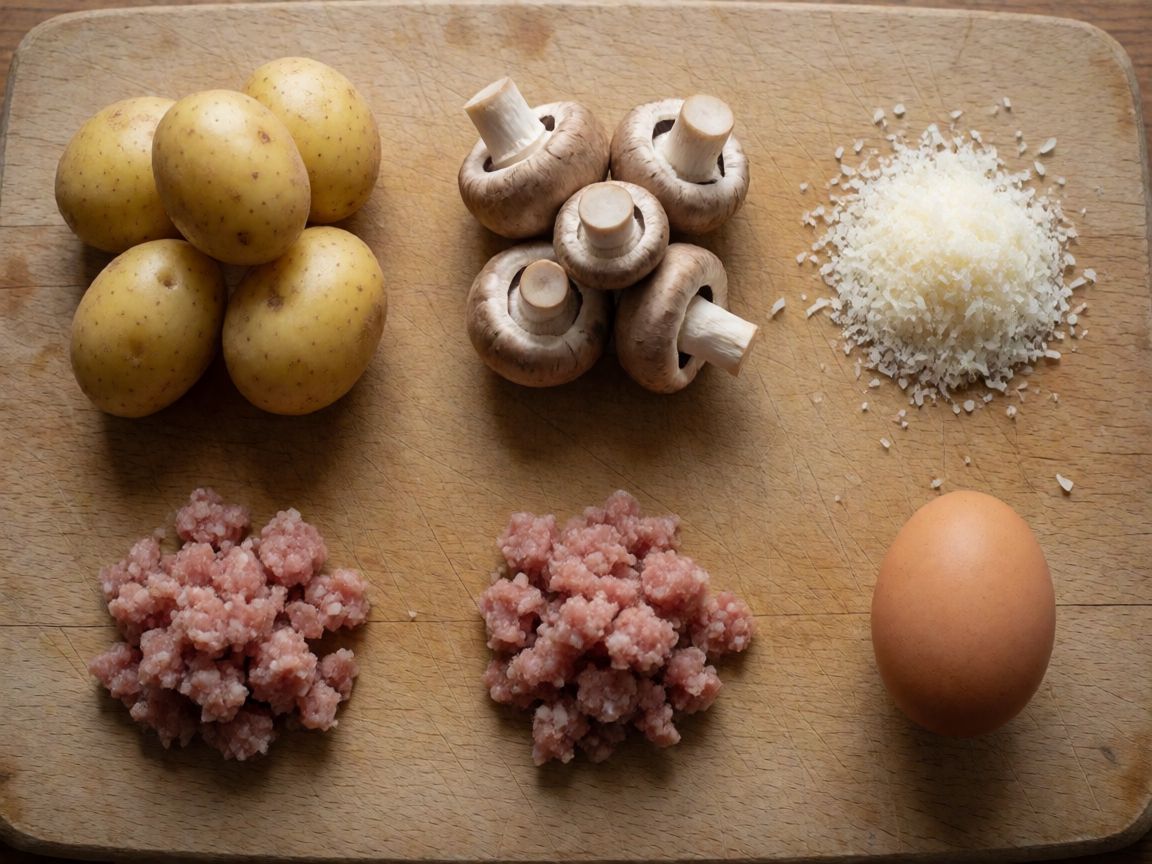
Potatoes: go for a floury, high-starch variety — Maris Piper or King Edward, the ones sold for roasting and mash, not the waxy salad ones. Starch is what gives the mash the grip to stand as a wall; a waxy potato (Charlotte, new potatoes) stays wet and slick no matter how long you drain it, and you'll end up with a base that weeps rather than holds. Boil them whole or in large chunks in well-salted water — salting the water, not just the mash, seasons the potato all the way through rather than just dusting the surface. Drain them properly and let them sit a minute or two in the dry pan over the turned-off heat; that's not fussiness, that's driving off the last of the clinging water before you mash, which is the difference between a mash that packs and a mash that oozes.
Sausage meat: the whole point of asking for sausage meat rather than whole sausages is skipping the casing — you want it loose, breakable with a wooden spoon, so it browns in small rough pieces rather than staying in two tidy cylinders. Any plain pork sausage with the skin squeezed off does this job; don't reach for a heavily herbed or very fatty banger, because excess fat here just means more liquid you then have to cook out before it meets the potato. If sausage meat isn't to hand, minced pork with a bit of fat and a pinch of fennel or sage gets you close.
Mushrooms: sliced thin so they cook through in the same ten minutes as the sausage and release their water into the pan rather than staying wet little cubes buried in the filling. Chestnut or button mushrooms are standard and fine — nothing exotic needed, their job here is bulk, earthiness and that released liquid which you're meant to cook away, not keep. If you're out of fresh ones, a handful of rehydrated dried mushrooms works, though their flavour is stronger and more concentrated, so use less.
Parmesan: goes into the mash for salt, savouriness and a bit of dry bite — not for stretch or melt, this isn't a cheese that goes gooey here. Any firm, well-aged hard cheese does the same thing; a mature Cheddar is the obvious British stand-in if Parmesan feels like an odd shop for a pie, though it'll push the flavour toward sharper and less nutty. The egg binds the mash the way egg binds any dense mixture that needs to hold shape once it cools and sets — skip it and the base is more fragile, easier to crack when you lift a slice.
On the oven: 180°C fan is a temperature chosen to firm and lightly brown the top without the thirty minutes drying the mash out before the filling's had time to settle — go hotter and you risk a cracked, over-browned crumb top sitting over a filling that hasn't quite married with the base. A conventional oven runs gentler at the same dial setting, which is why it wants the extra five to ten minutes — not a different result, just a slower route to the same one. Either way, the real test isn't the clock: look for a top that's gone from pale and raw-looking to a dry, faintly golden crumb, and filling you can hear gently bubbling at the tin's edge. That's done. The time given is just where to start checking.
One myth worth naming: some say a "pie" needs pastry or it's just a bake in a tin with a fancy name. No — the word describes the structure, something with a defined edge and a filling held inside walls, and mashed potato stiff enough to press into a rim does exactly that job. The Italians who'd recognise this (a torta di patate) never reached for pastry either; floury potato was cheaper, always in the larder, and did the holding on its own. That's not a shortcut, that's just a different load-bearing material.