
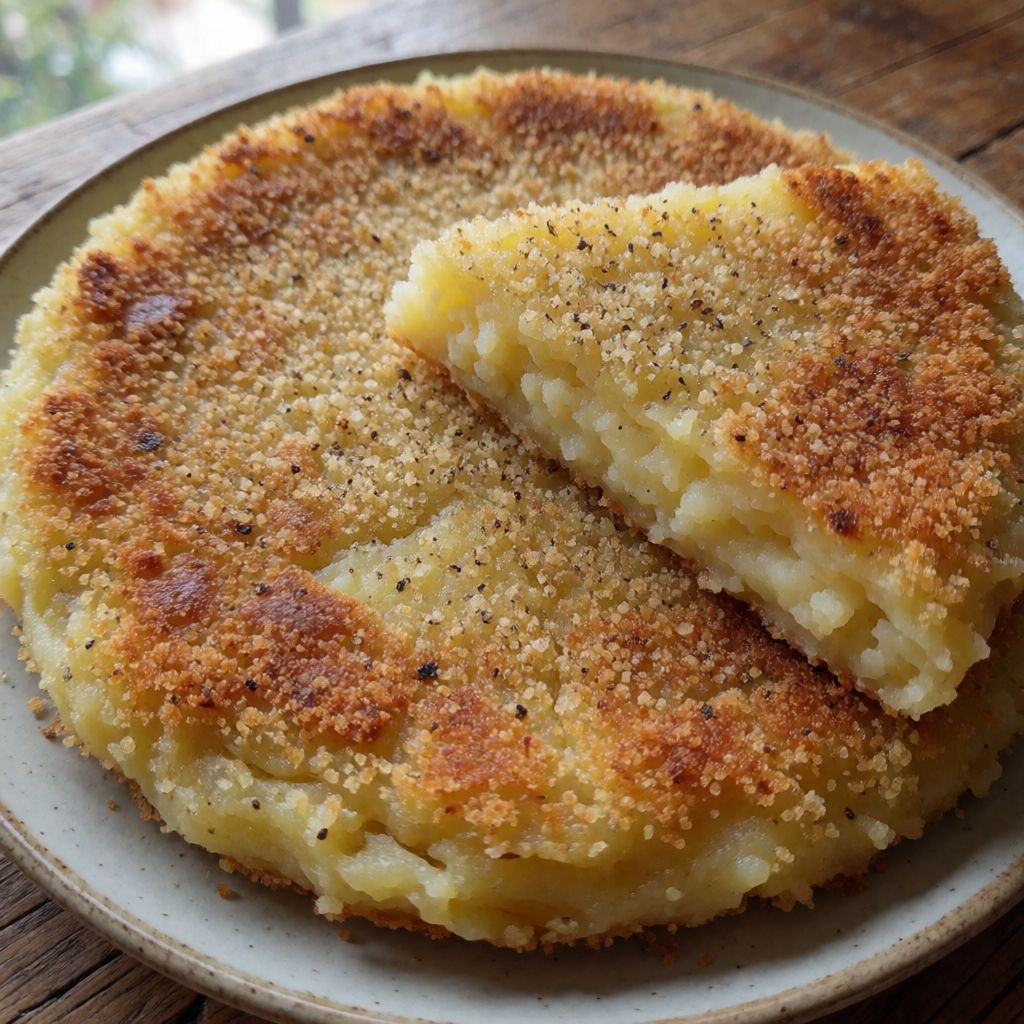
 AI photo
Potato Pitta, Lecce Style
A rustic baked potato pie layered with stewed onions, tomato and black olives, in the style of Lecce.
Labels are worked out automatically from the ingredients and can be wrong. Check the packaging if it matters to you.
Ingredients
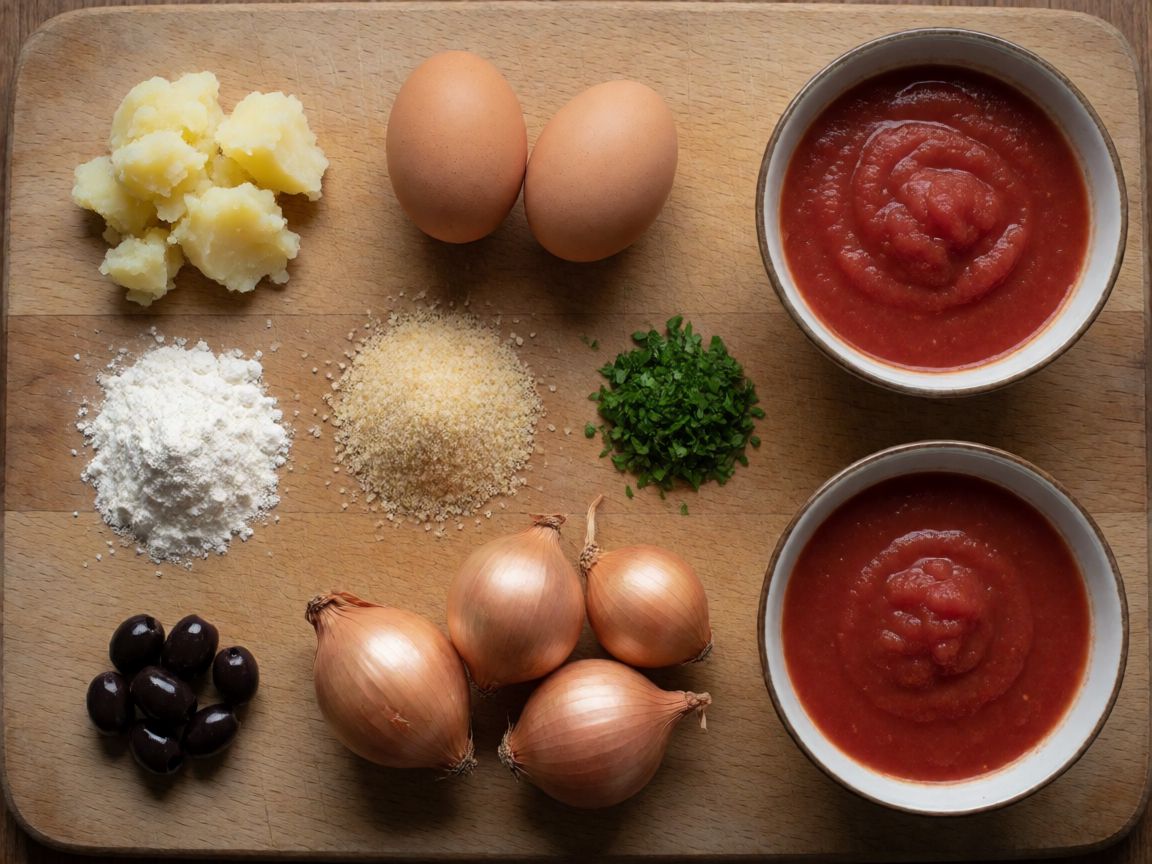
- 900 g Cooked potato
- 2 pcs Eggs
- 20 g Plain flour
- 10 g Breadcrumbs
- Salt to taste
- Black pepper to taste
- Parsley to taste
- 3 pcs Onion
- 200 g Tomato passata
- 80 g Black olives, pitted
- Olive oil to taste
- Breadcrumbs to taste










Steps
Slice the onion and place in a pan with a thin stream of olive oil and a pinch of salt. Cook gently for a few minutes, then add half a cup of water.
5 minContinue cooking, add the pitted black olives and cook until the onion is soft and creamy.
Mash the cooked potato in a large bowl. Add salt, black pepper, flour and breadcrumbs.
Add the parsley and eggs. Mix well until smooth.
Grease a 22-24 cm tin with olive oil, spread over half the potato mixture, forming a rim.
Add a layer of tomato passata.
Finish with a layer of the stewed onion and olives.
Cover the filling with the remaining potato mixture, smoothing the surface evenly.
Decorate the surface of the pitta with fork marks, sprinkle with breadcrumbs and drizzle with olive oil.
Bake the pitta at 195°C in a fan oven.
30 minLet the pitta rest before serving.
30 min
Pitta here has nothing to do with bread. In Lecce, "pitta" is a pie built in a tin — a potato case holding a stewed onion-and-olive filling, closed up and baked until the top takes colour. Think of it as a savoury shepherd's pie that swapped mince for Puglian sweetness: slow onion, black olives, a whisper of tomato. It sits in that family of Southern Italian "poor" dishes built to stretch leftover boiled potato into something that looks deliberate.
What decides whether it works is the mash, not the oven. If the potato mixture is wet, the case slumps, the tomato seeps through, and you get a flat, sad disc instead of a pie with a rim. Cooked potato must be properly dry — mashed while still warm, not drowned in butter or cream — because the egg and the 20g of flour are there to bind it into something you can shape with your hands, not something you pour. The bowl should feel like firm mash you could roll into a ball, not porridge.
The second hinge is the onion. "Soft and creamy" is doing real work in that recipe — it means the onion has gone past translucent, past gold, into a jammy, almost spreadable state where the water you added has cooked itself away and the olives have had time to give up their brine into the mix. Rush this and you get crunchy onion shards inside a smooth potato case, which is not a texture clash anyone enjoys. Patience here is not optional — it's the filling.
On ingredients: the potato must already be cooked and cooled a little before mashing — boiled, not roasted, because roast potato carries too much surface starch gone the wrong way and won't bind evenly. Waxy or floury both work; floury (like a Maris Piper, easy to find in any UK shop) gives you a softer case, waxy a firmer one that holds its rim better in a loose domestic tin. If your mash still has lumps, don't add more egg to compensate — push it through a sieve or ricer instead, because extra egg just makes the case eggy and rubbery rather than creamy.
The 20g flour and 10g breadcrumbs in the mash are not there for flavour — they're there to soak up whatever moisture the potato still holds, the same logic as a roux. If your mash feels wet after mixing, add breadcrumbs a spoonful at a time rather than more flour, since flour raw-tastes if you overdo it and breadcrumbs don't.
Onion: three onions cooked down to almost nothing is the point — you're not making a fresh onion dish, you're making an onion preserve. Any onion works, but a sweeter one (your standard British brown onion is fine) needs less time than a sharp one to reach that jammy state. The half-cup of water isn't padding — it's what stops the onion catching and turning bitter before it's had time to soften, a trick worth knowing for any slow onion anywhere.
Olives: pitted black olives, the ordinary tinned or jarred kind, not anything brined aggressively or stuffed — their job is salty depth against the sweetness of the onion and the acidity of the passata, not to announce themselves. If you've only got green olives, use them, but taste and pull back the added salt, since green ones are usually sharper.
Tomato passata is there as a thin, acidic layer between two sweet elements (potato and onion) — it's not a sauce you'd eat on its own, so don't reduce it first or thicken it. If you don't have passata, blitz a tin of plain tomatoes and use that; a shop ketchup or anything sugared will throw the balance.
On the tin: a 22-24cm cake tin or a deep pie dish from your Sunday roast cupboard does the job — nothing specialist needed. "195°C fan" means you're after an even dry heat that colours the top and sets the egg through without drying the inside out before the middle's hot; if your oven runs hot or has no fan, drop it 10-15°C and watch the surface rather than the clock — you want it gone from pale to golden-brown at the fork marks, with the smell of eggs no longer "raw" when it reaches you. The 30-minute rest afterwards is not laziness — a pie that's cut hot falls apart because the egg hasn't finished firming; let it sit and it slices clean, the same reason you let a roast rest before carving.