
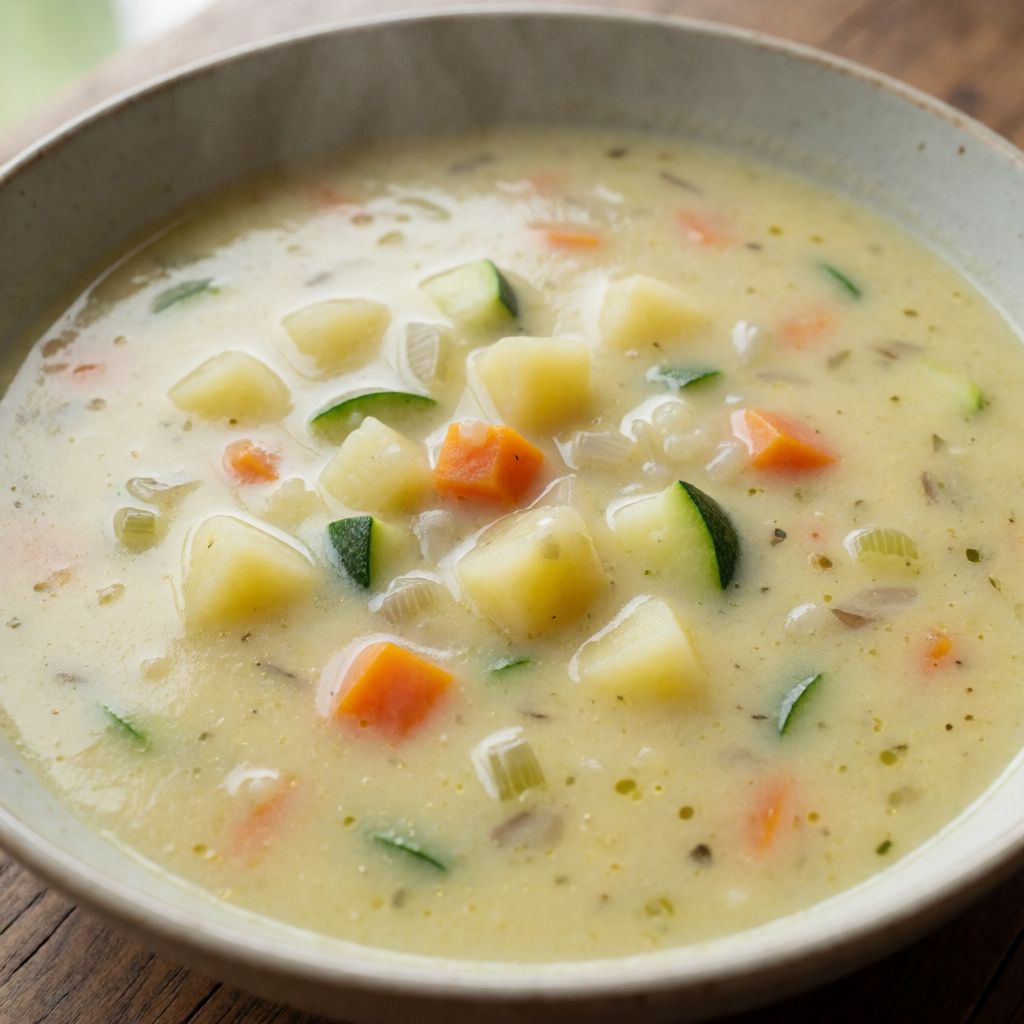
 AI photo
Potato Soup
A creamy potato soup with courgette, carrot and celery, finished with cream and fresh radish and parsley.
Labels are worked out automatically from the ingredients and can be wrong. Check the packaging if it matters to you.
Ingredients
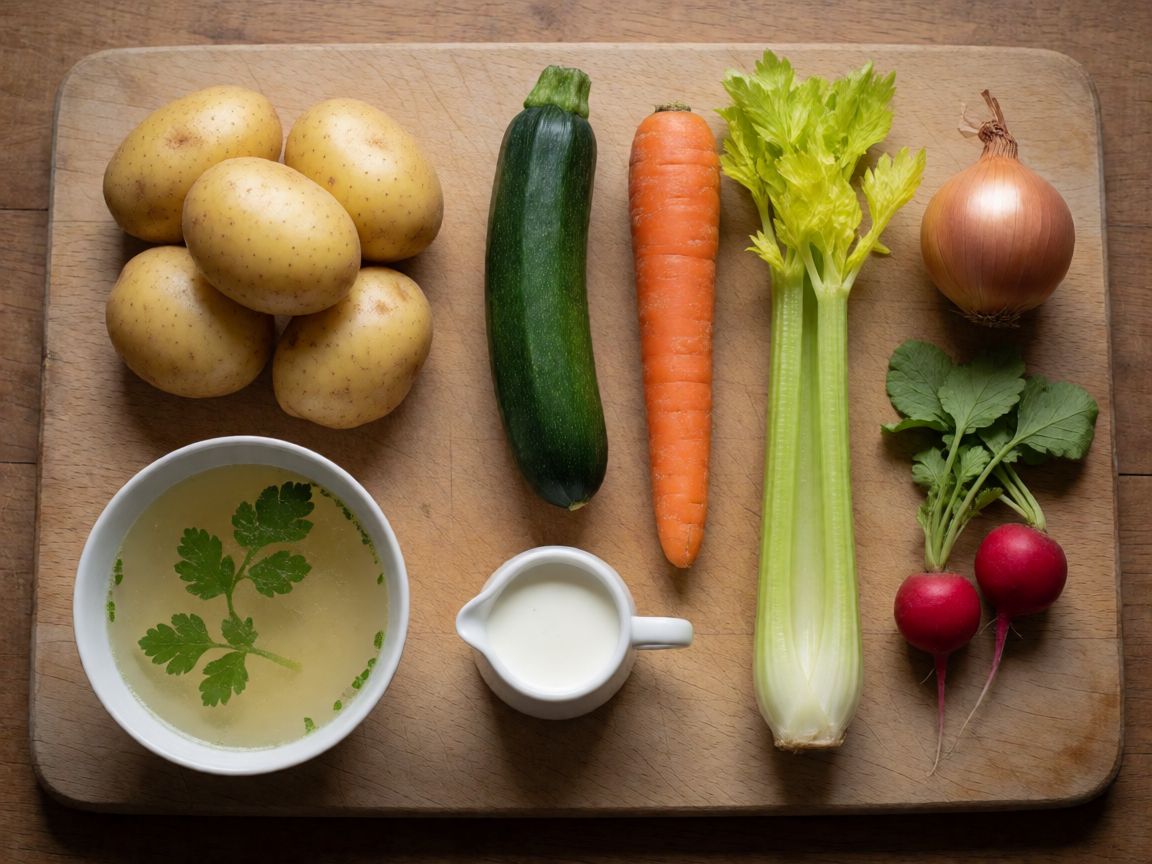
- 600 g Potato
- 30 g Vegetable oil
- 1 pcs Courgette
- 1 pcs Carrot
- 1 pcs Onion
- 1 pcs Celery stalk
- 1.2 l Vegetable stock
- 150 ml Cream optional
- 2 pcs Radish
- 1 pcs Parsley
- Salt to taste
- Black pepper to taste
- 1 pinch Nutmeg













Steps
Peel the carrot, onion and celery, cut into small cubes and fry in the oil.
Peel the potato, cut into pieces and add to the vegetables in the pan. Season with salt and pepper, and add half the stock.
Cover with a lid and cook.
15 minWash the courgette, trim the ends, cut into pieces and add to the pan.
Pour in the remaining vegetable stock and cook.
12 minAdd the cream (optional) and blend with a stick blender until smooth.
Cut the radish into strips, chop the parsley, add to the soup and stir.
Garnish with parsley leaves and serve immediately.
This is a veloute, not a soup in the brothy sense — potato for body, a trio of carrot-onion-celery for the base note, courgette thrown in late to keep its colour, and the blender doing the work that a sieve used to do before every kitchen had one. What decides whether it works is almost entirely about starch and heat, not seasoning.
The onion-carrot-celery fry first, in oil, before any liquid goes in. That's not decoration, it's chemistry: sugars in the onion need direct contact with a hot surface to brown and build flavour, and once stock is in the pan everything drops to simmer temperature and that door closes. Some say you can just boil everything together to save a pan — no, because then you get a soup that tastes of boiled vegetable water, not of anything.
The potato goes in with only half the stock, lid on. This is the bit people rush. Potato releases starch as it softens, and that starch is what will make the soup creamy without flour or much cream at all — but only if the potato actually cooks through, not just softens at the edges. A fork should go in without resistance; if it meets any resistance at the centre, it's not done, whatever the clock says.
Courgette comes in twelve minutes later, not with the potato. Put it in at the start and by the time the potato's ready, the courgette is grey mush with no flavour of its own left — it cooks fast, it has almost no structure once heated, and its whole contribution is a light vegetal top note that dies if boiled too long.
The blender at the end is doing what your grandmother's sieve or ricer did by hand: breaking the cooked potato's cell walls so its starch spreads through the liquid instead of sitting in lumps. A stick blender straight in the pan is fine — no need to dirty a jug blender — but let it cool a touch first if yours isn't rated for hot liquid, and go slow near the bottom so you don't splash boiling soup up the shaft onto your hand.
Potato: use a starchy or all-rounder type — Maris Piper, King Edward, the ones sold for mash and roasting, not waxy salad potatoes. Starchy potato breaks down and thickens; waxy potato holds its shape and leaves you with a thin soup full of little cubes, which isn't the dish. 600g is roughly four medium potatoes — don't eyeball it much smaller or the cream has to do all the thickening work alone.
Oil: anything with no smell of its own, so the onion and carrot taste of themselves rather than of the fat — sunflower or a mild rapeseed oil both do this. Olive oil isn't wrong, but a fruity one will sit underneath the vegetable flavour and you'll taste it in the finished soup, which some people like and some don't.
Carrot, onion, celery: this is the same base that underlies French mirepoix and Italian soffritto, cut small here because small pieces soften before the potato is even close to done — if you cut them the size of the potato, you'll be blending raw celery, which stays stringy and fibrous even cooked, into otherwise smooth soup.
Vegetable stock: 1.2 litres for 600g potato is a working ratio — if you want it thinner, add hot water at the blending stage rather than more stock, so you're not diluting flavour along with texture. Good stock cube or carton is entirely fine; stock paste tends to be saltier, so go easy on the salt you add separately.
Cream is marked optional for a reason — the potato starch already gives body, so cream here is for richness and a paler colour, not for thickening. If you skip it, taste again before serving: without the fat, the soup can taste flatter and need a touch more salt and pepper to feel finished. Nutmeg in small amount — a pinch really is a pinch, it goes savoury-sweet strange fast if you're generous.
Radish and parsley go in raw, right at the end, after blending — they're the one cold, crisp, sharp thing in a pan of soft hot vegetable, and that contrast is the whole point of them. If you stir them in early and let them sit in the hot soup, the radish goes limp and loses its bite, and you've lost the only texture in the bowl.