
 AI photo
Prunes and Apricots in Port Wine
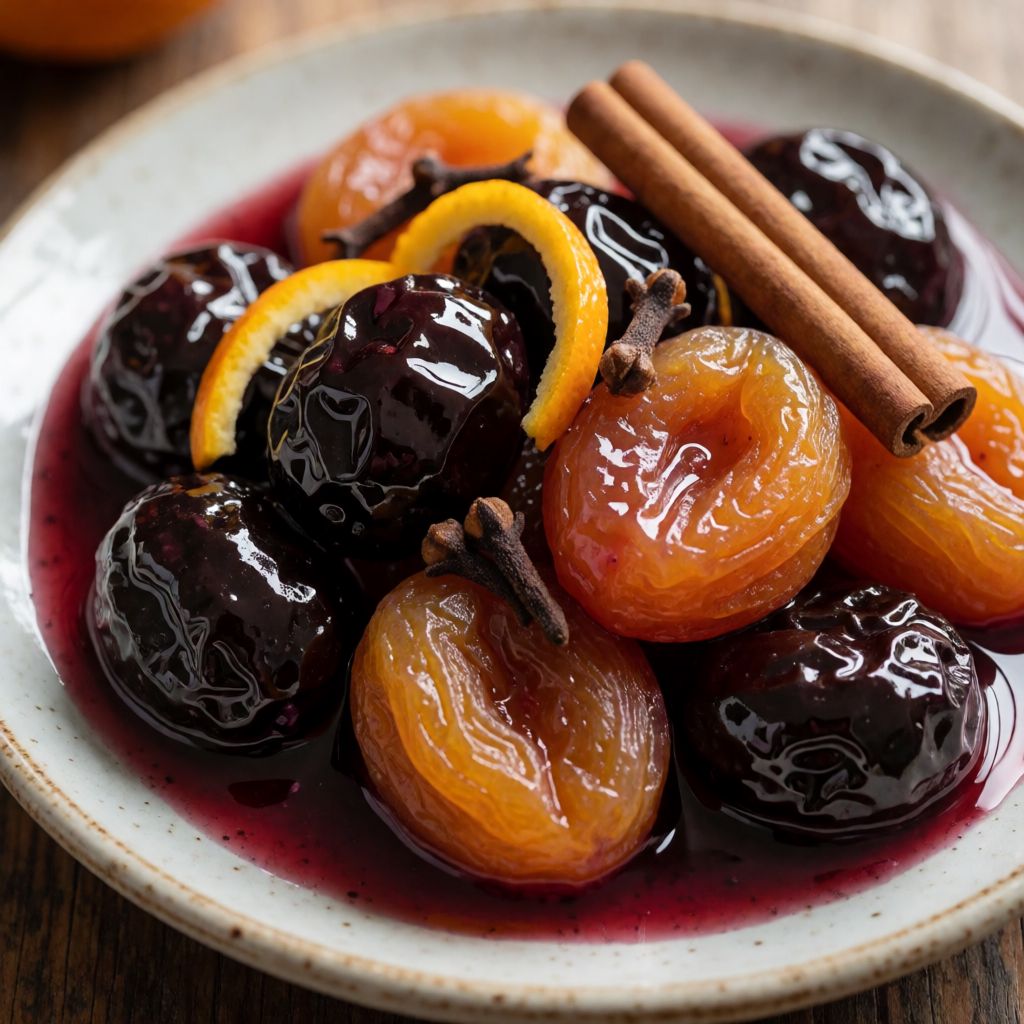
Dried prunes and apricots gently simmered with orange, spices and golden syrup, then left to steep in port wine.
Labels are worked out automatically from the ingredients and can be wrong. Check the packaging if it matters to you.
Ingredients
- 150 g Prunes
- 150 g Dried apricots
- 1 pcs Orange zest and juice
- 2 tbsp Golden syrup
- 1 pcs Cinnamon stick
- 2 pcs Cloves
- 100 ml Port wine







Steps
Put the prunes, apricots, orange juice, orange zest, golden syrup, cinnamon stick and cloves into a saucepan.
Slowly bring to the boil, then cover and simmer gently for 15 minutes.
15 minRemove the pan from the heat and pour the prunes, apricots and liquid into a clean, scalded jar.
Pour over the port wine and leave to infuse for at least 1 day.
This is not fruit that gets cooked — it's fruit that gets rescued. Prunes and apricots went dry on purpose, to survive the year without a fridge. What you're doing in that saucepan is giving the water back, dressed in orange, spice and sugar, so the fruit plumps up fat and glossy again. What decides whether it works isn't the 15 minutes on the hob — it's the day (or three) the jar sits afterward, letting the port actually get into the fruit instead of just sitting next to it.
Some say you need to boil dried fruit a good while to "cook" it properly. No — because it's already cooked, in the sense that matters: it's soft, sweet, shelf-stable, done. What you need from heat here is for the syrup to find its way into the fruit's cells, which is a slow soak job, not a long boil job. Bring it to the boil slowly — meaning: don't dump it on full heat and walk off, because the syrup is sugar-thick with golden syrup and orange juice, and sugar at the bottom of a pan on high heat catches and burns before you've even smelled it. Once you see a gentle, lazy bubble, not a rolling boil, put the lid on and let it sit there quietly for its 15 minutes, which is a floor, not a target — you're watching for the fruit going from stiff and leathery to soft and swollen, not counting seconds.
Prunes and apricots: buy them plump and a bit tacky to the touch, not dusty and stiff — stiff means old stock that's lost moisture it'll be slow to win back. Apricots that are a bright, almost traffic-cone orange have usually been treated with sulphur dioxide to stop them browning and to preserve that colour; the darker, brown-ish ones haven't been, and they taste a shade more honeyed, a shade less sharp. Either works here — the syrup covers for a lot. If you only have one of the two fruits, use more of it; the dish doesn't collapse without the pairing, it just reads a bit more one-note.
Orange, zest and juice: the juice is sugar and acid working against each other, which is what stops this tasting flat and jammy — all dried fruit wants is acid to answer its sweetness. The zest carries the orange oils, which is a different flavour entirely from the juice, more perfume than tang, and it fades fast once scraped, so zest it right before it goes in the pan, not the night before. No orange — a lemon's zest and juice will do the acid job, though you lose the specifically orange warmth; add a spoon more sugar if you go that route, lemon's sharper.
Golden syrup is a British kitchen staple for a reason that's purely practical: it's an invert sugar syrup, meaning it pours and dissolves without crystallising the way plain sugar can in a cold, long-sitting jar. It brings a faint caramel note without the bitterness of actually caramelising sugar yourself. If you've none, honey is the obvious stand-in, but honey has its own flavour, so it'll nudge the dish toward itself; a light treacle-cut sugar syrup is more neutral if you want golden syrup's job done without golden syrup's personality.
Cinnamon stick and cloves, whole, not ground — this matters more than it looks. Whole spices give up their oils slowly, over the simmer and then over the day of sitting in the jar, so the flavour builds gently. Ground cinnamon or cloves would dump everything at once and, worse, sit as grit at the bottom of your jar going increasingly bitter and medicinal the longer it steeps — which is exactly the defect whole spice avoids. Two cloves is already enough to turn the whole jar toward a dentist's waiting room if you forget and leave them in for weeks; fish them out with the cinnamon stick once you're happy with the flavour, rather than trusting them to behave forever.
Port: a ruby port is the standard choice here, fruity and straightforward; a tawny will bring a nuttier, more sherry-like note, which isn't wrong, just different. The reason port specifically, and not any random red wine, is mostly history and economics — centuries of trade treaties made port the cheap, reliably available fortified wine in British kitchens, sweet enough that it needs no extra sugar to work as a dessert liquid, and alcoholic enough to help the jar keep a few days longer than fruit juice alone would. If you've no port, any dark, sweetish fortified wine does the job — Marsala, sweet sherry — the criterion is sweet, dark, and alcoholic, not specifically Portuguese.
On the jar: scald it, meaning rinse it with freshly boiled water and let it air-dry, don't towel it. This isn't about sterilising for eternity — it's a dessert you'll finish within a week or two from the fridge — it's about not introducing mould spores into a sugar-wine syrup that's otherwise a very comfortable home for them. A clean jar from the dishwasher's hot cycle does the same job; you don't need any special kit standing between you and this.