
 AI photo
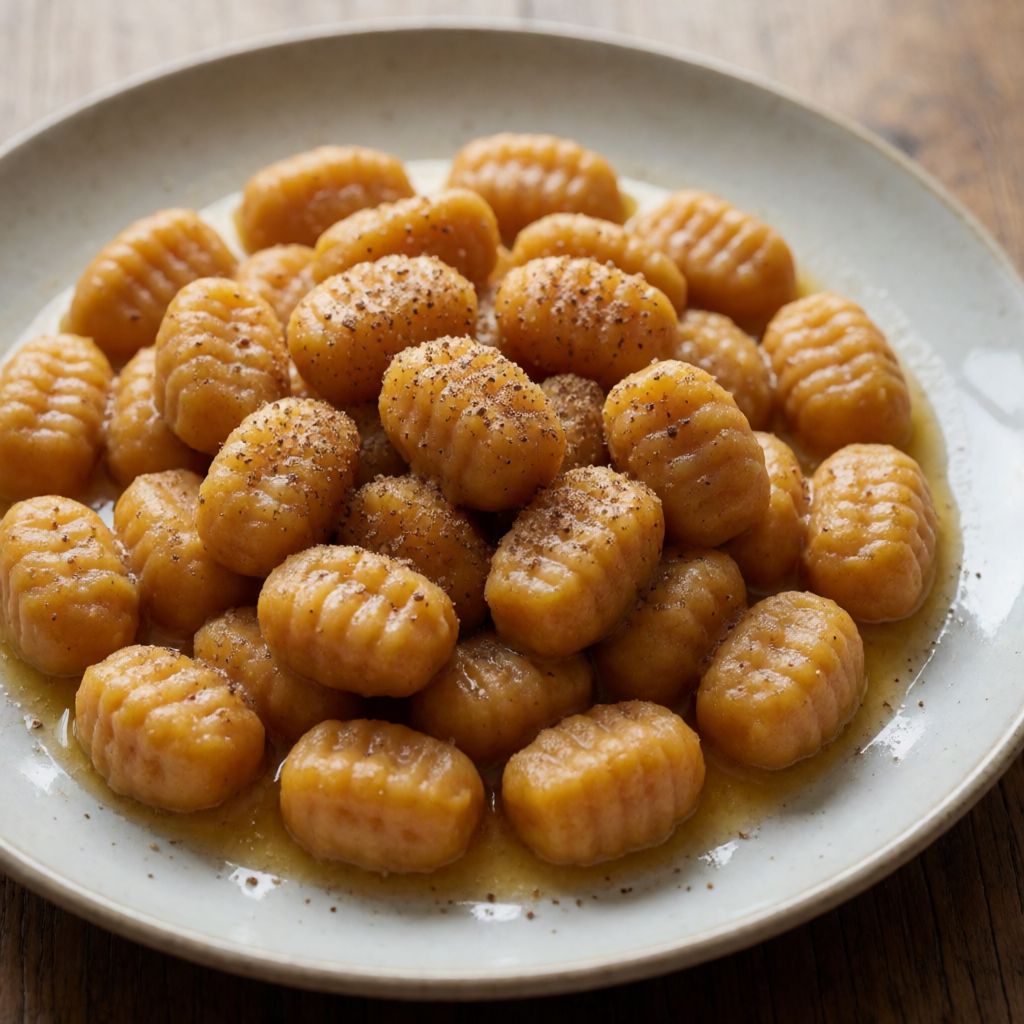
Pumpkin Gnocchi without Eggs
Soft egg-free gnocchi made with pumpkin and potato, tossed in sage butter and parmesan.
Labels are worked out automatically from the ingredients and can be wrong. Check the packaging if it matters to you.
Ingredients
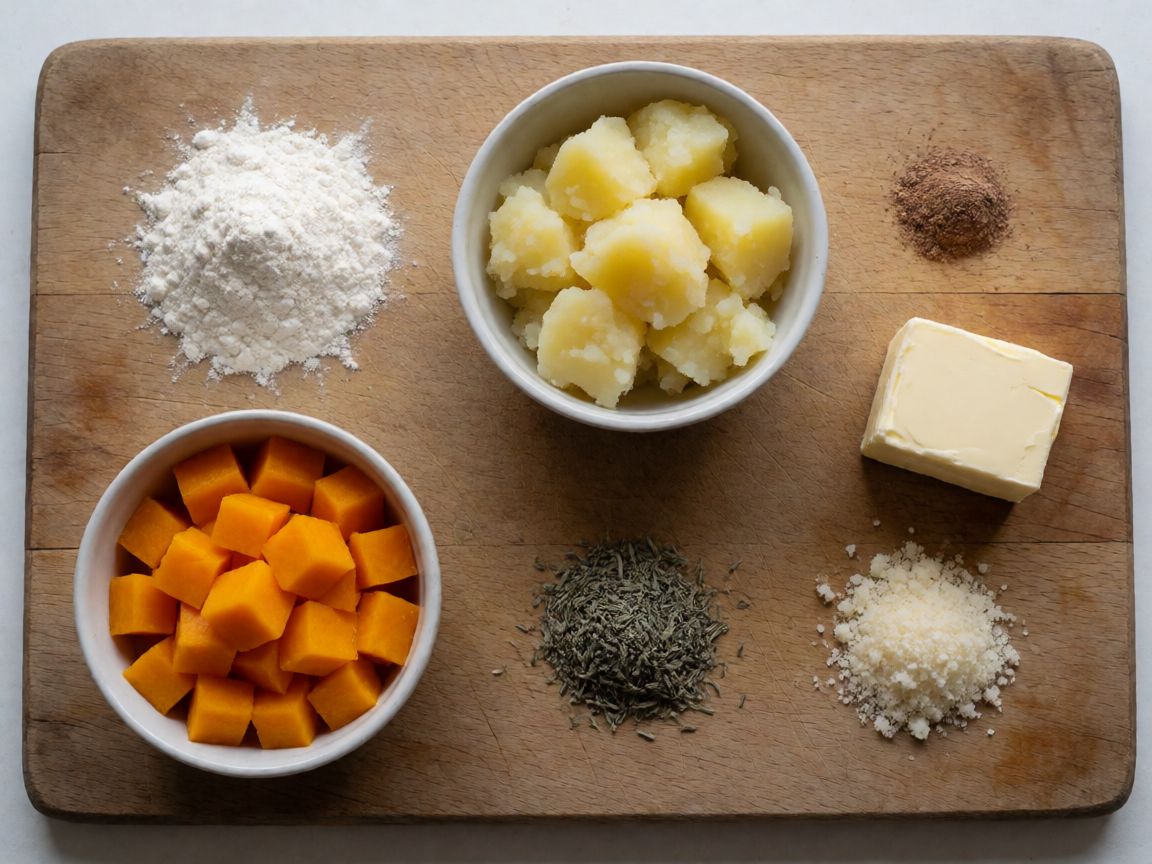
- 150 g Plain flour
- 250 g Boiled potatoes cooked
- 300 g Pumpkin
- Salt to taste
- Nutmeg to taste
- 60 g Butter
- Sage to taste
- Parmesan to taste






Steps
Peel the pumpkin, cut the flesh into large chunks, remove the seeds. Roast on a tray in the oven at 180°C for 20 minutes.
20 minBoil the potatoes unpeeled in salted water, drain, cool, then peel.
Pass the potatoes through a potato ricer. Mash the pumpkin flesh. Let both cool.
On a work surface, mound the sifted flour with a well in the centre, add the potato and pumpkin. Season with salt and nutmeg.
Knead the dough by hand until all the ingredients come together into a smooth, soft mass.
Tear off small pieces of dough, roll into thin ropes and cut into small pieces.
Dust the work surface and the gnocchi well with flour so they don't stick together.
Bring a large pot of salted water to the boil.
In a pan, melt two-thirds of the butter, add the washed sage and a ladle of water. Turn off the heat and add the remaining butter.
Once the water boils, salt it. Cook the gnocchi in small batches. Once they float to the surface, they are ready — drain and transfer to the sauce.
Add a ladle of the gnocchi cooking water and stir for a few seconds. Plate up.
If you like, sprinkle with grated parmesan and serve.
Gnocchi without egg works on starch and patience, not on a binder. Potato and pumpkin are both mostly water locked into starch granules — roast the pumpkin and rice the potato dry enough, and the flour has just enough to grip onto. Too wet, and no amount of flour will save you except by making the dumpling taste of raw flour and go heavy in the pot.
What decides this dish isn't the quantity of flour on the label — 150 g is a target, not a law. It's the state of the potato and pumpkin before flour ever touches them. If you boil the potato with the skin on, the flesh behind that skin stays drier than if you peeled first and let water seep into every cut edge. Roasting the pumpkin rather than boiling it does the same job from the other direction: it drives moisture off instead of adding more. Skip either precaution and you'll be adding extra flour to compensate, and extra flour is what turns a gnocco from a cloud into a pebble.
Some say gnocchi need egg to "hold together." No — egg is a shortcut for wet, careless mash; it binds moisture you shouldn't have left in there to begin with. Leave it out and you have to earn the binding by control of water instead, which is exactly what steps 2 and 3 are doing when they tell you to cool everything before mixing: warm mash releases more steam into the dough as you knead, and steam is water you can't see leaving but will feel later as a sticky mess.
Flour here is structure, nothing more — it's the net the starch and moisture get caught in. Use a plain flour with decent gluten but don't be precious about it; "plain flour" in a UK kitchen is already the right thing, no need to hunt for Italian 00. What matters more than the type is how much of it you actually need, which depends on how dry your potato and pumpkin turned out. Treat 150 g as a starting point you add to gradually, not a fixed dose you tip in at once.
The potato should be a potato that holds its shape when boiled, the kind that doesn't collapse into mush and water in the pan — a floury variety, Maris Piper or King Edward, works because it has enough starch to rice cleanly into dry crumbs rather than wet paste. Boiling it unpeeled matters for the reason above: the skin is a barrier against the cooking water, so the flesh you eventually rice is drier than if you'd peeled and exposed cut surfaces to boil in liquid. A potato ricer isn't optional kit here — a fork-mash leaves lumps and air pockets of raw potato that won't absorb flour evenly, so if you don't have a ricer, pass it through a sieve instead; don't just mash and hope.
Pumpkin is roasted rather than boiled for exactly the same water-logic. Boiling adds moisture to a vegetable that's already mostly water; roasting at 180°C drives moisture out as steam while the sugars at the cut edges start to caramelise, which is also where the flavour comes from — not from the pumpkin itself, which left raw is fairly bland. If pumpkin's out of season or you can't find a good one, butternut squash does the identical job, same starch, same roast.
Nutmeg earns its place by cutting through the sweetness of the pumpkin the way it does in béchamel or spinach dishes — a background note, not a flavour you should taste outright. Salt goes into the dough itself because gnocchi, unlike pasta cooked in heavily salted water, don't have long enough contact with that water to season from outside; the salt has to be in the dumpling, not just around it.
The sauce is deliberately minimal: butter and sage, with a ladle of starchy cooking water stirred in at the end. That water is not an afterthought — it's an emulsifier, carrying dissolved starch that lets the melted butter cling to the gnocchi instead of pooling separately in the plate. This is the same trick you'd use finishing any pasta sauce with cooking liquid, and it's worth remembering here because without it the butter just sits there looking rich and does nothing. Butter should be real butter, nothing flavoured; sage needs no substitute really, but if you've none, a few bay leaves warmed gently in the butter will give you aromatic fat without pretending to be sage.
On a domestic hob you won't get the wide, fast-evaporating surface of a kazan or a professional flat-top, so don't crowd the pot — cook the gnocchi in small batches as the recipe says, because a pan overloaded with dumplings cools the water, delays the float, and you end up with gnocchi sitting in tepid water going gluey at the edges rather than cooking through quickly. A domestic ring can struggle to keep a full boil once you drop in a dozen dumplings; better to wait the extra minute between batches than to lose the boil entirely.
Patience shows up twice and both times it's the same lesson: let the potato and pumpkin cool before you knead, because warm mash is wetter mash in disguise, and don't rush the float test by fishing gnocchi out early because they look "probably done" — the surface tells you the centre has actually set, and guessing by eye alone before that point gets you a raw core under a cooked skin.