
 AI photo
Sweet Pumpkin Pancakes
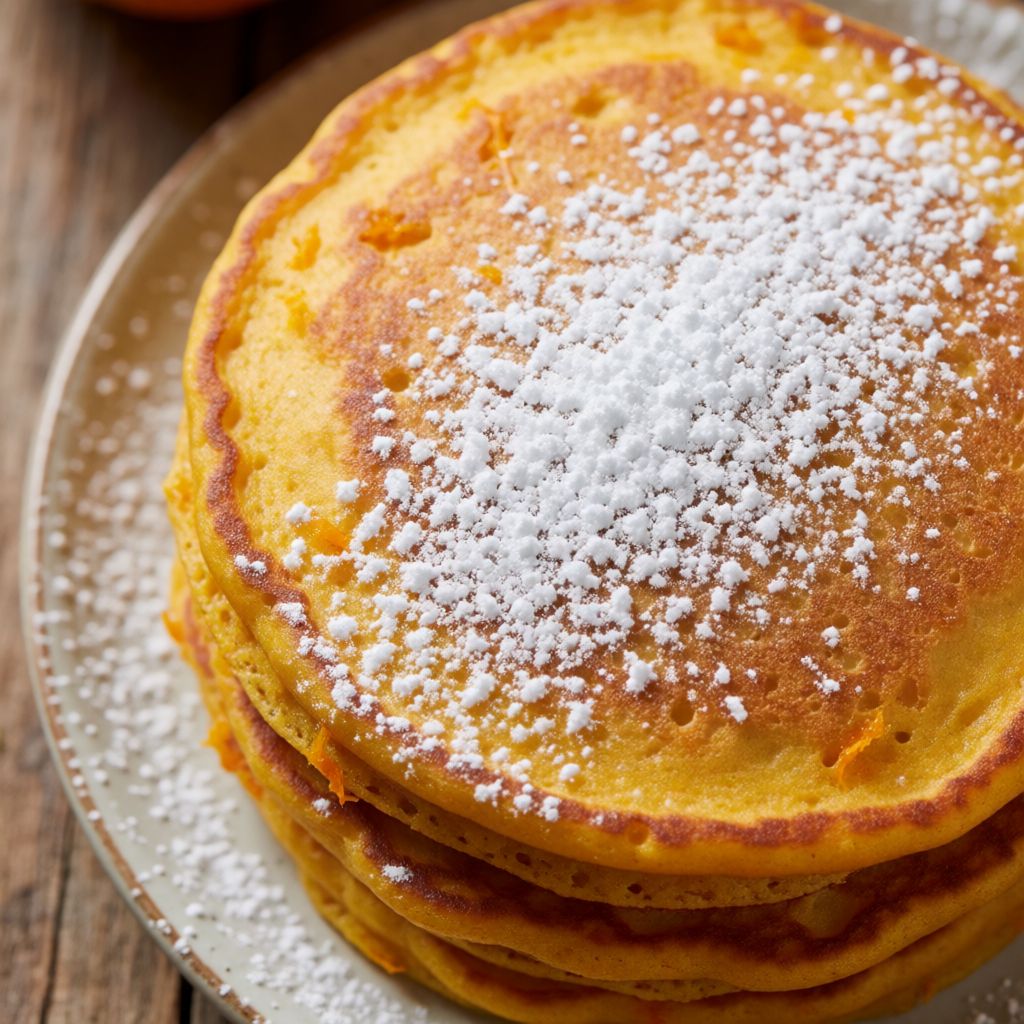
Soft, golden pumpkin pancakes with a hint of orange zest, lightly dusted with icing sugar.
Labels are worked out automatically from the ingredients and can be wrong. Check the packaging if it matters to you.
Ingredients
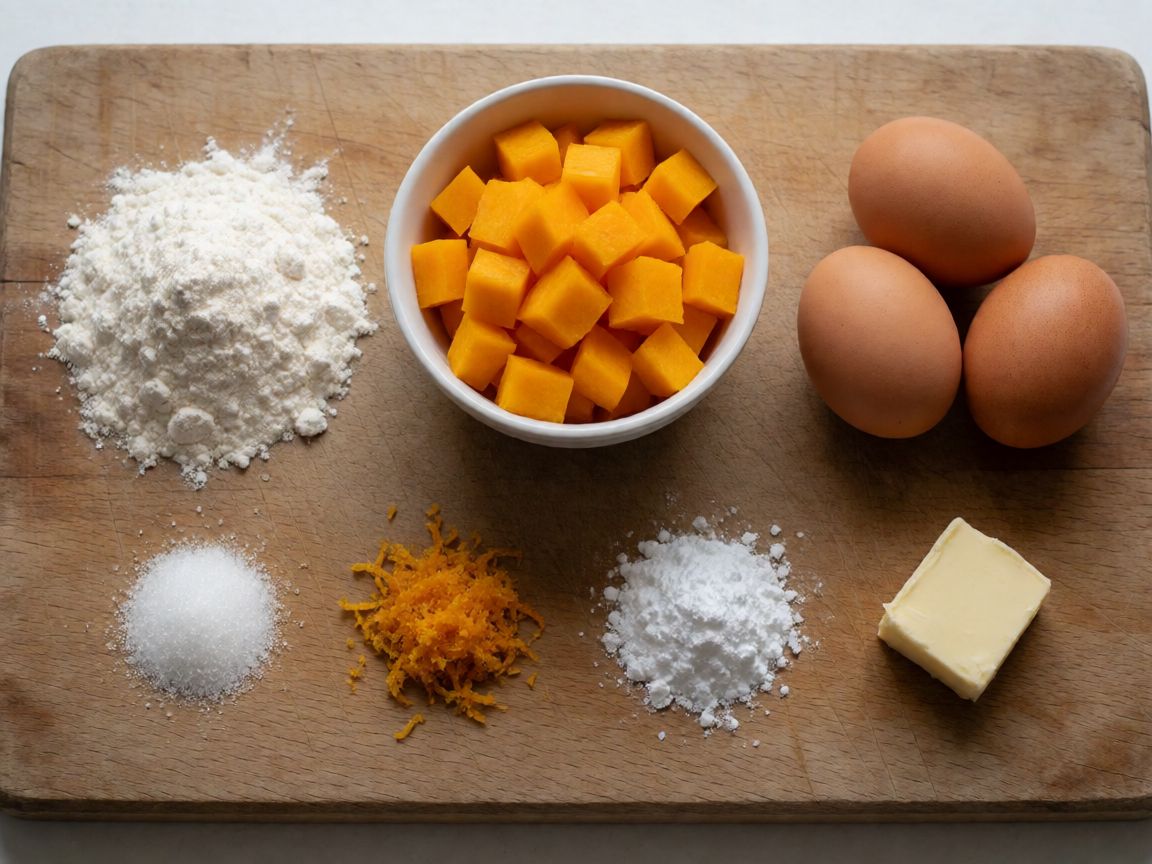
- 250 g Plain flour
- 150 g Pumpkin
- 3 pcs Eggs
- 50 g Sugar
- 2 pcs Orange zest zest of 2 oranges
- Icing sugar to taste, for dusting
- Butter to taste, for frying
- 1 pinch Salt to taste







Steps
Peel and deseed the pumpkin, cut into slices, and boil in salted water until soft.
Drain, mash with a fork and leave to cool in a bowl.
In another bowl, whisk the eggs with the sugar and orange zest.
Add the flour and pumpkin purée, and mix until smooth.
Shape into small balls, flatten slightly in your palm and fry in a pan with butter until golden.
Serve the pancakes warm or cold, dusted with icing sugar.
Forget the picture the name conjures - a stack of thin discs drowned in syrup. This isn't that kind of pancake. The dough here is dry enough to roll in your palm like a small ball, flattened slightly, and fried in butter. It's closer to a fritter than to anything you'd call a pancake at breakfast. Some say pancake means batter poured into a pan - no, not always: in a lot of European kitchens "pancake" just means something fried flat, whatever shape got it there.
What decides whether these hold together or fall apart in the pan is moisture - specifically, how much water is still sitting in the pumpkin mash when you add it to the eggs. Boil the pumpkin until it's soft enough that a fork goes through without a fight, drain it properly, and let it cool before it meets the eggs. Skip the cooling and draining and you get a wet, loose dough that won't hold a ball shape - it spreads in the pan, sticks, and the outside scorches long before the middle has had any real heat.
The flattening in your palm isn't decoration. A ball of dense egg-and-pumpkin dough is slow to heat through in the middle; pressing it flatter gives the heat more surface to work with relative to the volume it has to cook. Fry them in butter that's gently foaming, not smoking - butter burns fast, and a smoking pan will give you a dark crust around a raw centre.
Serve them warm or cold, dusted with icing sugar rather than syrup - with tea, milk in first if that's your habit, not as a Sunday-roast side. These are a tea-time sweet, not a breakfast plate.
Flour here does one job: it binds the wet mash and the egg into a dough that holds its shape when you shape it. There's no raising agent in this recipe, and that's not an oversight - it's the whole point. These are meant to be dense, closer in bite to a fritter or a small dumpling than to anything risen and airy. Plain flour is right because you don't want extra protein fighting you, and you don't want anything self-raising adding air you haven't accounted for. If you only have self-raising, it'll still work - the pancakes will just puff a touch more and feel slightly lighter, which isn't a disaster, just a different pancake.
Pumpkin should be a dense-fleshed one - the drier the flesh, the less water you're fighting with later. Boil it in salted water (the salt seasons the vegetable itself, not just the dish) until a fork meets no resistance, then drain it properly - press out any obvious extra liquid if the flesh feels wet. Mash with a fork, not a blender: a blender makes a smooth, wetter purée and strips out the texture that tells your spoon how dry the mash actually is. If pumpkin's out of season or you just don't fancy peeling one, butternut squash does exactly the same job - same dense, low-water flesh, same boil-and-mash logic.
Three eggs carry the structural weight that the missing raising agent doesn't - they're what holds the dough together when it hits hot butter. Whisking them with the sugar first dissolves the sugar properly and starts pulling in a little air; adding the zest at this stage, before the flour goes in, matters because the aromatic oils in citrus zest bind to fat, and eggs have fat in the yolk. Add zest after the flour's in and some of that aroma just gets buried in starch and never reaches your nose.
The sugar in the dough itself is modest - fifty grams for the whole batch - because the real sweetness is meant to land at the end, from the icing sugar dusted on warm or cold pancakes. Keep the two separate and you get a dough that tastes of pumpkin and orange rather than plain sugar, with the sweetness arriving as a last, light layer rather than cooked all the way through.
Butter for frying is about flavour, not necessity - any fat with no smell of its own that can sit in a shallow layer without smoking too soon will fry these through. Butter's low smoke point is exactly why you keep an eye on it: foam settling, not blackening, is your cue that the heat's right. If you're nervous about burning it, clarified butter or ghee gives you the same flavour with more room before it scorches.
Dishes like this - a bit of flour and egg stretched out with a cheap, abundant autumn vegetable, fried and dusted with sugar - aren't some ancient ritual. They're what you make when pumpkin's sitting there softening in the larder and eggs and flour are the expensive part of the shopping. The economics, not the magic, explain why so many kitchens across Europe have their own version of exactly this. And the one ingredient none of them list, because it costs nothing and everyone forgets it: patience with the pan. Don't crowd it, don't rush the butter, give each one its own space - that's what actually gets you a cooked middle under a gold skin, not a timer.