
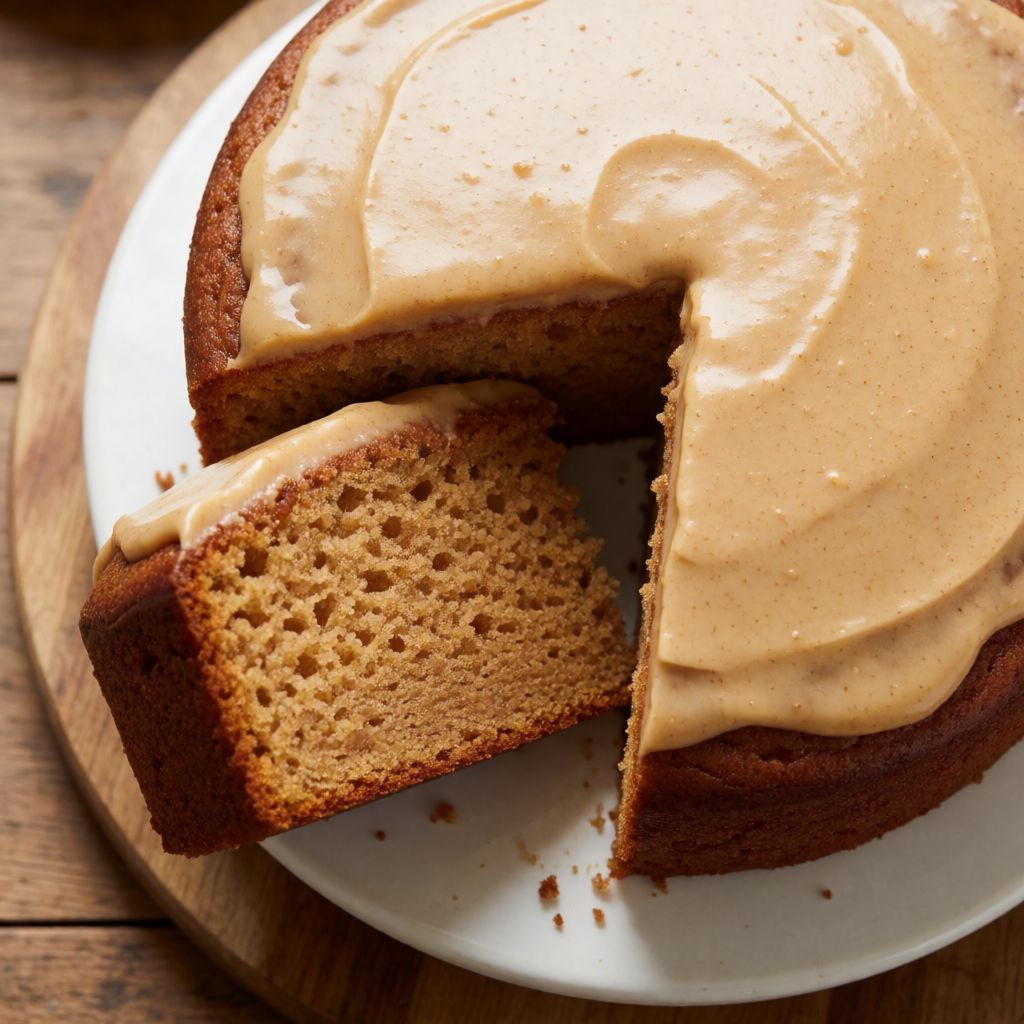
 AI photo
Peanut Butter Cake
A simple peanut butter cake with a soft, velvety crumb, perfect with a cup of tea.
Labels are worked out automatically from the ingredients and can be wrong. Check the packaging if it matters to you.
Ingredients
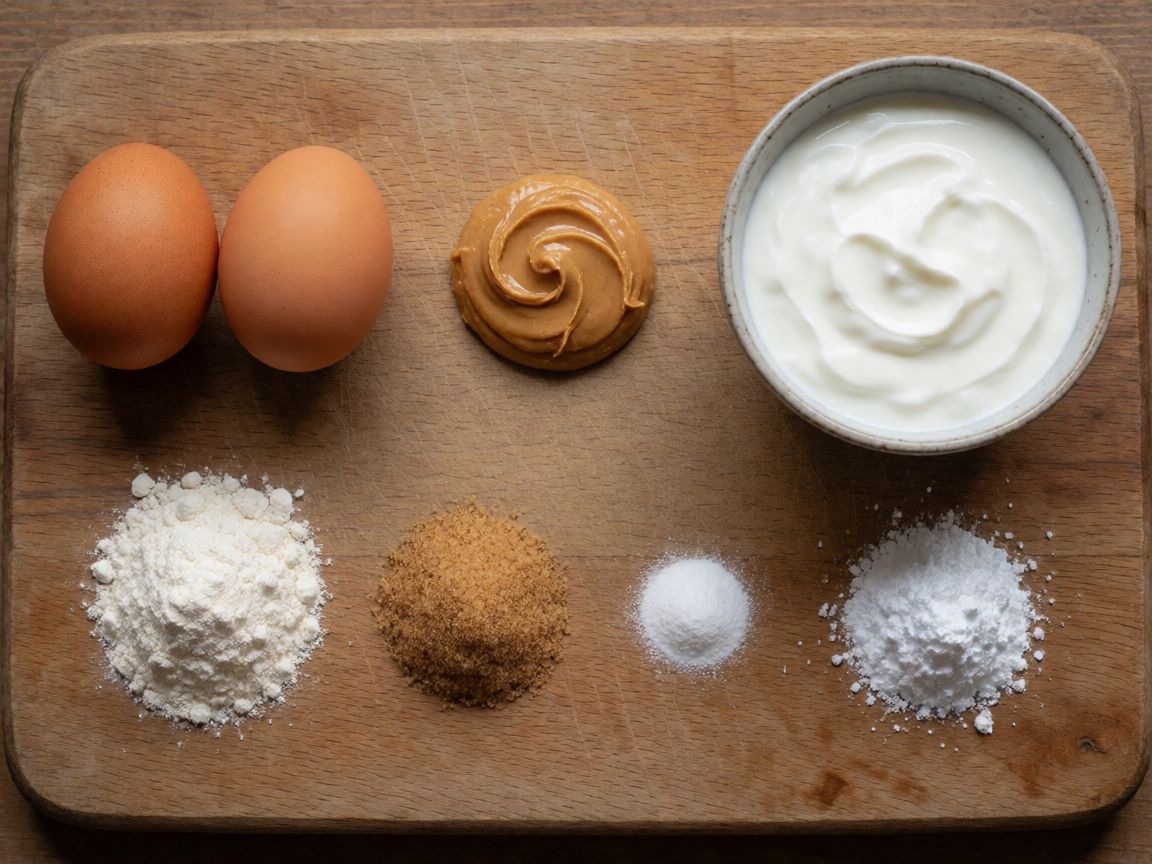
- 2 pcs Eggs
- 120 g Peanut Butter
- 250 g Yogurt plain or Greek
- 50 g Vegetable Oil
- 200 g Plain Flour
- 125 g Brown Sugar
- 1 pcs Baking Powder
- Icing Sugar to taste








Steps
Crack the eggs into a large bowl and whisk them with the vegetable oil. Add the yogurt and mix again.
Add the peanut butter and mix everything until you get a smooth, amber-coloured batter.
In a separate bowl, sift the flour together with the baking powder, add the brown sugar and mix.
Add the dry ingredients to the wet ones and stir just enough to combine — the batter should be smooth, fairly thick and velvety.
Pour the batter into a 22 cm tin, greased with butter and dusted with flour, smooth the surface and bake at 180°C for about 40 minutes.
40 minCheck it's done with a wooden skewer: if it comes out dry, take the cake out of the oven and let it cool completely before dusting with icing sugar.
This is not a layered, fussy cake — it is a one-bowl quick bread dressed up for tea, and that's exactly its point. No creaming butter and sugar for ten minutes, no resting dough overnight. Wet meets wet, dry meets dry, then wet meets dry and you stop. That's the whole trick, and it's also where people go wrong.
What decides whether this works is restraint at one single moment: the point where you fold the dry mix into the wet batter. Flour has gluten in it, and gluten wants to be worked — knead it hard and you get bread. Stir a cake batter the same way and you get the same effect in miniature: a tight, rubbery crumb instead of a tender one. "Mix until smooth" doesn't mean "mix until elastic". The moment the flour streaks disappear, your hand stops. That's not laziness, that's the recipe doing its job for you.
The other engine here is invisible and starts the second the ingredients touch, long before the oven gets involved: yogurt's acidity meeting the baking powder's alkaline salts. That reaction wants to happen in the bowl, not in your fridge overnight — so don't make this batter in advance and leave it waiting on the counter while you lay the table. Every minute it sits before baking, it's quietly losing the lift it needs.
Peanut butter earns its place doing two jobs most people only credit it with one: it's a good slice of your fat, which is why so little vegetable oil is needed alongside it, and it's your main flavour, already built from roasted nuts — the oven isn't asked to create a taste from nothing, just to warm one through and let it spread into the crumb.
Eggs: two, any temperature, nothing fussy about them here. Whisked first into the oil, not the yogurt, they trap air and bind with the fat into a loose emulsion before a watery liquid gets a chance to break it apart. That order — egg and oil first — is what gives the finished batter its "amber, smooth" look rather than a curdled one.
Peanut butter: pick one with a short list behind it — peanuts, maybe salt, nothing else. The sweetened, stabilised kind will throw off both the sweetness and the texture, because the recipe is balanced around a plain, oily paste. No peanut butter in the cupboard — any ground nut butter with a similar fat content stands in: almond, cashew, even tahini if you don't mind a bitter edge replacing a sweet one. The test is simple — does it spread like paste and smell of what it's made from.
Yogurt: plain or Greek, both work because what matters is the acid and the fat, not the thickness. Greek, carrying less water, gives a denser crumb; thin natural yogurt gives a lighter one. No yogurt in the fridge — buttermilk, or milk soured with a splash of lemon and left five minutes, supplies the same acid for the baking powder to react against.
Vegetable oil: anything with no smell or taste of its own — sunflower, rapeseed, grapeseed. Olive oil has its own voice and it will argue with the peanut butter all the way to the plate. Oil instead of butter isn't a health substitution here, it's a texture one: oil stays liquid at room temperature, so the cake stays soft a day later rather than drying out — useful if this is meant to outlast one pot of tea.
Flour, baking powder, brown sugar: sift the first two together before the sugar goes in, not for ceremony but because baking powder clumps straight from the tin, and an unbroken clump means a bitter metallic pocket in one bite and no lift two centimetres away. Trust the packet's quantity of baking powder rather than guessing — too little and nothing rises, too much and you taste soap. Brown sugar brings its molasses along for the ride, which is why the batter looks amber before it's anywhere near the oven; white sugar substitutes fine if you stir in a spoonful of golden syrup or treacle to bring that same moisture and depth back.
At 180°C the surface browns through the Maillard reaction while the centre is still slowly setting its egg protein and gelatinising its starch — slow enough that the crumb stays tender rather than snapping rubbery. A hotter oven seals the crust before the middle's ready, leaving a wet band underneath that people blame on the recipe when it's usually an oven running hot or a tin sitting too near the top element. Forty minutes is where you start checking with a skewer, not where you stop — push it into the thickest part, not the edge, and read it: clinging wet crumb means wait, a few dry crumbs on a mostly clean skewer means out. Dust the icing sugar only once it's properly cool — do it on a warm cake and the sugar melts into an invisible film within minutes, and you'll wonder where your decoration went. That cooling time, and the ten minutes you didn't spend overmixing earlier, are the patience this cake actually asks for — not long hours, just not rushing the two moments that matter.