
 AI photo
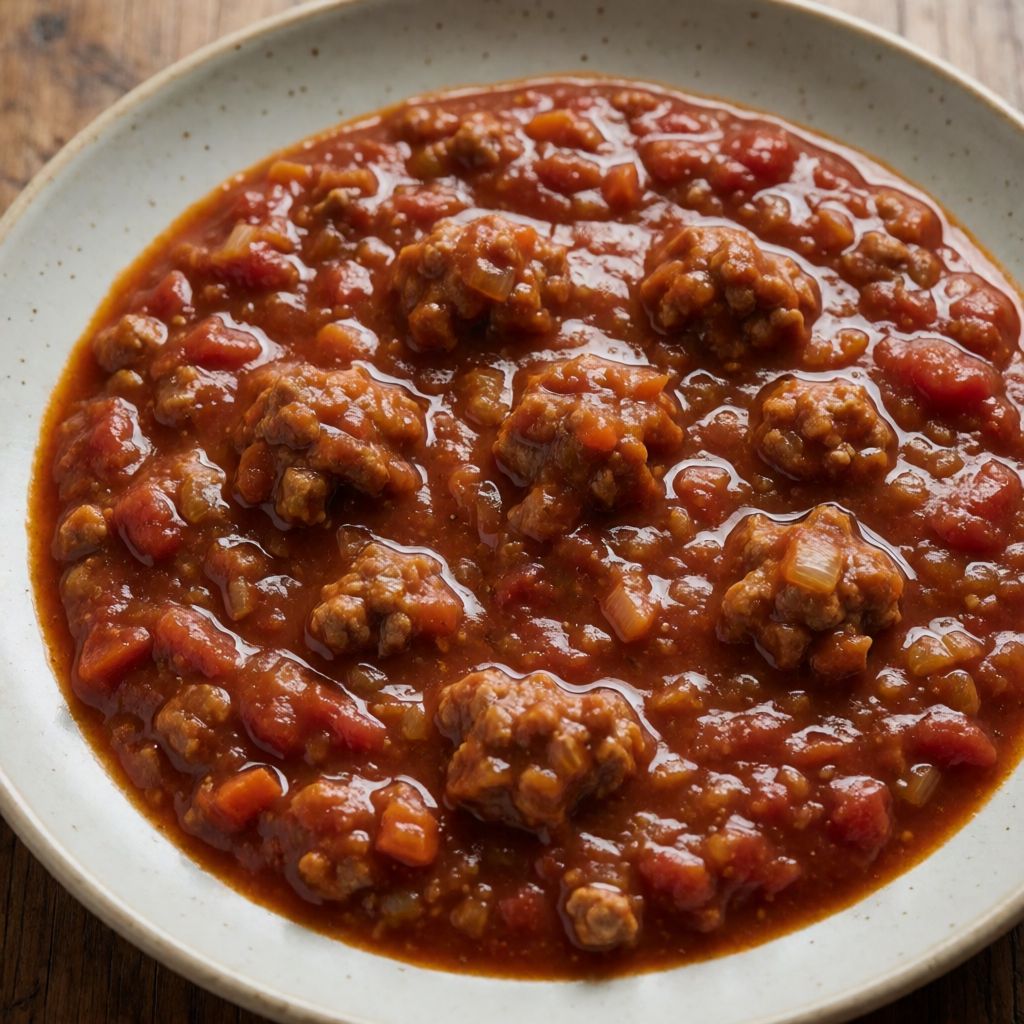
Sausage Ragù
A rich Italian-style sausage ragù, slowly simmered with wine and tomato, perfect over pasta.
Ingredients
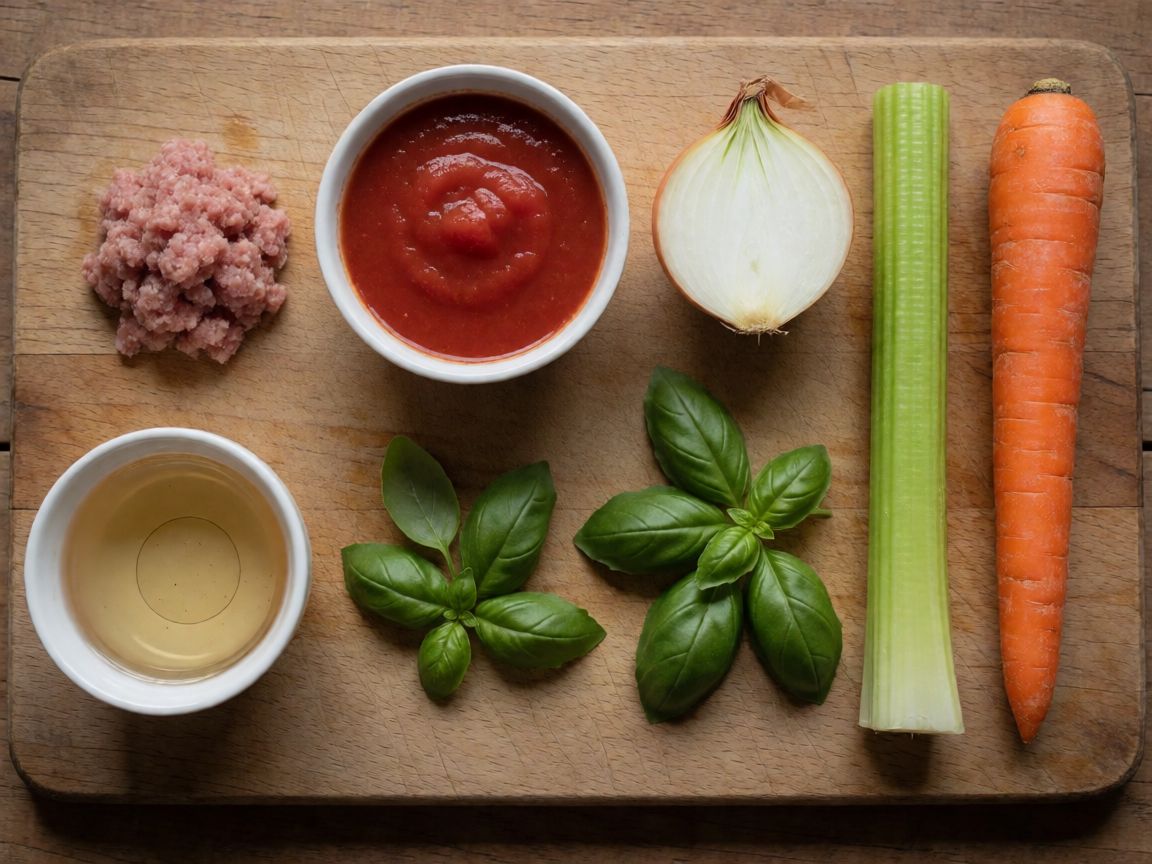
- 500 g Sausage meat
- 500 ml Tomato passata
- 0.5 pcs Onion
- 1 pcs Celery stick
- 1 pcs Carrot
- 100 ml Red wine
- Olive oil to taste
- Salt to taste
- Black pepper to taste
- Basil fresh, to taste










Steps
Finely chop the onion, carrot and celery stick. Put them in a pot and sauté slowly in a generous amount of olive oil until soft.
Add the sausage meat and lightly fry, breaking it up with a spoon, until the liquid has evaporated.
Pour in the red wine. Once it has evaporated, add the tomato passata.
Bring to the boil, then simmer the ragù over medium-low heat with the lid slightly ajar.
60 minKeep cooking until the ragù is piping hot right through, reaching about 71°C at the centre.
Season with salt and black pepper to taste.
A few minutes before the end of cooking, tear the fresh basil into the ragù.
This is not the grand, long-simmered ragù that takes a whole Sunday and a bone-in shin of beef — it's the fast cousin, built on sausage meat straight out of the casing. No long cooking to soften connective tissue, because minced meat has none left to soften. So what decides whether this works is not time on the hob, it's three separate moments of driving off water and letting flavour concentrate instead.
First moment: the onion, carrot and celery go in gently, in plenty of oil, and stay there until soft — not brown, soft. This is the sweetness base, what the Italians call soffritto. Colour too early and you get bitterness instead of sweetness, because sugars that caramelise too fast turn acrid before the vegetable has actually cooked through. Judge it by bend, not by clock: a piece of carrot should fold without resistance, the onion should have gone translucent and slightly golden, never dark.
Second moment: the sausage meat goes in and you fry it until the liquid it releases is gone. Some say browning meat "seals in the juices" — no, nothing is sealed, that's a kitchen legend with no mechanism behind it. What actually happens is water cooking off the surface, which lets the meat fry instead of stew in its own exudate, and frying is what gives you flavour, not sealing.
On temperature and doneness: the 71°C mentioned isn't a flavour instruction, it's a food-safety one. Sausage meat is raw minced pork before it goes in the pan — it is not pre-cooked just because it once lived inside a skin — so like any dish built on ground meat, you're checking it's hot enough through the middle, not just hot at the surface where the spoon stirs it. A thermometer is honest here where eyes aren't; if you don't have one, cut into the thickest spoonful and make sure there's no pink streak and no give of rawness at the centre.
Sausage meat itself: what you're buying is minced pork with its own seasoning and, crucially, its own fat ratio already built in — that's the whole point of using it instead of plain mince, it saves you adding fat separately. Choose a butcher's sausage meat, coarse-ground, rather than the finely emulsified kind meant for frankfurters, which turns rubbery and sheds its fat strangely when fried loose. No sausage meat to hand? Buy sausages and strip the casings yourself, or use minced pork shoulder with a spoon of its fat added, since shoulder alone usually runs too lean for this sauce to feel right.
The soffritto trio — onion, carrot, celery — isn't decoration, it's the economic backbone of Italian home cooking: cheap vegetables, long slow sautéing, turned into the sweetness that expensive stock would otherwise have to provide. If you're out of celery, don't panic and don't substitute with something stranger — a bit more carrot and onion carries the sauce fine, celery just adds a faint bitterness that rounds the sweetness off.
Passata needs to be the plain, sweet, ripe kind — no herbs or basil already blended in, because you're adding your own basil at the right moment, and pre-flavoured passata fights it. Tinned whole tomatoes, crushed by hand or blitzed smooth, do the same job if passata isn't on the shelf; just expect a touch more acidity to balance with time and a pinch more sugar if it tastes sharp.
The wine: red, for backbone and acid, nothing fancy, somewhere between a glass's good enough for drinking and one you wouldn't bother opening for guests. If you're avoiding alcohol, a splash of red wine vinegar loosened with a little stock does the acid's job, though the character shifts — it won't taste wrong, just different.
On kitchen reality: you don't have a kazan, you have a pot on an electric or gas hob, and that's fine — this dish was never built for one. What you do need is something to stand in for a lid that isn't quite a lid: a plate resting slightly off-centre over the pot does exactly what "lid slightly ajar" asks for, letting steam escape so the sauce reduces instead of staying watery, while still holding enough heat in that it doesn't need babysitting. Basil goes in at the very end because its aroma is fragile — boil it for an hour and you've got green mush with none of the scent left, which defeats the purpose of using fresh basil at all. And give the whole thing patience: ninety minutes is the minimum, not a target, because a ragù finished early just tastes like tomato sauce with sausage in it, not a ragù.