
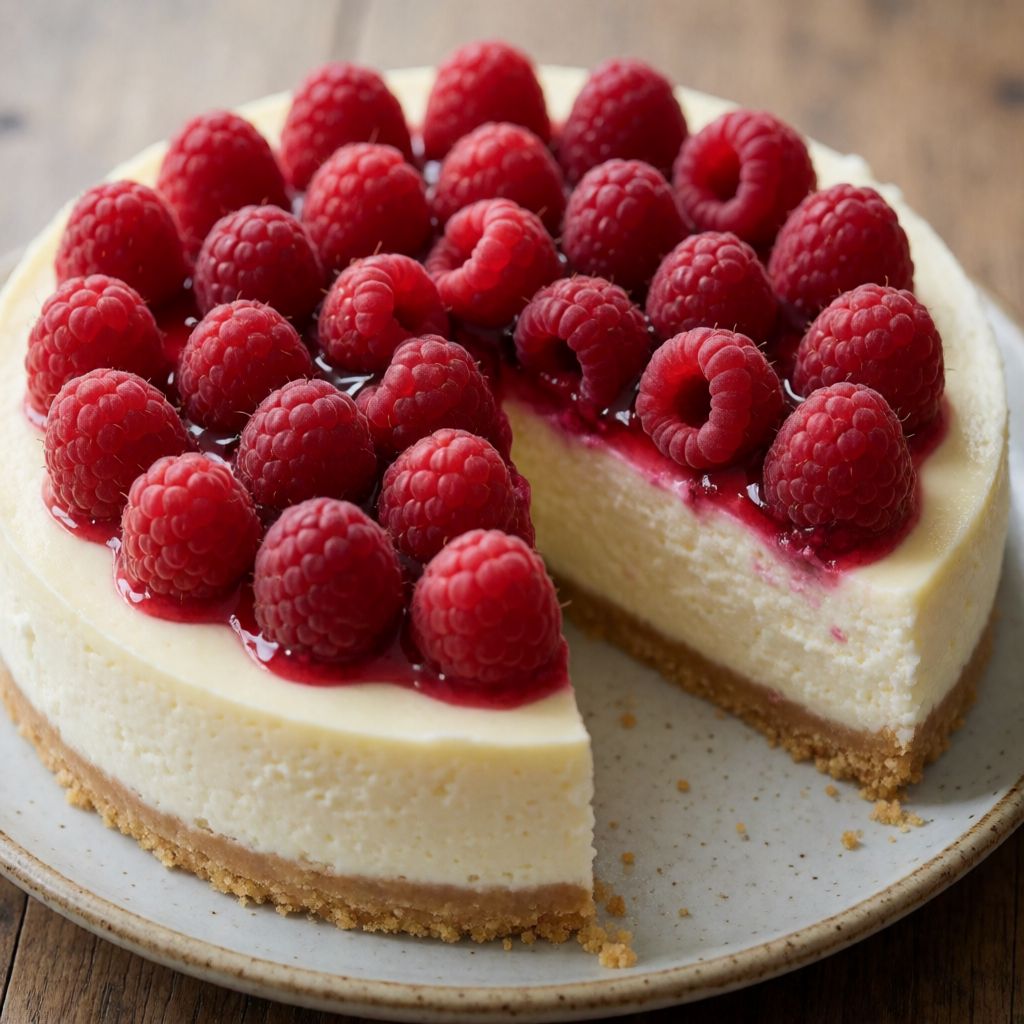
 AI photo
Ricotta Cheesecake with Fresh Raspberry Topping
A fresh no-bake cheesecake with a creamy ricotta filling and a bright raspberry topping.
Labels are worked out automatically from the ingredients and can be wrong. Check the packaging if it matters to you.
Ingredients
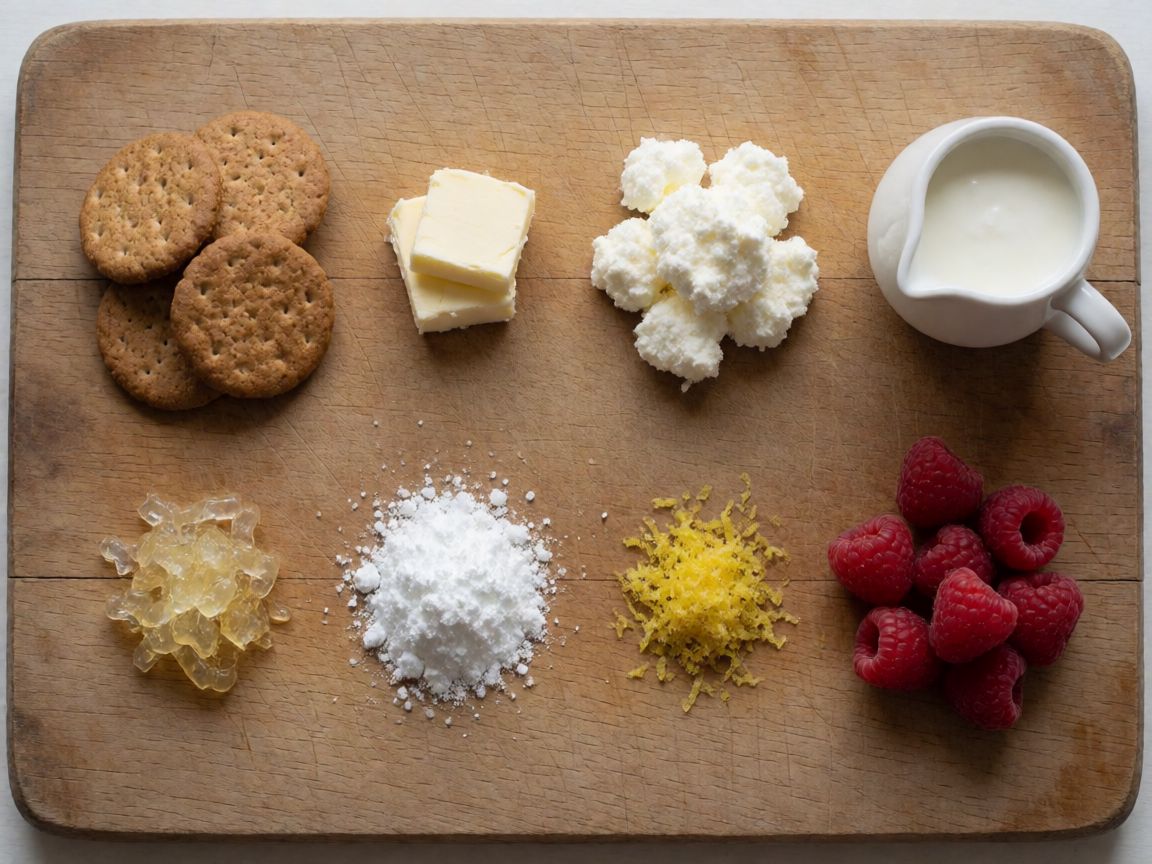
- 320 g Digestive biscuits
- 150 g Butter melted
- 250 g Ricotta
- 500 ml Double cream
- 15 g Gelatine
- 100 g Icing sugar
- 1 pcs Lemon zest
- 375 g Raspberries
- 70 g Icing sugar
- 18 g Cornflour
- 200 ml Water
- 250 ml Mixed seasonal berries for decoration










Steps
Crush the digestive biscuits, mix with the melted butter and press into a 22 cm tin.
Press the base down firmly and evenly, then chill it in the fridge for 30 minutes.
30 minSoak the gelatine in cold water, squeeze out and dissolve in 100 ml of hot cream.
Beat the ricotta and lemon zest with an electric whisk until smooth.
Whip 400 ml of cream with the icing sugar, then gently fold into the ricotta cream.
Add the dissolved gelatine and mix.
Pour the cream over the cheesecake base, smooth with a spatula and chill.
Cook the raspberries with the icing sugar, stirring constantly, for a few minutes.
Strain the raspberry sauce through a sieve to remove the seeds.
Dissolve the cornflour in water, add to the juice and cook until thickened.
Cool the raspberry sauce to room temperature.
Pour the cooled sauce over the cheesecake, spreading it across the surface.
Chill the cheesecake in the fridge for 3 hours.
180 minDecorate with mixed seasonal berries and mint leaves before serving.
This cheesecake never sees an oven. Nothing in it sets by heat the way a sponge or a custard does — it sets because things get cold or because starch and gelatine do their chemistry in water. That's the whole character of the dish: it's an assembly of three separate physical structures, stacked one on another, each held by a different mechanism, and what decides whether the thing stands up when you slice it is whether you respected each mechanism in turn, not whether you followed a clock.
Layer one is the base: biscuit crumb glued by butter. Butter is liquid when warm, solid when cold — that's not a detail, that's the entire reason the base holds together at all. Press it in while the butter is still soft so it fills every gap between crumbs, then chill it so the fat goes rigid again and locks the crumbs in place. Skip the chilling, or press half-heartedly, and the first slice falls apart on the plate — not because the biscuits were wrong, but because the glue never set.
Digestive biscuits exist because British biscuit manufacturers in the 1800s added bicarbonate of soda to wholemeal flour for digestion, and the side effect was a biscuit with just enough fat and just enough structure to crumb cleanly instead of turning to dust — which is exactly the property you need here. The criterion for a substitute is a plain biscuit that's slightly sweet, slightly salty, and crumbs rather than shatters: ginger nuts, Hobnobs, even a shortbread in a pinch, though shortbread brings extra butter of its own so cut back what you melt in.
Butter is the mortar, nothing more, and it should be a butter that tastes like butter and nothing else, because this base carries no other flavour to hide behind. Melt it gently — not so it browns, since browned butter has a nutty taste that fights the lemon and raspberry later. If you've only got margarine, know that it won't set as hard when cold, and your base will be softer underfoot.
Ricotta is chosen for being drier and less fatty than cream cheese, which is what keeps this cheesecake light instead of dense — swap in cream cheese or mascarpone and you'll get a heavier, richer result, closer to a baked New York style than what's written here. Double cream is non-negotiable in its fat content, not its brand: you need something around 48% fat to whip to a stable structure that still holds air once folded with ricotta and gelatine. Single cream or anything lighter simply won't whip stiff enough to hold the weight of the ricotta above it.
Gelatine does one job — turn a loose cream into something that holds a slice — and it does that job only within a narrow heat window. Soak it in cold water first so it hydrates evenly throughout the sheet or granule instead of clumping when it hits warmth; dissolve it in hot (not boiling) cream so the protein chains stay intact. If you're using powdered gelatine rather than leaf, the ratio to liquid matters more than with leaves, so follow the pack, not the memory of how much leaf gelatine looks like.
Lemon zest isn't decoration, it's there because ricotta on its own tastes faintly chalky and flat, and the oils in the zest — not the juice, the zest — cut straight through that without adding wetness to a mixture that's already managing a lot of water from the cream and the ricotta.
Raspberries get cooked briefly with sugar to release their juice and soften their structure before you strain out the seeds — the seeds are the one genuinely unpleasant texture in an otherwise smooth dessert, and straining is the whole reason this sauce feels silky rather than jammy. Cornflour thickens that strained juice into something with enough body to sit on top rather than run off the sides; cook it only until it visibly thickens on the spoon, because starch that's cooked too long starts to break back down and go thin again. Any soft seasonal berry can stand in for raspberry in the decoration on top — the mechanism there is just colour and a clean bite against the cream, nothing structural, so use what looks good in the shop that week.