
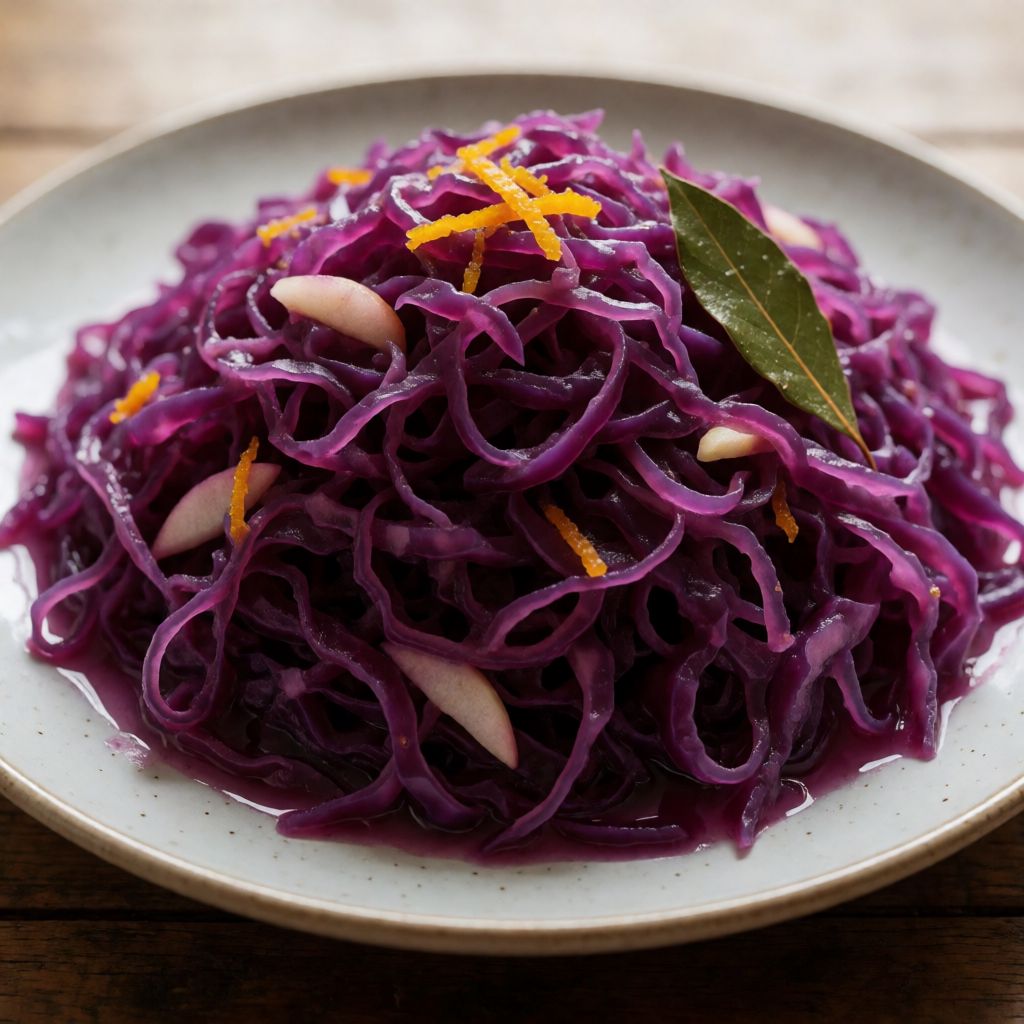
 AI photo
Homemade Red Cabbage with Orange
A warming side dish of braised red cabbage with orange, cinnamon and redcurrant jelly, lovely alongside a Sunday roast.
Labels are worked out automatically from the ingredients and can be wrong. Check the packaging if it matters to you.
Ingredients
- 500 g Red Cabbage finely shredded
- 1 tbsp Butter
- 1 pcs Orange juice and zest
- 50 ml Cider Vinegar
- 1 tsp Dried Thyme
- 2 pcs Bay Leaves
- 1 tbsp Honey
- 1 pcs Cinnamon Stick
- 1 pinch Vanilla Powder
- 2 tbsp Redcurrant Jelly
- Salt to taste
- Black Pepper freshly ground, to taste










Steps
Sauté the red cabbage in the butter for a few minutes, stirring, until it is warmed through and slightly wilted.
5 minAdd the orange juice, orange zest, cider vinegar, bay leaves, cinnamon stick, a pinch of vanilla powder and the thyme.
Simmer for 25–30 minutes, then just before serving stir in the honey, redcurrant jelly, salt and freshly ground black pepper to taste.
27 min
This is sweet-sour braised cabbage, the kind the Germans brought to British Christmas tables through Prince Albert's court, and which somehow slid off the Christmas plate and onto the Sunday roast one too. It's not a quick stir-fry side — it's a slow argument between acid, sugar and tough winter vegetable, settled over half an hour in a pan.
What decides whether it works is two things, and neither of them is flavour, oddly. First: colour. Red cabbage holds a pigment called anthocyanin, and that pigment is a mood ring for pH — acid keeps it red-violet, anything alkaline (including plain tap water in some areas) tips it towards a dull blue-grey that looks, frankly, inedible even if it tastes fine. Some say the vinegar is there for tang. No — it's there to stop your cabbage turning the colour of a bruise. The orange juice does the same job, quietly, alongside the vinegar.
Second: texture. Raw red cabbage is dense, almost woody — the ribs are full of cellulose and pectin holding the leaf rigid. Butter and brief heat only soften the surface; the real work happens in the simmer, where sustained gentle heat breaks that structure down until the shred goes from stiff and squeaky to soft, glossy, faintly yielding between your teeth. You're not looking for al dente here — there's no such thing in this dish. You're looking for cabbage that bends like a ribbon, not one that still fights you.
Don't rush the simmer to save ten minutes. Patience is the ingredient doing the actual cooking — everything else is seasoning around it.
On the cabbage itself: pick a head that feels heavy and dense for its size, with tight, unblemished leaves — a loose, puffy head has already lost moisture and will give you less texture to work with. Shred it finely and evenly; thick wedges won't soften in the time this method allows, and you'll be left fishing out crunchy lumps from an otherwise silky dish.
Butter at the start is there for a short, gentle wilt — not to fry, not to brown. You want the shreds coated and slightly collapsed, going from stiff ribbons to something glossier, within a few minutes over heat that keeps them moving without spitting or catching at the edges. Butter's job here is small but real: it carries a little dairy sweetness that pairs with the fruit and spice later, in the way rendered goose or duck fat did in the dish's older German versions, before most kitchens kept a jar of that around. If you've none, any fat with a bit of body and no harsh smell of its own will do — a mild oil works, it just won't bring quite the same roundness.
The orange and the cider vinegar are doing the colour-and-acid job together — zest for fragrance, juice and vinegar for the acidity that both seasons and preserves the red. Cider vinegar is chosen for being fruity rather than sharp; red wine vinegar is the closest substitute in character, white distilled vinegar the least kind — it'll do the chemistry but taste like a chemistry set.
Bay, cinnamon stick, thyme and that pinch of vanilla go in before the long simmer because they need the time to actually get into the liquid — these are infusions, not garnishes, and tossing them in at the end would leave you with raw-tasting spice floating uselessly on top. Pull the bay leaves and cinnamon stick out before serving; nobody wants to bite into either.
Honey and redcurrant jelly go in right at the end, off the heat or nearly so, because their job is to finish the balance between sweet and sour after the acid and spice have already done their work — add them early and they'd just cook away or tip the dish too sweet before you can judge it. Salt and pepper last, for the same reason: you're tasting a nearly finished thing, not guessing at a raw one.
In a British kitchen this sits happily where red cabbage always has — next to a Sunday roast, pork or goose especially, since the fat on the meat and the sharpness in the cabbage were always meant to answer each other. You don't need a lid for the simmer; a plate set over the pan traps enough steam, and on a domestic hob you want the liquid trembling, not boiling hard — a hard boil will cook off the orange-vinegar liquid before the cabbage has had time to give in, and you'll end up with tough shreds in a dry pan rather than a soft one in a little syrup.