
 AI photo
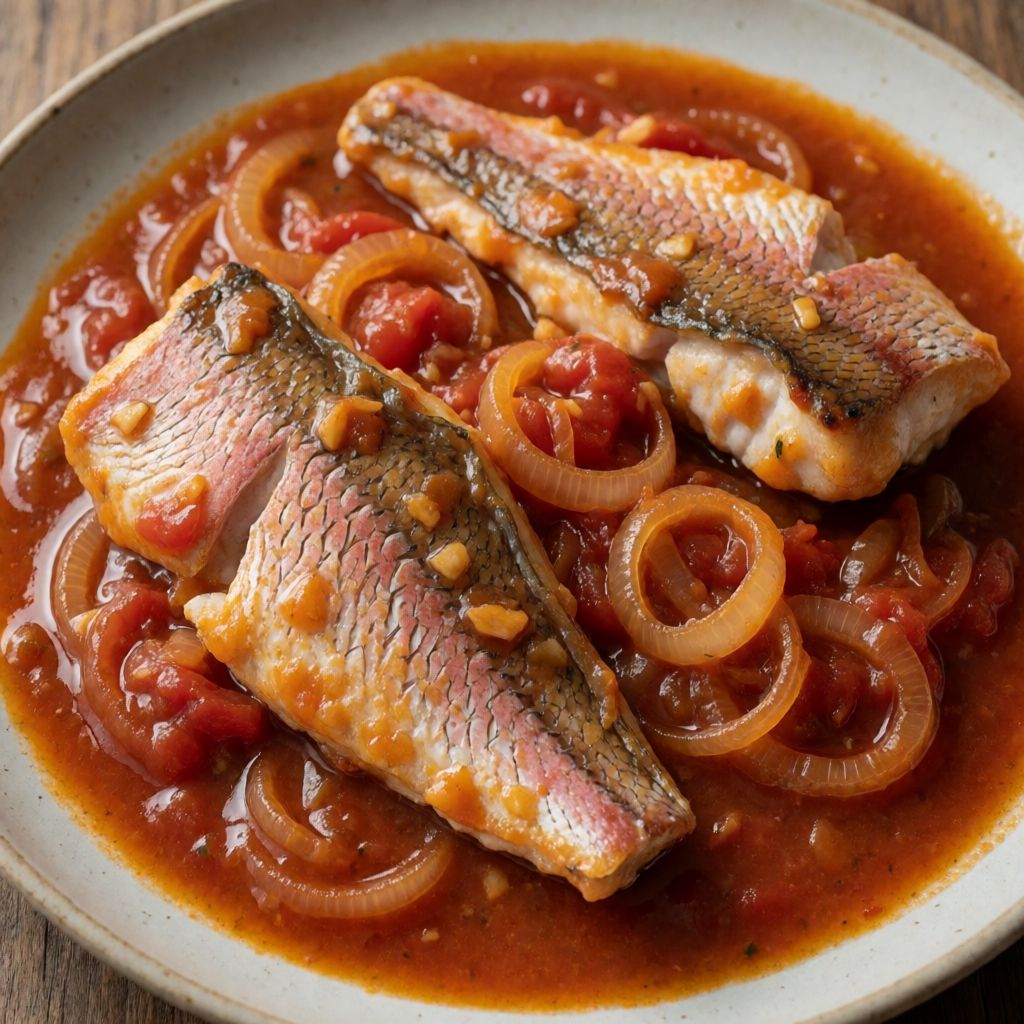
Red Mullet with Onions
Red mullet fillets chilled with wild fennel, then pan-fried and served with slow-cooked onions in a red wine and tomato sauce.
Labels are worked out automatically from the ingredients and can be wrong. Check the packaging if it matters to you.
Ingredients
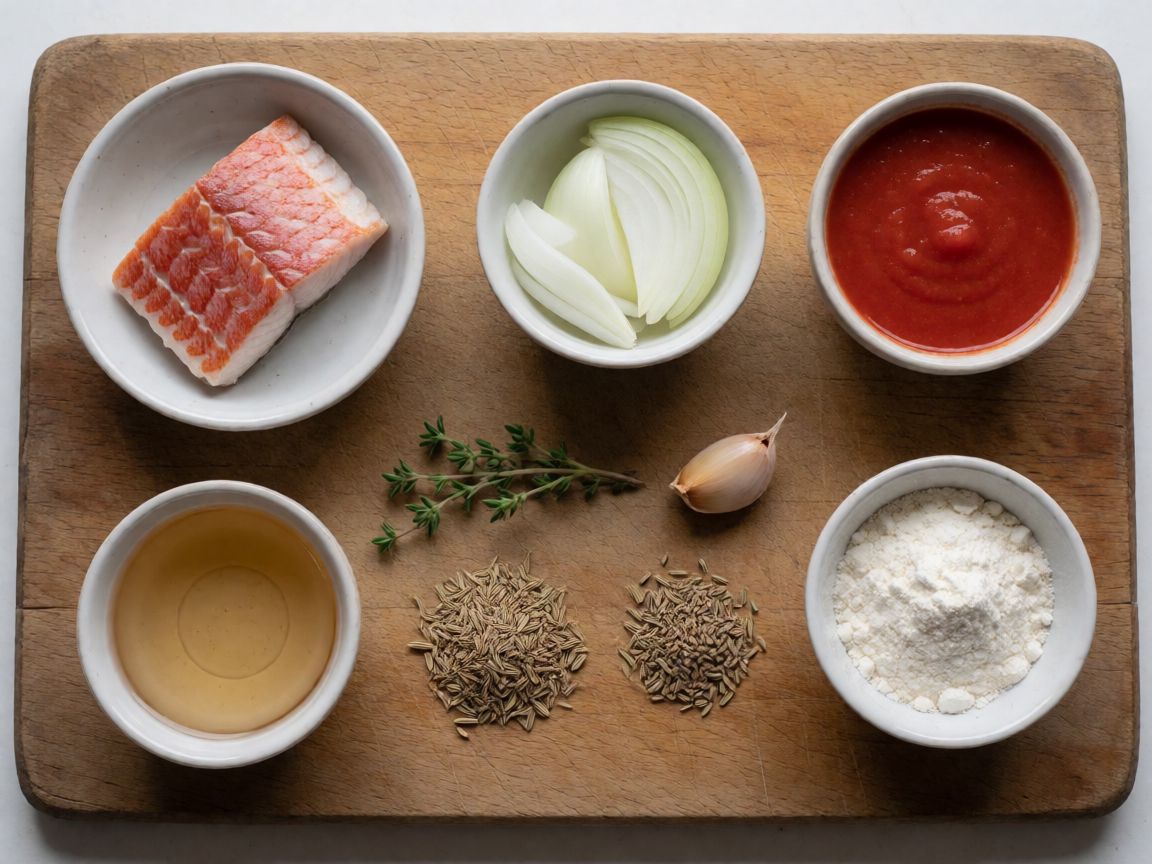
- 500 g red mullet fillet
- 300 g onion
- 300 g tomato passata
- 300 ml red wine
- 1 clove garlic
- olive oil to taste
- 1 pinch wild fennel seeds to taste
- thyme to taste
- plain flour to taste
- salt to taste
- black pepper to taste









Steps
Arrange the red mullet fillets in a baking dish and sprinkle with wild fennel seeds.
Cover with cling film and refrigerate for 30 minutes.
30 minPeel the onion, slice it thinly and put it in a frying pan with a little olive oil.
Add the red wine, flavour with thyme and cook over medium heat.
Peel the garlic clove and sauté it in a frying pan with olive oil and wild fennel seeds.
Add the tomato passata and cook over low heat.
Remove the wild fennel from the fillets and coat them in plain flour.
Pan-fry the fillets in olive oil until cooked through. Doneness: 63 °C at the thickest point.
Season the fillets with salt and black pepper, and plate with the onions and tomato sauce.
Red mullet is a small, bony, slightly oily fish with a sweetness that plain white fish doesn't have — it's why Mediterranean cooks reach for it rather than cod. That sweetness is also why it's paired here with two things that pull against it: a wine-braised onion that's gone from sharp to soft, and a tomato sauce perfumed with fennel seed and garlic. Neither sauce dominates — they're both built low and slow while the fish itself gets a fast, hard sear at the end.
What decides whether this works isn't the sauces, which more or less look after themselves. It's the fillet. Red mullet skin is thin, the flesh underneath delicate, and if you fry it too gently it steams in its own moisture and falls apart on the spatula. Some say fish should always go into a cool pan and heat up gradually — no, because that's advice for a thick steak, not a fillet this thin. You want the oil properly hot before the fish goes in, so the surface sets and crisps in the time it takes the inside to just turn opaque. A thin fillet has no patience for a slow build.
The fennel-seed cure at the start is doing real work, not decoration. Half an hour under cling film lets the seeds' oil migrate into the flesh — too short and you just get seeds sitting on the surface, too long and the salt in the dish (if you've seasoned early) starts drawing out moisture you want to keep. Thirty minutes is the lower bound stated for a reason: judge it by smell, not the clock — the fillet should carry the scent of fennel through its cut edge, not just on top.
Doneness here is not a timer question, it's 63°C at the centre of the fillet — the point where the flesh has gone from translucent and glassy to opaque and just firm, flaking cleanly along its natural seams rather than squashing. A probe thermometer earns its keep on fish exactly because fillets this thin cross from raw to overdone in the time it takes to answer the phone. If you don't have one, press the thickest part with a finger: it should give slightly and spring, not wobble wetly and not resist like a rubber ball.
On the onion: 300g sliced thin and simmered in 300ml red wine isn't a quick sauté, it's a reduction. The wine's sharpness needs time to cook off and leave behind sweetness, and the onion needs that same time to go from crisp white to soft and faintly amber. Judge it by colour and texture, not minutes — when the onion bends rather than crunches, and the liquid round it has thickened from "soup" to "coating," it's there. Any decent dry red works; you're not drinking it, you're using its acid and tannin to balance the fish's natural oiliness, so don't reach for your best bottle and don't apologise for a cheap one.
The tomato side is simpler and shorter by nature. Garlic is sautéed gently with fennel seed first — gently, because garlic burnt even slightly turns bitter and there's no rescuing a sauce after that — then the passata goes in and cooks low. Low heat here isn't timidity, it's because passata is already cooked tomato; you're not trying to break anything down, you're thickening it slightly and letting the fennel oil distribute through it. A pinch of sugar helps if your passata is sharp, though that's not written into tradition, just into any cook's sense that acidity needs a counterweight.
Wild fennel seed is the ingredient worth explaining rather than substituting carelessly. In the dish's home ground it would likely be fresh wild fennel fronds, foraged, not the dried seed sold in jars — the seed is the domestic stand-in, more concentrated and more anise-forward. If you have fennel fronds from a bulb, use a small handful chopped instead of the pinch of seed; if you have neither, a few crushed coriander seeds will give you aromatic lift without pretending to be the same thing.
For the fish itself, red mullet isn't always easy to find outside a proper fishmonger, and a supermarket fish counter may not stock it. The criterion for a substitute is a small, slightly oily, sweet-fleshed fish that holds together as a fillet — red bream or small snapper are the closer matches; cod or haddock will cook fine but will taste of nothing beside this sauce, because the whole dish is built around a fish with its own flavour to argue with the wine and tomato, not hide behind them.
On oil: "olive oil to taste" here means two different jobs — a little for the slow onion and garlic work, where you want its flavour quietly present, and more for the final fry, where it needs to be hot enough to crisp the flour without smoking. If your kitchen only runs one grade of olive oil, use it for both rather than buying a second bottle; the loss is minor. This isn't a dish that needs a wide pan built for a kazan — a standard frying pan does the fish fine in batches, and the sauces each want nothing bigger than a saucepan. Four portions, modest ingredients, and the only real patience required is in the onion and the thirty-minute cure — everything else moves quickly once the fish hits the heat.