
 AI photo
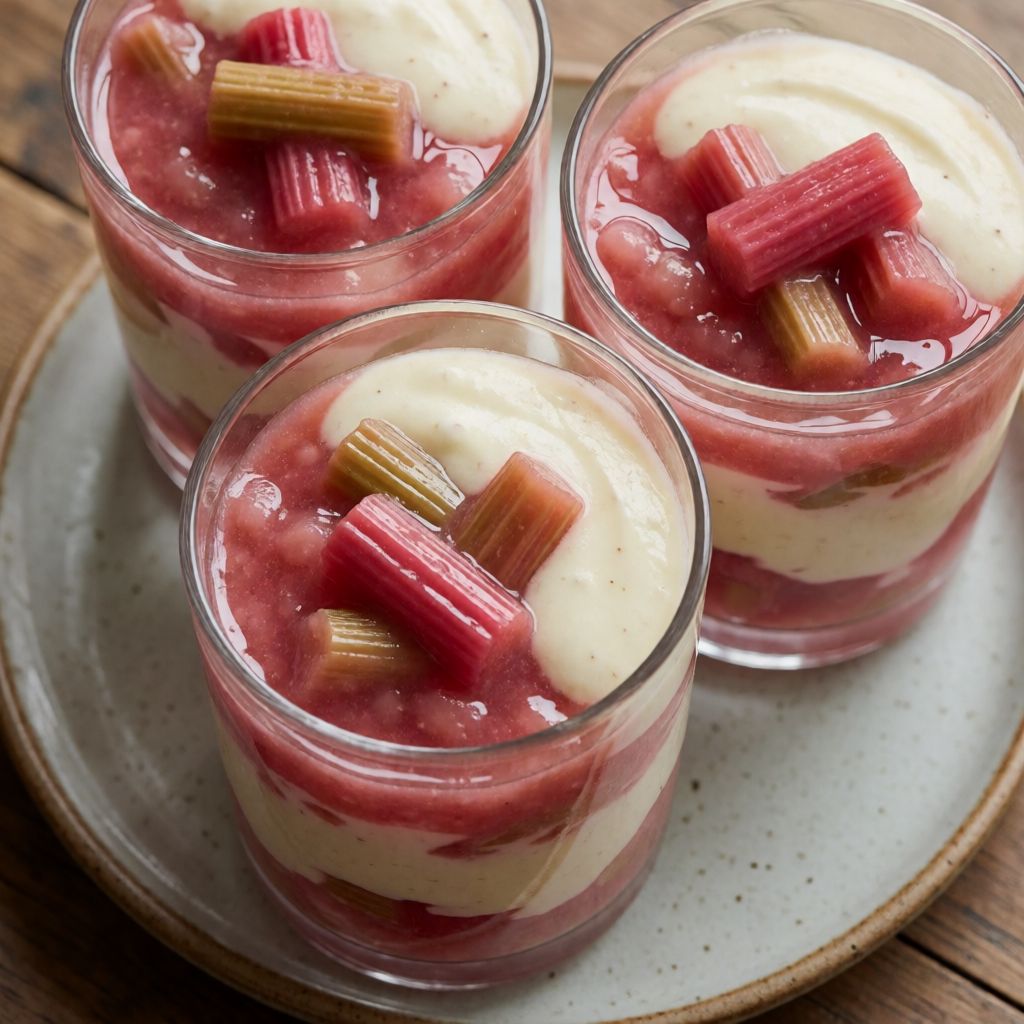
Rhubarb Trifle Glasses
A layered rhubarb dessert served in glasses, with crisp oatmeal crumble and a silky vanilla cream.
Labels are worked out automatically from the ingredients and can be wrong. Check the packaging if it matters to you.
Ingredients
- ½ pcs Vanilla pod
- 100 g Caster sugar
- 500 g Rhubarb diced
- 1 tbsp Water
- 100 g Rolled oats
- 50 g Almonds blanched and finely chopped
- 50 g Caster sugar
- 50 g Butter
- 2 pcs Egg yolks
- ½ pcs Vanilla pod
- 30 g Caster sugar
- 150 ml Double cream






Steps
Split the vanilla pod, scrape out the seeds and mix them with the sugar.
Put the rhubarb, sugar, vanilla seeds and the pod into a pan with the water and bring to the boil.
Stir well and simmer gently for 10 minutes.
10 minLet the rhubarb compote cool completely.
Put the rolled oats and almonds in a pan and toast over medium heat, stirring, until fragrant, taking care not to let them burn.
Add the butter and sugar and stir over medium heat for about 5 minutes, until the butter and sugar have melted and the crumble is crisp and lightly golden.
5 minLet the crumble cool completely on a sheet of baking paper.
Whisk the egg yolks, vanilla seeds and sugar until thick and airy.
Whip the cream to soft peaks and gently fold it into the whisked egg mixture to make a delicious vanilla cream.
Assemble the trifle: in glasses, layer the rhubarb, crisp oat crumble and vanilla cream.
Serve the trifle straight away.
A trifle glass is really three separate small decisions stacked on top of each other, and the whole thing lives or dies on temperature contrast and texture contrast, not on any one component being clever. Warm stewed rhubarb goes cold, crisp buttered oats stay crisp, raw egg-and-cream goes soft — and you build the glass right before eating, because the moment the cream touches the crumble, the crumble starts dying. This is not a baked trifle in the trifle-sponge-and-jelly sense; there's no sponge, no setting, no fridge overnight. It's closer to a deconstructed crumble served in a glass with cream instead of custard.
What decides success is whether you let each layer finish on its own terms before it meets the others. Rhubarb has to cool fully, because warm fruit will melt the fat in the crumble and turn crunch into mush in the time it takes you to walk the glass to the table. The oat-almond crumble has to cool and firm up on paper, not on a plate, because paper pulls moisture and lets the butter set hard around the oats — on a plate, steam has nowhere to go and the base stays greasy and soft. The cream mixture only comes together at the very end, because raw yolk and whipped cream don't wait for you.
Some say trifle needs a day in the fridge to "let the flavours develop." No — not this one. This is a glass built for immediate eating, assembled layer by layer like a sandwich, not a jar of pickles. Sitting does nothing good here; it only softens the one element you worked to keep crisp.
Vanilla pod, split and scraped twice over — once for the rhubarb, once for the cream — is there for more than scent. The seeds carry the flavour; the empty pod, dropped into the simmering rhubarb, still gives something to the liquid as it cooks, which is why you don't throw it away after scraping. If you don't have a pod, a teaspoon of good vanilla extract stirred in at the same point does the job — paste works too, extract from a bottle of "vanilla flavouring" with no actual vanilla in it does not, because there's nothing there to taste.
Rhubarb — go for stalks that are firm and snap rather than bend; a stalk that's gone soft and stringy has lost the acid structure that makes this fruit worth cooking at all. Early-season forced rhubarb is pink and mild; the garden stuff from midsummer is greener, more sour, and will want a touch more sugar. Dice it so pieces are roughly even — not for looks, but so they all soften at the same rate and you don't get spoonfuls that are half mush, half raw fibre.
The water in step 2 is doing almost nothing on its own — a tablespoon is there only to stop the sugar catching before the rhubarb releases its own juice, which it will, generously, within a minute or two of heat. Once it starts simmering you'll see liquid pool at the bottom; that's the sugar and rhubarb's own water doing the work, not the tablespoon.
Rolled oats, not quick oats or jumbo oats — rolled gives you a crumble that toasts evenly and bites with a bit of structure; quick oats turn to dust, jumbo oats stay chewy rather than crisp. Almonds blanched and chopped fine add fat and a bit of bitterness against all that sugar; if you're out, any nut with a mild flavour and some oil in it — hazelnuts, cashews — will stand in, just chop it as fine as the almonds would be.
Toasting the oats and almonds dry, before the butter goes in, matters because butter added too early coats the oats and stops them browning properly — you get soggy-toasted rather than crisp-toasted. You're watching for colour change and smell, not a clock: golden, nutty, and if you catch a whiff of anything bitter or burnt, it's already too late, so pull it off the heat a shade earlier than you think you need to. Butter and sugar melting together afterwards is simple caramelisation acting as glue — it's what turns loose toasted oats into a crumble that holds together in clumps rather than scattering like dust in the glass.
Egg yolks whisked with sugar until "thick and airy" is doing real chemical work — the sugar dissolves into the yolk and the whisking beats in air, and together they thicken the mixture so it can carry its own weight once folded with cream, rather than sinking to the bottom of the glass as a thin yellow puddle. Folding the whipped cream in gently, not stirring, keeps the air you've just beaten into both components instead of knocking it back out — this cream is meant to sit soft and light, not stiff like a piped decoration. Double cream is the right cream here because it's fat enough to hold soft peaks without turning to butter if you overwhip by a few seconds; anything leaner will slump rather than hold shape in the glass.
This serves four properly, or two generously if you've had a big Sunday roast and want pudding that isn't heavy. And the real patience ingredient here isn't the ten minutes of simmering or the five minutes at the stove — it's the cooling. Rush the rhubarb or the crumble into the glass while still warm, and you've made rhubarb crumble soup, not a trifle.