
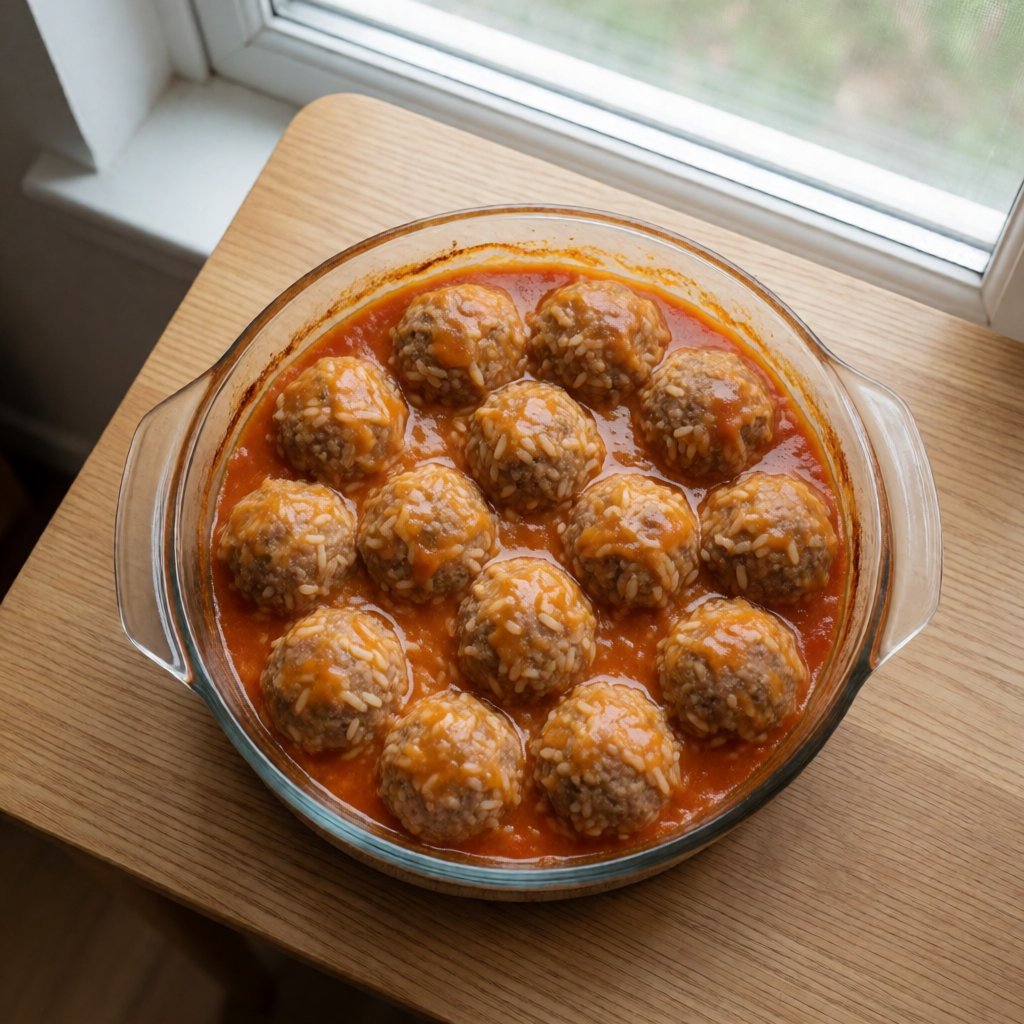
 AI photo
Hedgehog Meatballs with Rice in Tomato Sauce
Minced beef and rice meatballs baked in a tomato sauce, nicknamed for the rice bits that poke out like hedgehog spines.
Ingredients
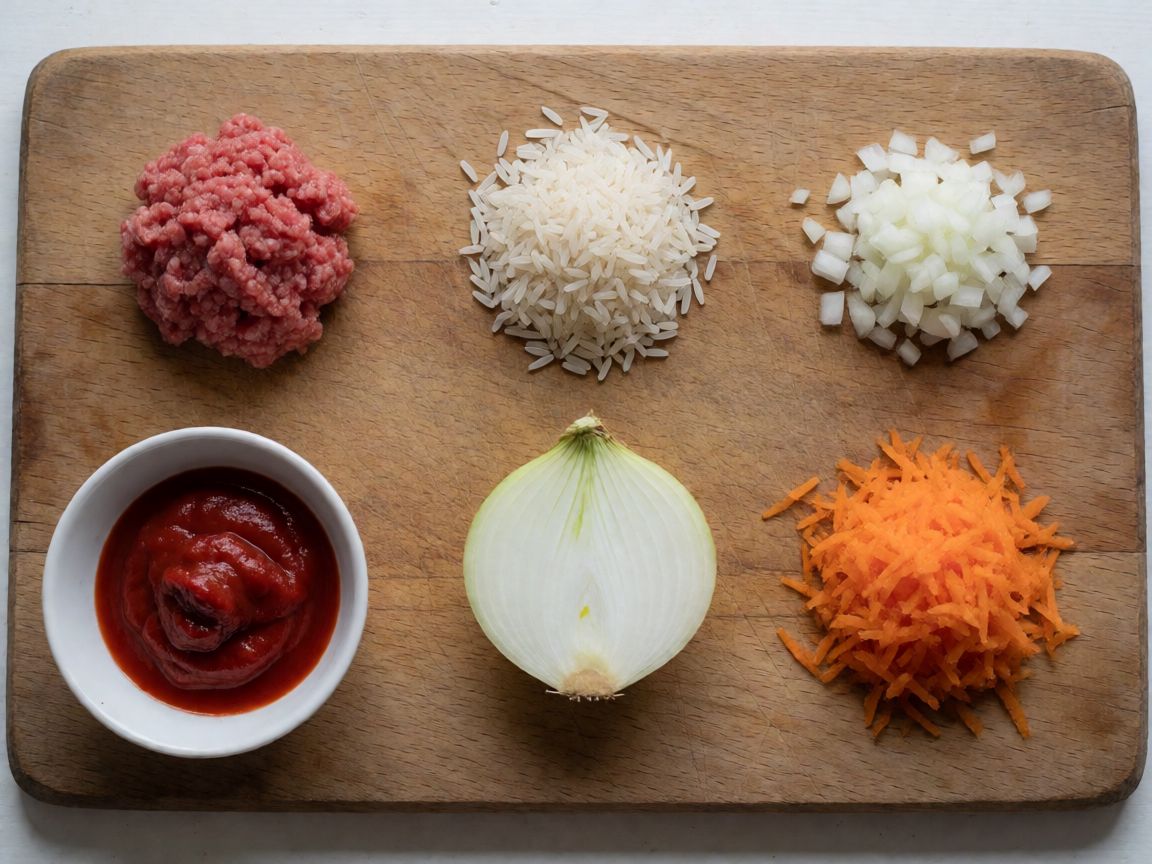
- 300 g Beef Mince
- 40 g Rice raw
- 0.5 pcs Onion finely chopped
- 1 pinch Salt
- 2 tbsp Tomato Paste
- 300 ml Water
- 1 pcs Carrot grated







Steps
Mix the beef mince with the rice, onion and salt, then shape into balls about 4cm wide.
Place the balls in a baking dish and pour over the water mixed with the tomato paste and grated carrot, until they are covered.
Cover with foil and bake at 200°C for 50 minutes, until the centre reaches 71°C.
50 minRemove the dish from the oven.
These are what Russians and Ukrainians call "yozhiki" — hedgehogs — because the raw rice inside the mince swells as it cooks and pokes little white quills through the meat. It's not a trick, it's physics: rice needs water and heat to gelatinise, and here it gets both from inside the meatball, pulling moisture in from the surrounding tomato liquid. That's the whole mechanism of the dish, and everything else follows from it.
What decides whether it works is whether the rice has enough liquid to finish cooking without the meatball drying out first. That's why the sauce has to cover the balls, not just sit under them — anything sticking above the waterline cooks by dry heat instead of wet heat, and you get a crust of raw-ish rice on top while the bottom is fine. The foil over the dish isn't decoration either: it keeps that liquid from reducing and evaporating before the rice is done, which in a British oven — fan-forced, no humidity to speak of — happens faster than you'd think.
Some say you should par-boil the rice first, to be safe. No — because then you lose the hedgehog. Pre-cooked rice is already swollen and soft; it won't pull in the tomato liquid the same way, won't hold its shape as a spike, and tends to turn to paste inside the meat. Raw rice is doing a job here, not just filling space.
Beef mince: look for something with visible fat in it, not the leanest tray on the shelf. Lean mince holds together worse when raw rice is mixed through it — rice is dry and crumbly, it needs the fat in the meat to bind and stay juicy through fifty minutes of oven heat. If your mince is very lean, a British pork sausage mince mixed half and half works fine; the mechanism doesn't care which animal, only that there's enough fat to carry the rice.
Rice: raw, plain, long-grain or short-grain, it doesn't matter which — what matters is that it is not pre-cooked, not "easy cook", not parboiled. Those have already had their starch set by steam under pressure; they won't absorb the tomato liquid the way raw grains will, and that absorption is what turns the outside of the meatball from dense mince into something lighter, almost fluffy, by the time it's done.
Onion, finely chopped rather than grated: grated onion releases water fast and makes the mix too wet to shape; chopped fine, it still gives moisture and sweetness as it cooks inside the meatball, but slowly, from little pockets rather than all at once. Salt is a pinch because the sauce reduces a little under the foil and concentrates its own saltiness from the tomato paste — season the meat lightly and let the sauce catch up.
Tomato paste and water: this is your sauce, thinned right down, because it has two jobs — flavour, and being enough liquid to cover the meatballs and feed the rice. If you only have chopped tomatoes, use them, but you'll need less added water, since they're already mostly liquid, and strain or blend them if you want a smooth sauce rather than chunks. Don't reach for ketchup as a substitute — it's sweetened and thickened differently, and it will scorch rather than reduce gently.
Grated carrot in the sauce isn't there for texture, it's there for sugar. Tomato paste is sharp and a bit flat on its own when it's just diluted with water; the carrot's natural sweetness rounds that acidity out while it cooks down, the same reason a Bolognese or a goulash often gets a carrot in the base. You won't see it as carrot by the end — it melts into the sauce — you'll taste its absence if you leave it out.
Shape the balls around four centimetres because size here is doing a timing job: big enough to hold their shape and not fall apart into the sauce, small enough that the centre reaches that 71°C and the rice inside is fully swollen by the time fifty minutes are up. Go much bigger and you risk the outside sauce looking done while the middle — meat and rice both — is still short of it; there's no shortcut for that except patience and, if you're unsure the first time, a thermometer in the fattest one before you call it finished.
·