
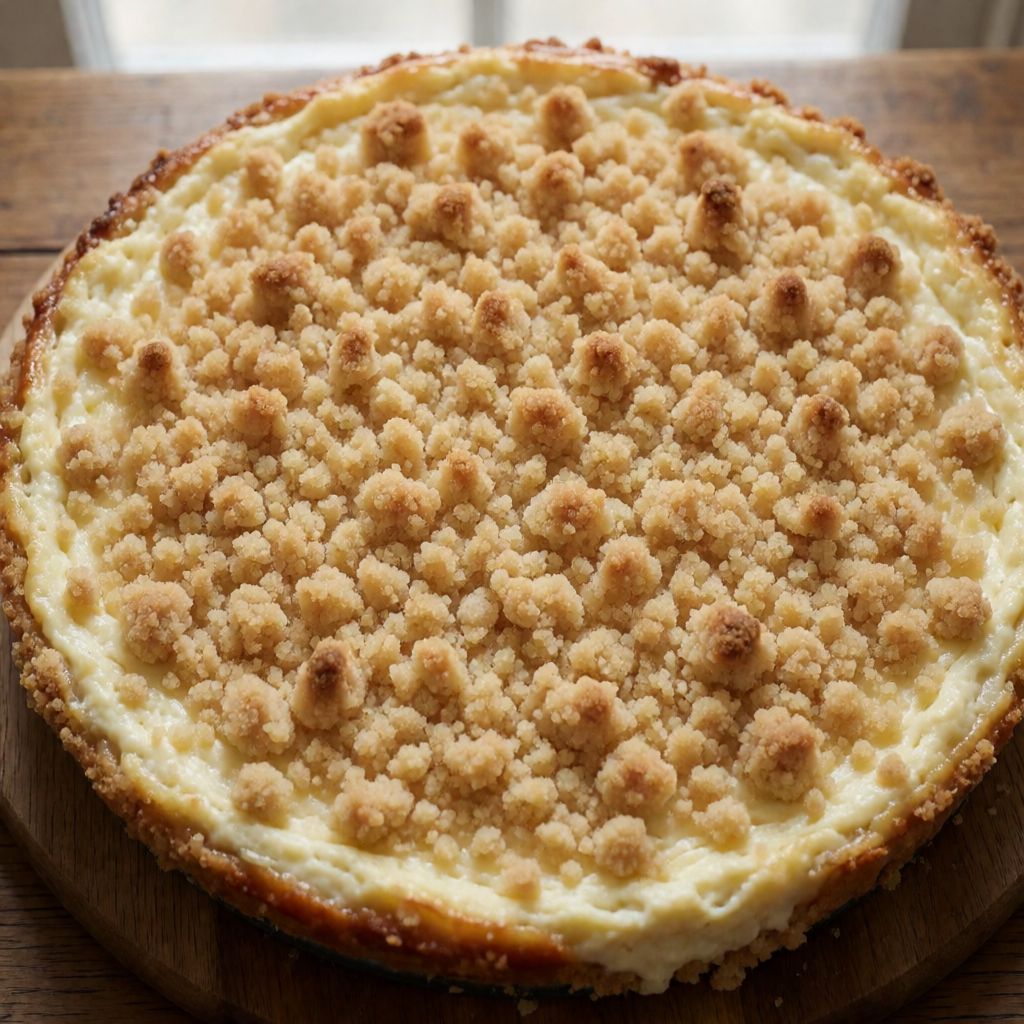
 AI photo
Delicate Ricotta Crumble Pie
A soft crumble-pastry pie filled with a smooth ricotta cream, scented with a touch of cinnamon.
Labels are worked out automatically from the ingredients and can be wrong. Check the packaging if it matters to you.
Ingredients
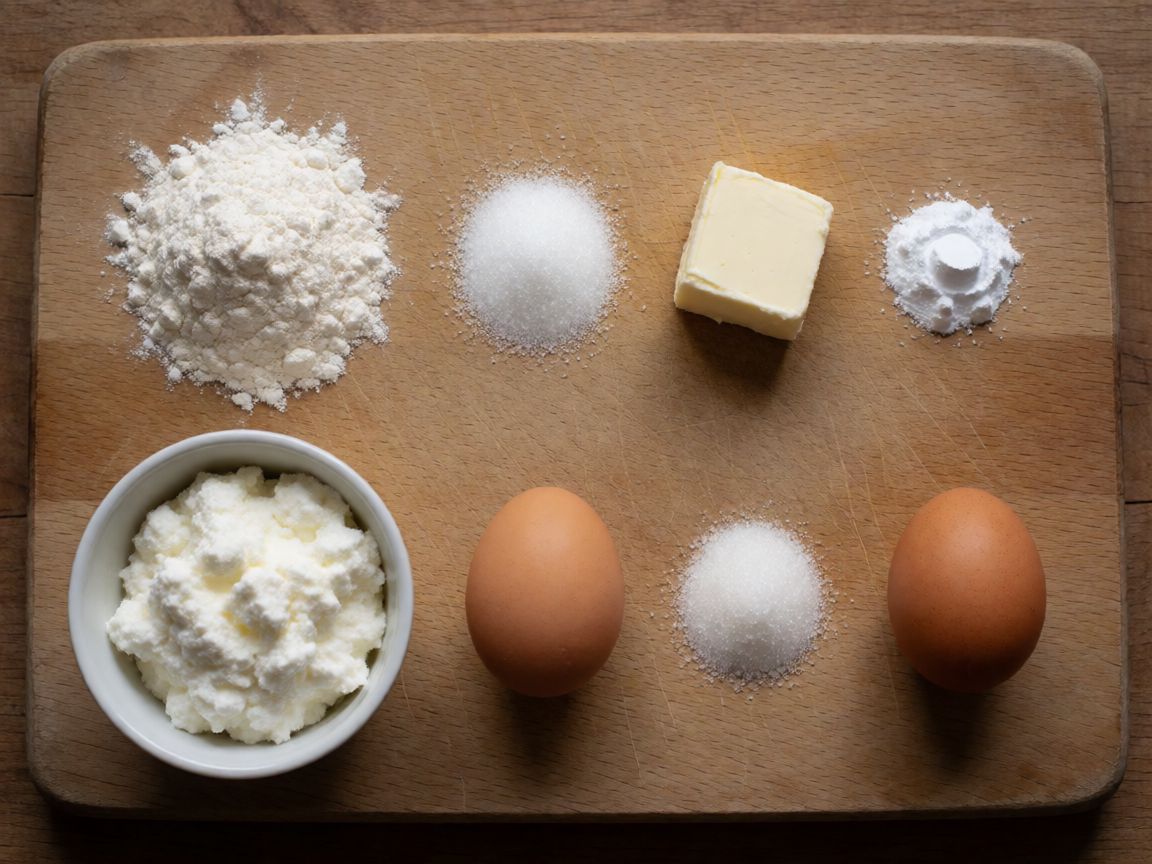
- 300 g Plain flour
- 120 g Caster sugar
- 100 g Butter cold, diced
- 8 g Baking powder
- 1 pcs Eggs
- 650 g Ricotta
- 50 g Caster sugar
- 1 pcs Eggs
- 1 pcs Egg yolk
- 1 pinch Cinnamon
- 1 pinch Icing sugar for dusting









Steps
Sift the flour into a large bowl, then add the sugar, egg and baking powder.
Add the cold diced butter and rub it in with your fingertips until you get a crumbly texture.
Wrap the dough in cling film and chill it in the fridge.
Beat the ricotta with the egg, yolk, sugar and cinnamon until smooth.
Spread half of the dough into the tin, pressing it down with a spoon.
Spread over the ricotta cream, then sprinkle the rest of the dough on top.
Bake in a preheated oven at 180°C on static (conventional) heat.
40 minLet the pie cool, dust with icing sugar and serve.
This is a crumble pie, not a tart: the whole trick is that the base is a rubbed-fat dough that stays crumbly rather than pastry-smooth, and that crumbliness is what decides whether this works at all. You're not rolling out a pie crust and pinching the edges — you're pressing loose, buttery sand into the tin with the back of a spoon. Some say a pastry dough needs to be kneaded to come together properly. No — the opposite. Kneading develops gluten, gluten makes it elastic, elastic means it shrinks back when baked and turns tough and biscuit-like instead of short and sandy. The whole point of rubbing cold butter into flour with your fingertips — not a mixer, not warm hands held under the tap first — is to coat the flour grains in fat before water or egg can touch them, so gluten strands never get the chance to form long enough to matter.
Underneath that crumb sits a ricotta custard, and the custard is the quieter half of the equation but just as unforgiving. Ricotta on its own is grainy and a little wet; egg, yolk and sugar bind it into something that sets like a loose cheesecake rather than weeping liquid under the top crust. The extra yolk (beyond the whole egg) is there for richness and colour, not for setting power you're short of — one whole egg already has enough protein to coagulate 650g of ricotta into a sliceable filling at oven heat.
Flour is just flour here — nothing fancy, no need to hunt down "00" grade. Plain flour with middling protein is actually what you want, because this is the one pastry where you're actively trying to avoid gluten development, not encourage it. If you only have self-raising to hand, drop the baking powder and expect a slightly softer crumb — it won't ruin anything, but it's not the same mechanism, so don't be surprised if the top layer sits a touch more cake-like.
Butter has to be cold and diced small, straight from the fridge, because the whole rubbing-in method depends on tiny solid pieces of fat melting slowly in the oven, leaving little pockets of air and short, sandy crumb behind them. If the butter arrives at room temperature it smears into the flour instead of coating it, and you lose the texture before you've even started. Margarine will technically rub in, but it carries more water and less structure, so the "crumble" ends up denser and a bit greasy at the edges — use it only if butter genuinely isn't available, not as an upgrade.
Caster sugar, not granulated, dissolves faster against the smaller amount of moisture in a rubbed dough, so the base doesn't end up with gritty undissolved crystals once baked. In the filling the smaller 50g sugar amount is deliberate — ricotta already carries a mild sweetness and a lot of moisture, so the sugar there is seasoning the custard, not carrying the whole dessert's sweetness; that job is shared with the icing sugar dusted on at the end, which also hides the crumb's slightly uneven surface, a cosmetic trick as old as crumble itself.
Ricotta is the one ingredient worth being fussy about. You want the firmer, drained kind sold in tubs at the chiller — not cream cheese, not cottage cheese, which is wetter and lumpier and will leave your filling split and watery under heat. If ricotta is genuinely unavailable, a well-drained quark or a thick strained yoghurt gets you closer than cottage cheese ever will, though you'll lose a little of ricotta's faint sweetness and need to compensate with a touch more sugar.
Cinnamon here is a single pinch for a reason — it's there to round off the ricotta's blandness, not to announce itself. This is where some people, chasing a "proper" flavour, dump in a full teaspoon and end up with something that tastes more like a spiced bun filling than a delicate baked cheese. Resist it; a pinch is a background note, not a headline.
On an ordinary UK hob-and-oven setup, the thing to watch is your tin size and oven's real temperature rather than the dial's number — domestic ovens run cooler or hotter than marked by a surprising margin, and a deep or narrow tin changes how long the centre needs to firm up compared to the edges. The 40 minutes given is a lower bound, not a target: you're done when the top crumb has turned from pale and wet-looking to dry and faintly golden, and the pie, given a gentle shake, wobbles like a set custard rather than sloshing like a raw one. And once it's out — leave it. Cutting into it hot is the fastest way to collapse that careful ricotta structure into soup on the plate; the custard needs the same patience cooling that the dough needed chilling, just at the other end of the process.