
 AI photo
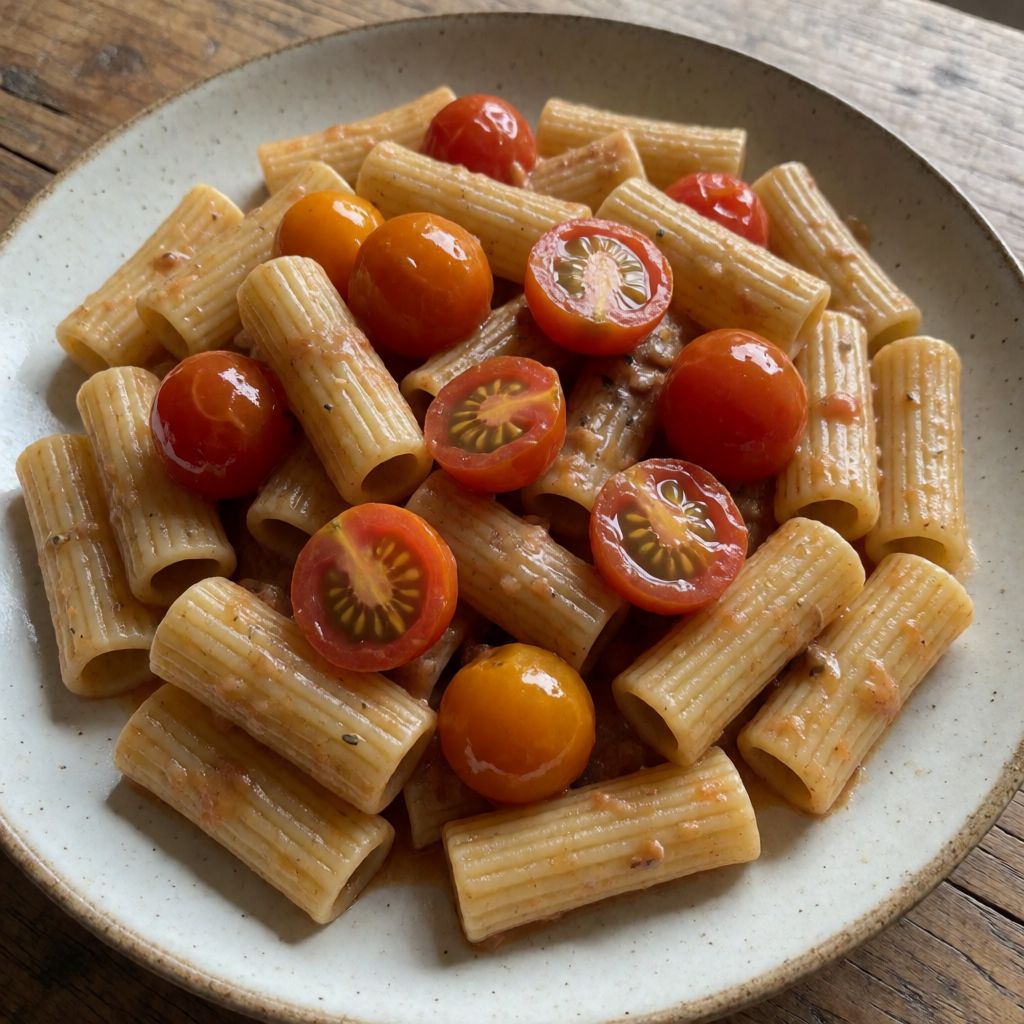
Wholewheat Mezzi Rigatoni with Anchovies and Datterino Tomatoes
A quick pasta dish with wholewheat rigatoni, anchovies, garlic and sweet datterino tomatoes.
Labels are worked out automatically from the ingredients and can be wrong. Check the packaging if it matters to you.
Ingredients
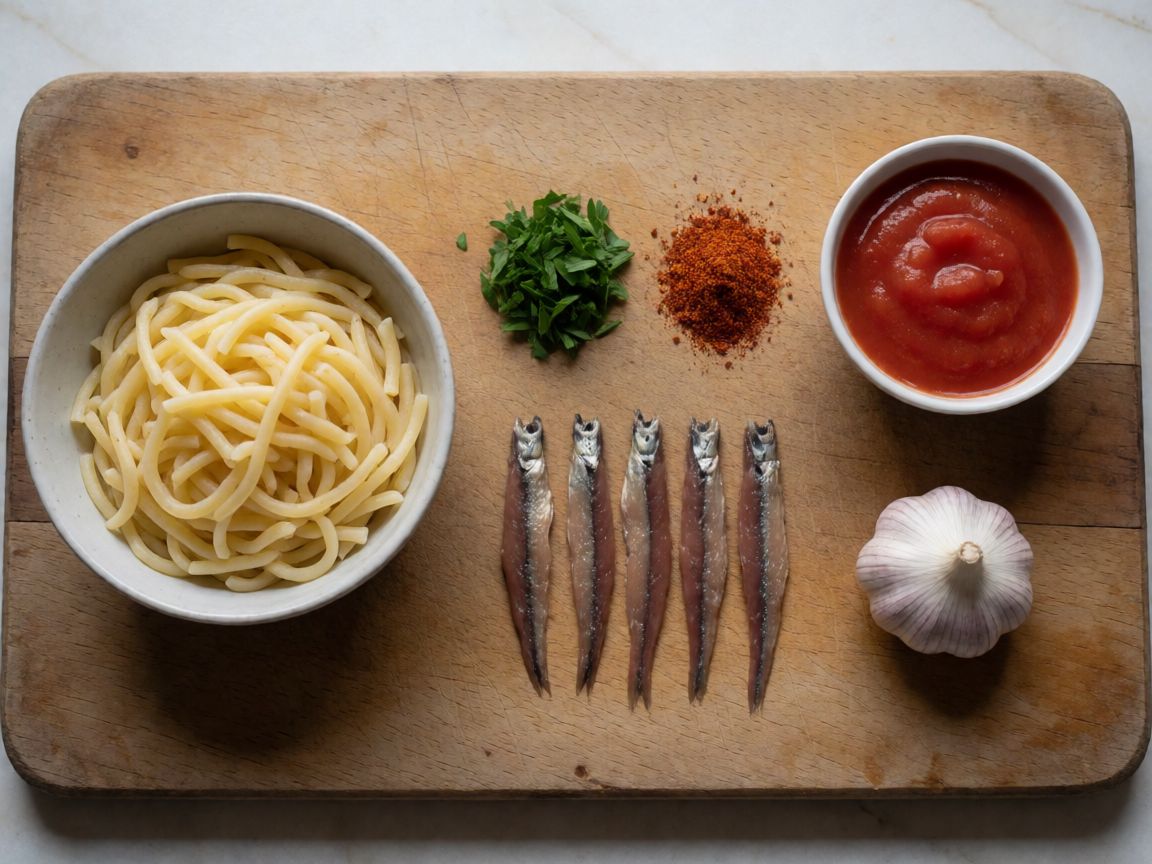
- 400 g Wholewheat mezzi rigatoni
- 2 tbsp Olive oil
- Parsley chopped, to taste
- pinch Ground chilli powder dried
- 200 g Datterino tomatoes
- 5 pcs Anchovies in oil
- Garlic to taste
- Salt to taste







Steps
Fry the garlic and anchovies in olive oil in a frying pan.
Add the datterino tomatoes and cook for about 10 minutes.
10 minSeason with salt, add a pinch of ground chilli powder, and sprinkle generously with parsley.
Add the pasta, cooked until al dente and drained.
Fry for a few minutes and serve, sprinkling with extra parsley if desired.
Forget the name for a second — this isn't pasta with tomatoes and some fish thrown in. It's an oil that's been given a job. Anchovies go in cold oil over a gentle heat and they don't stay anchovies for long: they break down, the flesh dissolves, the salt spreads through the fat, and what's left when you add the tomatoes is seasoning, not seafood. That's the whole engine of the dish. If you've ever been told anchovy pasta tastes "fishy" — no, because a properly melted anchovy doesn't taste of fish at all, it tastes of salt and depth, the way a good stock cube would if it came from the sea instead of a factory. Fishy is what happens when the anchovy hasn't melted — it's still sitting there whole, raw-tasting, because the oil was too hot, or you moved too fast.
What decides whether this works is entirely in the first few minutes, before the tomatoes even go in. Garlic and anchovy in oil is a narrow window: too gentle and the garlic never gives up its smell, too hot and the anchovy's own salt starts to catch and burn at the edges before the middle's dissolved — and burnt anchovy is bitter in a way you can't cook out later, no matter how much tomato you throw on top of it. You're listening for the garlic to start smelling sweet and nutty, not watching a clock, and you want the anchovy fillets going soft and disappearing into the oil rather than frying crisp.
A word on patience, because this recipe looks quick and in one place it genuinely isn't: the anchovy-and-garlic stage. Twenty-five minutes total sounds like nothing, but most of that time belongs to letting things melt and reduce on their own schedule, not yours. Push the heat up to save five minutes and you'll spend longer than that scraping bitterness off the bottom of the pan.
Anchovies in oil: buy the tinned or jarred ones that are actually sitting in oil, not the salt-packed kind that need rinsing and boning first — for this dish you want them soft and ready to go, not a separate prep job. Five fillets for four people isn't stinginess, it's the point — this is background, not protein. If you genuinely can't eat anchovy, there isn't a clean swap that gives you the same salty-savoury melt; a few capers and extra salt will get you something in the same direction, but it's a different dish wearing the same coat, and there's no shame in saying that plainly.
Garlic — to taste is the right instruction here, because this is a seasoning, not a vegetable. A clove or two, sliced rather than crushed to a paste, so it releases slowly instead of all at once and scorching. Olive oil should be a plain one for the cooking, nothing extra virgin and fruity wasted on frying — any oil with no strong smell of its own will carry the anchovy and garlic fine, save the good stuff for drizzling over the finished plate if you want it.
Datterino tomatoes are a UK supermarket item now, usually sold on the vine, sweeter and firmer than standard cherry tomatoes because they're bred for sauce rather than salad. If you can't find them, ordinary cherry tomatoes work — look for ones that feel heavy for their size, that's the sugar and juice, not air. Don't reach for tinned chopped tomatoes here; they're already broken down and watery, and you'll lose the burst-and-collapse texture that's half the point.
Chilli powder is there for warmth under the dish, not heat on top of it — a pinch, added once the tomatoes are cooking, so it toasts slightly in the oil rather than sitting raw and sharp. And the parsley: chop it and keep most of it back until the pasta's in the pan. Add it with the anchovies at the start and by the time you eat it's gone grey and flat — fresh herbs are a last-minute decision, not an early one.
Wholewheat pasta is worth defending for a second, because some cooks treat it as the "healthy" swap you make reluctantly. It isn't a lesser white pasta — it's a different texture altogether, nuttier and firmer, and it actually suits a sauce with this much salt and bite better than a delicate white pasta would, which this dish would simply overpower. Boil it in well-salted water until it still resists the tooth slightly, because it finishes cooking in the pan with the sauce — that last toss is where the starch on the pasta's surface grabs the oil and tomato and turns two separate things into one.