
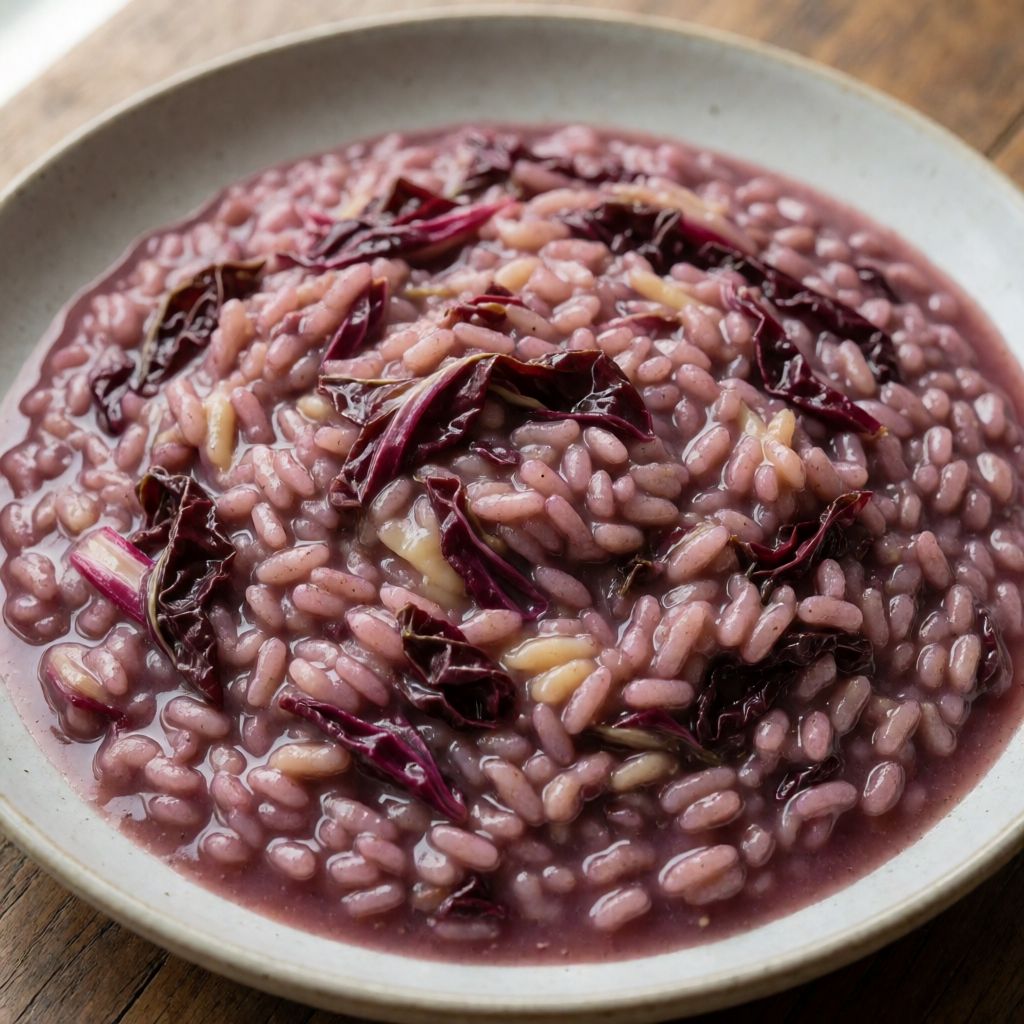
 AI photo
Dolcetto d'Alba and Radicchio Risotto
A creamy Piedmontese risotto with red wine and bitter radicchio, finished with melted fontina cheese.
Labels are worked out automatically from the ingredients and can be wrong. Check the packaging if it matters to you.
Ingredients
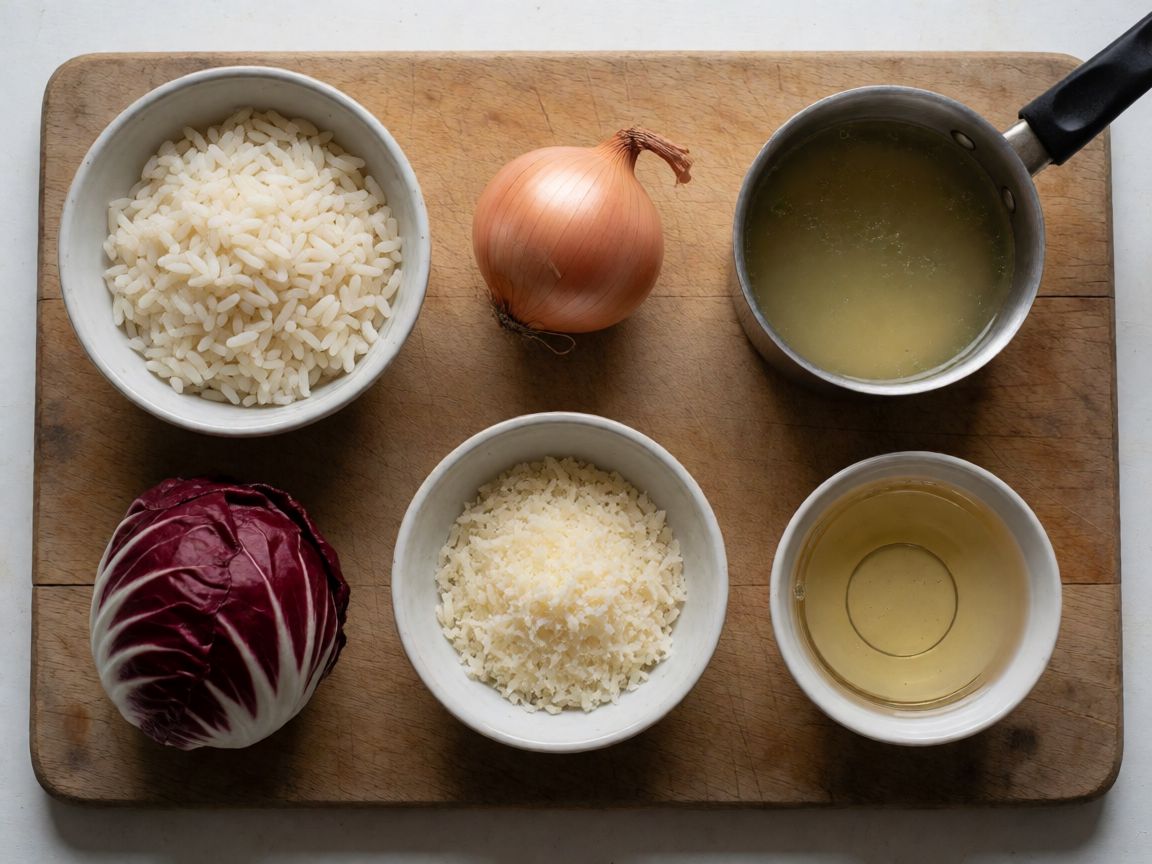
- 350 g Carnaroli risotto rice
- 1 pcs Onion
- 2 tbsp Olive oil
- 150 g Fontina cheese
- 1 pcs Radicchio
- Salt to taste
- Black pepper to taste
- 1 l Vegetable stock
- 250 ml Dolcetto red wine









Steps
Heat the olive oil in a pan and sauté the onion.
Add the radicchio and cook gently.
10 minAdd the rice, toast it briefly, then pour in the wine and let it evaporate.
Cook the risotto to doneness, gradually adding the stock.
Season with salt and black pepper, and stir in the fontina until smooth.
This is a wet rice dish, not a soup and not a pilaf — the Italians have a dreadful habit of calling it "risotto" as if that explained anything. What it actually is: rice cooked in liquid added a little at a time, so that each grain scrapes against its neighbours and bleeds just enough starch to thicken the liquid around it into a kind of edible gravy. The rice itself stays al dente — bite in the centre, give at the edge. Get that balance and you have risotto. Miss it either way and you have porridge or you have soup with rice floating in it.
What decides whether it works is heat and patience, not a stopwatch. The stock has to go in hot, because cold liquid shocks the grains mid-cook and they finish unevenly — some gluey outside, some still chalky in the middle. You add it in small amounts, not a flood, because a flood just boils the rice instead of coaxing starch out of it gradually. And you stir — not every second, that's the myth, your arm will survive a short rest — but often enough that no grain sits still long enough to catch on the bottom of the pan.
Radicchio is the part people underestimate. It's bitter by design — that's its whole identity as a leaf — and the cooking and the wine are both there to blunt that bitterness, not hide it. Dolcetto, the wine in the name, isn't decoration either: it's the house wine of the same Piedmont hills where this rice and this radicchio grow. One region feeding itself with what's on hand — that's the actual story behind the pairing, not some mystical idea that only this wine will do.
Rice first, because it decides everything else. Carnaroli, which this recipe asks for, is bred for exactly this job — it has a thick starchy coat around a core that resists breaking down. Arborio will do if that's what's in the shop, but it's softer and forgives you less if you overcook it; it slides from al dente to mush faster. Whatever variety, don't wash it. Washing strips the surface starch you're relying on to thicken the dish — that's not a step someone forgot to write down, it's a step deliberately left out.
The onion goes in first and slowly, in oil, to turn sweet rather than brown. Use any oil with no smell of its own — olive oil here is fine because it's mild, not because olive oil is sacred to risotto; a flavourless vegetable oil would do the same job with less character, which is sometimes exactly what you want. Burnt or browned onion at this stage means bitterness baked into the whole pot later, with no way to fix it once the rice is in.
Radicchio wilts down hard — a whole head looks like a lot and shrinks to not much, the way spinach does. The gentle cooking here isn't about softening the leaf, it's about cooking off some of its bitter compounds before they can dominate the finished dish; rushing this with high heat scorches the edges and makes the bitterness sharper, not softer. If radicchio isn't available, any bitter leaf that holds up to heat — chicory, a firm endive — gets you closer than skipping it altogether, though you lose the particular pink-to-brown colour it gives the rice.
The wine does two jobs: it deglazes whatever's caught on the pan from the onion and toasting rice, and its acidity cuts the richness that's coming later from the stock and cheese. It needs to actually evaporate — you're cooking off the alcohol and the raw harshness, not just adding a splash of flavoured liquid. If you don't have Dolcetto, any dry red without heavy oak will stand in; a white works too and gives a cleaner, less earthy result, which some cooks in the region actually prefer, wine snobbery aside.
Stock is the long game. If you've done a Sunday roast recently, the leftover bones make better stock than most things from a carton — simmered down, it has a backbone a cube never will. If not, a good shop stock kept hot in a jug beside the pan is the honest domestic substitute; just don't add it cold, for the reason above. Fontina melts smoothly and has enough fat to bind rather than seize — any semi-soft cheese that melts without turning rubbery or grainy will stand in, a young Gruyère or a mild Taleggio among them. A hard, dry cheese grated in at the end will sit in clumps instead of disappearing, and that's the usual reason a risotto looks finished but tastes unfinished.
As for how many it feeds — 350g of rice and a litre of stock is a proper four plates, not four tastes. Don't stretch it further by adding more stock at the end to cover a shortfall; that waters down what should be thick. Make less rice next time instead.