
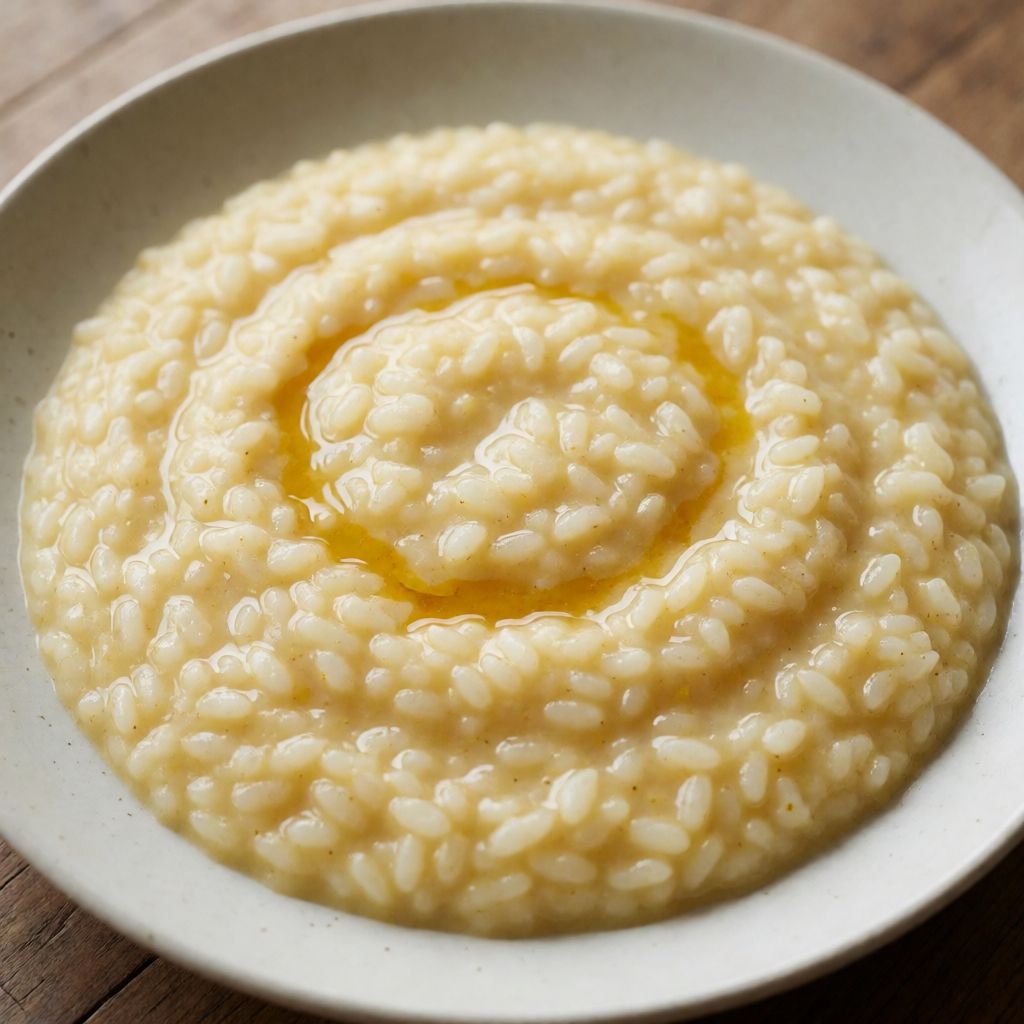
 AI photo
Light Saffron Risotto
A light saffron risotto, made with less butter and oil, enriched with a touch of yogurt instead of cream.
Labels are worked out automatically from the ingredients and can be wrong. Check the packaging if it matters to you.
Ingredients
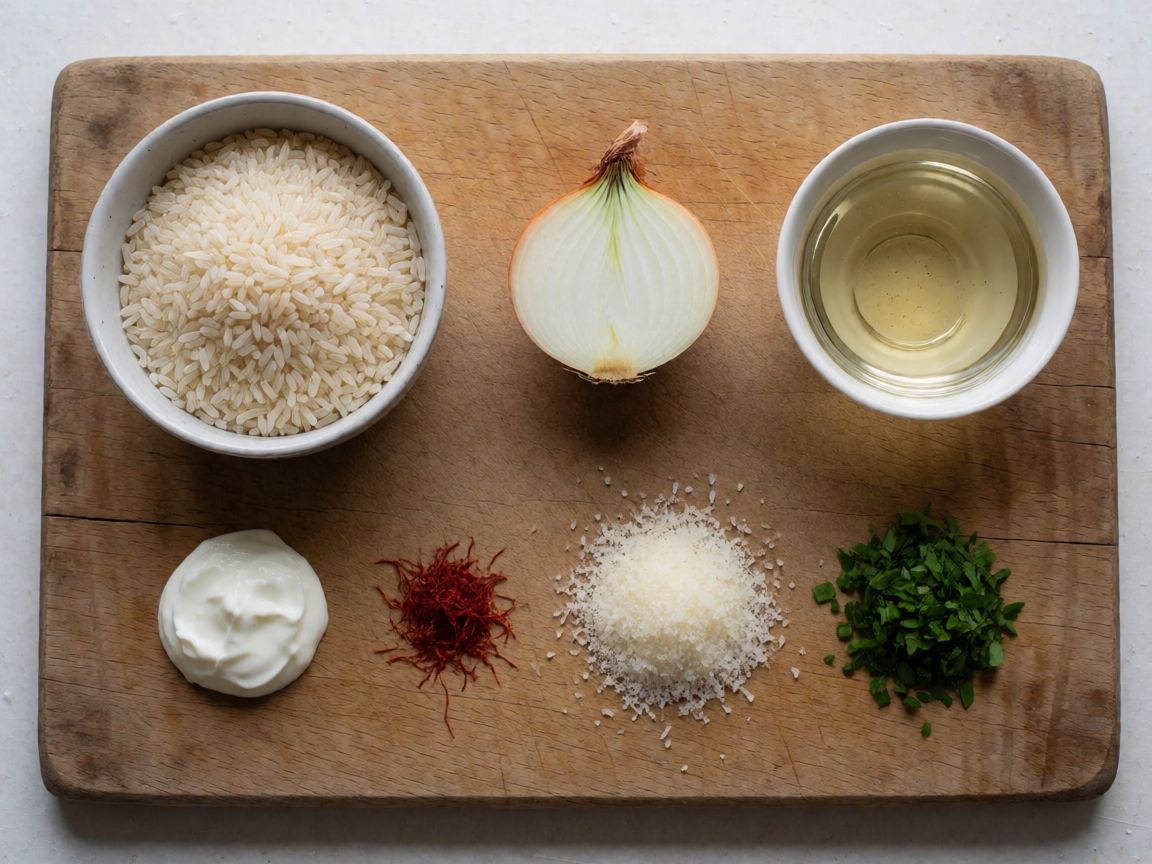
- 250 g risotto rice
- 0.5 pcs onion
- 125 ml white wine
- water to taste
- 2 tbsp low-fat plain yogurt
- 1 pcs saffron
- olive oil to taste
- pecorino to taste
- parsley to taste
- black pepper to taste
- pinch salt to taste










Steps
Thinly slice the onion and sweat it in 2 tbsp of hot water and 1 tbsp of olive oil until translucent.
5 minAdd the rice and stir well so it doesn't stick to the pan.
2 minAdd the white wine and let it evaporate.
2 minGradually add hot water, seasoning with salt to taste.
15 minWhen the rice is half cooked, stir in the yogurt and keep stirring until the rice is fully cooked.
5 minAdd the saffron, fresh parsley and black pepper to taste.
1 minLet the risotto rest for 2-3 minutes and serve with a generous helping of grated pecorino.
3 min
Risotto, under all the mystique, is a starch-management problem. Rice grains are coated in starch; your job is to rub just enough of it loose into the water, in stages, so it thickens into sauce around the grain while the centre of the grain stays barely resistant. This version does that job with a saffron thread for colour and scent, and a spoon of yoghurt instead of butter and cream to carry the richness — lighter on fat, same mechanism.
What decides whether it works is the heat and the water, not the grain count. Onion goes in with a splash of water as well as oil because onion left dry in hot oil browns at the edges before the inside softens — you want translucent, soft, sweet, not caramelised. Translucent is a thing you see: the white haze clears and you can almost see through the slices. That's the cue, not a stopwatch.
The wine isn't for flavour so much as for acid — it deglazes whatever stuck to the pan from toasting the rice, and that acid needs to cook off or the risotto tastes raw and sharp. "Evaporate" means the smell of alcohol stops hitting you when you lean over the pan, and the liquid in the pan looks syrupy, not winey.
A word on "medium heat", because the original recipe doesn't give you numbers either, and that's honest of it. On a domestic UK hob, with a decent-sized pan (wide, not a kazan — you want surface area so liquid reduces rather than steams), you're after a gentle, steady simmer-bubble throughout: lazy bubbles at the edge of the pan, never a hard rolling boil. A rolling boil toughens the outside of the grain before the inside gets a chance; a dead-quiet pan never releases the starch at all. Watch the bubbles, not the dial.
Half-cooked, in step 5, is a texture you bite for, not a time you wait for: the grain still has a firm white dot in the cross-section if you bit one in half, but the outside is soft. That's when the yoghurt goes in. Yoghurt here is doing butter's old job — finishing the dish with fat and tang so the starch-thickened water turns into something that clings to a spoon rather than pools under it. Low-fat yoghurt can split if it hits a very hot pan hard, so pull the heat back slightly and stir it through rather than dumping and walking off; full-fat yoghurt, or a spoon of crème fraîche, is more forgiving if you've got it, and plain soft cheese stirred through with a splash of the cooking water does a similar job in a pinch.
Risotto rice — Arborio, Carnaroli, Vialone Nano, whatever's on the shelf labelled "risotto rice" — isn't fussy branding, it's a short, fat, starchy grain bred to hold its shape while still giving up starch freely. Basmati or long-grain won't do this: wrong starch, wrong shape, you'll get fluffy separate grains or porridge, nothing in between. If risotto rice genuinely isn't available, pearl barley is the nearest domestic stand-in — it won't be risotto, but it follows the same gradual-liquid logic and gives a similar creamy-round result.
Saffron: one strand or a small pinch, because it is potent and expensive for the same reason — it's hand-picked stigmas from a flower that gives up very little per plant, which is the whole economic story of why it's sold by the gram like gold and not by the jar like paprika. Crush it between your fingers or steep it in a spoon of the hot cooking water before adding, so the colour spreads evenly instead of sitting in one orange streak. Turmeric will give you yellow and nothing else — fine for colour, no flavour trade, don't call it a substitute, call it a different dish wearing the same colour.
Olive oil "with no smell of its own" isn't really what you want here, by the way — a little fruitiness is welcome, but any plain cooking oil will carry the onion stage if that's what's in the cupboard; save a special oil, if you have one, for the last drizzle at the table rather than the sweating.
Pecorino is salty and sharp in the way Parmesan is salty and sharp — both are hard sheep's- or cow's-milk cheeses pushed hard on ageing and salt because that's how you preserve milk before refrigeration existed, which is the actual reason Italian hard cheeses taste the way they do, not some guarded secret. Use whichever hard grating cheese you've got; mild cheddar won't give you the same bite, but a hard, salty cheese of any origin will stand in.
Last point, the resting 2–3 minutes at the end: don't skip it thinking it's decorative. The risotto is still tightening as it sits — the starch keeps setting the sauce around the grain even off the heat — and serving it straight off the stove gets you something looser and thinner than what you'll get three minutes later. That's not a myth to break, that's just what starch does as it cools.