
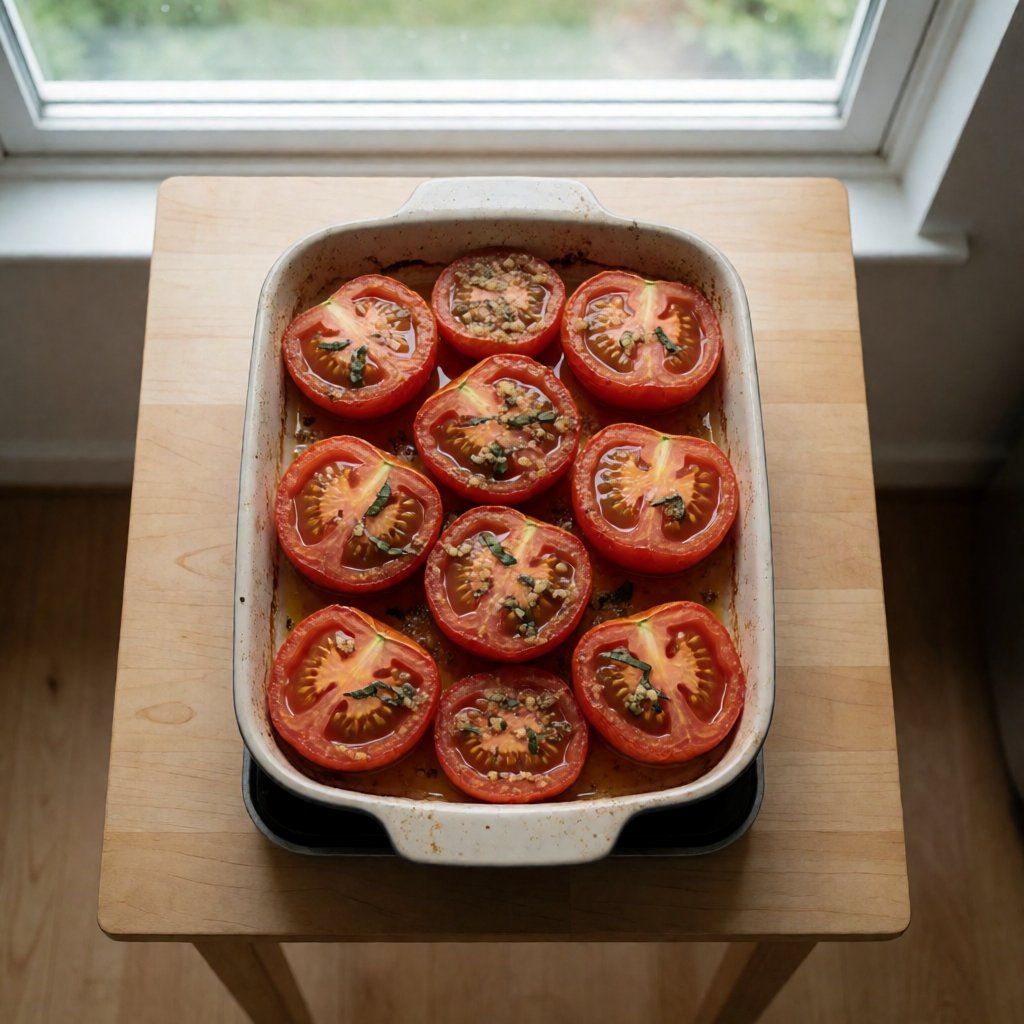
 AI photo
Baked Tomatoes with Garlic
Simple roasted tomatoes with garlic, finished with a quick blended sauce.
Labels are worked out automatically from the ingredients and can be wrong. Check the packaging if it matters to you.
Ingredients
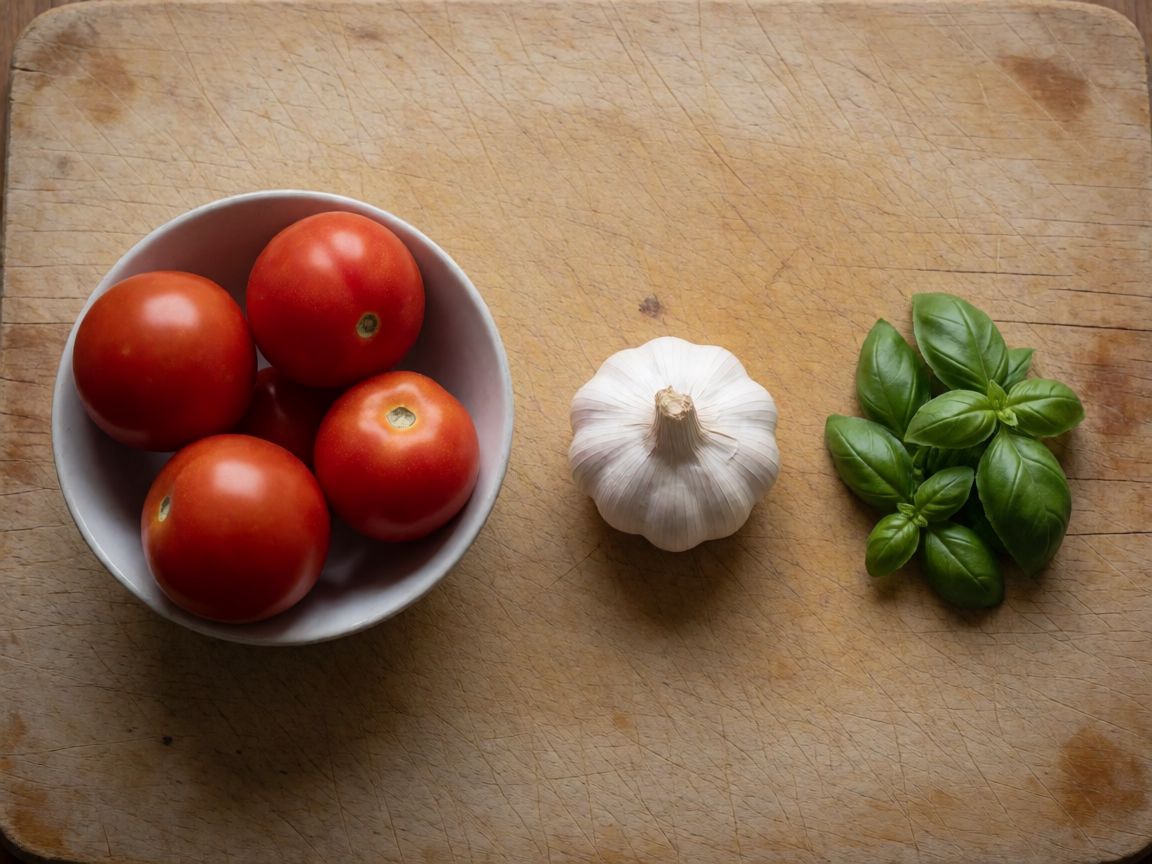
- 500 g Tomatoes ripe
- 1 pcs Garlic whole head
- 2 tbsp Sunflower Oil
- 1 pinch Salt to taste
- 1 bunch Basil to taste





Steps
Halve the tomatoes and slice the top off the garlic head.
Brush with oil, season with salt, and arrange cut-side up.
Place the tray in the oven and bake at 200°C for 30 minutes.
30 minRemove the tray from the oven.
For the sauce, blend everything with a hand blender.
This isn't a salad and it isn't a garnish — it's a sauce built by letting the oven do what reducing on the stove does, only drier and more honest about it. Tomatoes halved, cut side up, a whole head of garlic roasted alongside, then the lot — skins, blistered edges, soft garlic, all the juice that ran out — goes into the blender together. No cream, no flour, no trick to thicken it. What thickens it is water leaving.
What decides whether it works is two things happening at once at 200°C. The cut tomato flesh has to lose water fast enough that the sugar and acid left behind concentrate, instead of the tomato just stewing in its own juice. And the garlic, sealed inside its own skin, steams gently while the dry air outside mellows it rather than scorching it. Turn the tomatoes cut side down and you steam them instead of roasting them — wrong texture, wrong flavour. Peel the garlic before it goes in and the outside burns before the inside has softened. The skin on both, tomato and garlic, is doing a job, not just sitting there for looks.
Some say roasted garlic turns bitter, so people either avoid roasting it whole or wrap it in three layers of foil out of fear. No — bitterness comes from scorched sugar, and that only happens when the flesh is exposed directly to dry heat. Leave the skin on, slice the top so steam can escape and a little oil can get in, and the cloves cook through long before there's any danger of burning. That's the entire reason a whole head goes in rather than peeled cloves.
Tomatoes: you want ripe, which means real colour and a little give under the thumb, not the rock-hard, pale ones bred to survive a lorry journey rather than taste of anything. 500g for two people is generous — think one large tomato or two medium ones per person. British supermarket tomatoes are often grown for shelf life, not sugar, and if that's what you've got, lean on the salt a bit harder before they go in and give them a few extra minutes — roasting can't invent sweetness that isn't there, but it can concentrate what little is.
Garlic: one whole head, as fresh as you can find — firm, skin unbroken, no green shoot pushing up through the top. A sprouted clove has already spent its own sugar growing that shoot; roast it and you get nothing sweet back, just bitterness. If you can't get a decent whole head, peel several cloves and wrap them loosely in foil with a spoon of oil — the foil stands in for the skin as the steam barrier. You lose the little caramelised crust on the cut top, but the inside still goes soft and sweet.
Oil: two tablespoons is there to carry heat evenly into the cut surfaces and stop them drying out before they cook through — not to flavour the dish. Use anything with no smell of its own; sunflower is cheap and does the job, a light olive oil works too. Don't reach for a bold extra virgin here — its own bitterness will fight the sweetness you're trying to build in the oven. Save it, if you like it, for drizzling over the finished sauce at the table, where its flavour is a bonus rather than a rival.
Basil goes in raw, into the blender, after the tray comes out — never roasted. Heat drives off basil's aromatic oils within minutes; roast it alongside the tomatoes and you're left with wilted green leaf and none of the smell that makes it worth adding. Blend it in while everything is still warm but not cooking, so that top note survives the trip to the bowl.
Patience is the other ingredient here, and it's the one people skip. Thirty minutes at 200°C in an ordinary UK oven — no fan assumed, unless you know yours runs hot — is a floor, not a target. Turn it up to 220 or 250 to save time and you blister the outside before the inside gives up its water properly; you get char where you wanted caramel. Check by eye and by press, the way described above, rather than by the timer going off.
Serves two generously with bread for mopping, or scale the tomato up for more people and keep roughly one garlic head per 500g batch — garlic doesn't need to scale as fast as tomato. One head already carries enough sweetness and pungency to carry a decent amount of sauce without taking it over.
·