
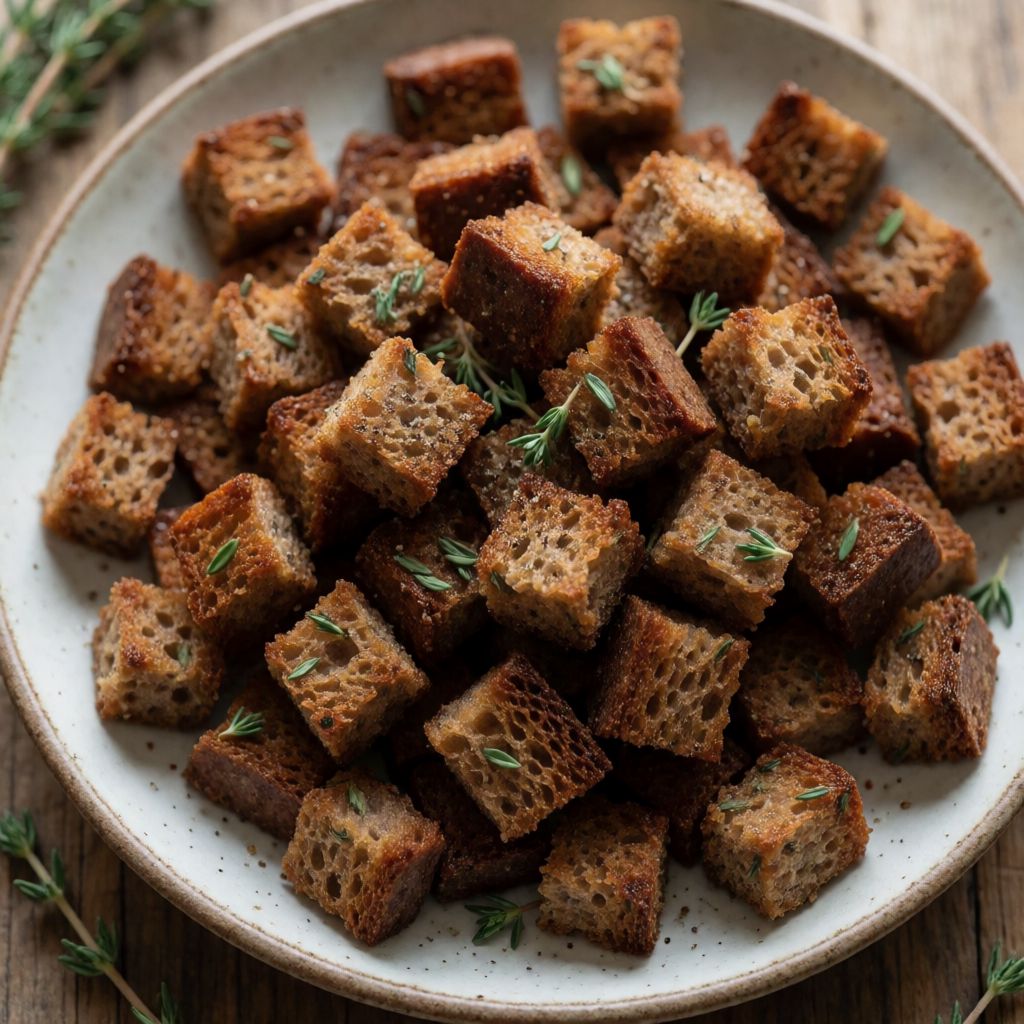
 AI photo
Rye Croutons
Crispy rye bread croutons flavoured with garlic, thyme and butter, great over soup or salad.
Labels are worked out automatically from the ingredients and can be wrong. Check the packaging if it matters to you.
Ingredients
- 2 pcs Rye bread slices
- 1 clove Garlic crushed
- 1 tsp Dried thyme
- 3 tbsp Butter
- Salt to taste
- Black pepper freshly ground, to taste




Steps
Cut the rye bread into small cubes and mix with freshly crushed garlic, thyme, salt and freshly ground black pepper.
Fry the bread cubes in a hot pan with melted butter or oil, stirring often, until crisp, or toss them with oil and bake in a preheated fan oven at 180°C for 15 minutes until crisp.
15 minLet cool slightly and serve over a salad or as a topping for soup.
This isn't a dish you serve on its own — it's a texture tool. Small cubes of rye bread, crisped in garlic butter, scattered over soup or a salad to give the spoon or fork something to bite against. Two slices feed four, because nobody eats a bowl of croutons; they eat a handful on top of something else.
What decides whether this works is heat and size, and they're linked. Cut the cubes too big and the outside burns before the inside dries out — you get a scorched shell round a damp middle. Cut them small and even, and the whole cube crisps through at the same rate. That's the real reason for "small cubes", not neatness.
Rye bread matters here more than people think. It's dense, close-crumbed, with less air in it than a white loaf. That density is what lets it hold butter and crisp without collapsing into crumbs or turning soft and oily. A light, airy bread would soak up the fat and go limp instead of crunchy — the structure just isn't there to resist it.
Garlic goes in raw, crushed, mixed straight into the bread before any heat touches it — not rubbed on afterwards like you'd do for bruschetta. That's deliberate: cooking the garlic together with the fat spreads its flavour through every cube instead of leaving it as a smear on the surface of a few. The risk is the one thing that ruins garlic every time — scorching it. Raw garlic in a screaming-hot pan goes bitter in seconds; garlic riding along in a 180°C oven with the cubes has time to soften and perfume the oil without catching. If you're doing this in a pan, keep the heat at a point where the butter sizzles gently rather than spits and smokes — that's your line between toasted and burnt.
Butter, not a neutral oil, because butter isn't just fat — it carries milk solids, and those solids brown and turn nutty as they heat, which plain oil can't give you. That's worth the extra attention it demands, since butter burns at a lower point than most oils. If you want margin for error, especially with the oven method, you can swap in any oil with no smell of its own — sunflower, a mild rapeseed — and get clean crisping without the risk, just without that last layer of toasted-milk flavour. Olive oil works too, but it brings its own taste, which can fight the thyme rather than back it up.
Dried thyme rather than fresh is right for this: dried herbs carry their aromatic oils in a more concentrated, more heat-stable form, so a short, hot contact with fat releases them rather than scorching them the way fresh leaves sometimes do at these temperatures. A teaspoon for two slices of bread is plenty — this is seasoning for a garnish, not a herb crust.
Salt and pepper: grind the pepper fresh if you can. Pre-ground pepper loses its aromatic oils to oxidation within weeks of grinding, so what you're adding is mostly heat with none of the citrus-and-wood smell that makes pepper worth using at all. It's a small thing on two slices of bread, but it's the difference between croutons that taste of something and croutons that just taste of crunch.
On the bread itself — if rye isn't in the cupboard, use any dense, close-crumbed loaf: a wholemeal sandwich loaf, sourdough a day or two old, that sort of thing. What you're after is bread that resists the fat rather than drinking it. You'll lose the faint sourness rye brings, which is its own thing and worth seeking out once, but you won't lose the crunch, and the crunch is the actual job here.
Last point, and it's an easy one to skip: let them sit a minute after cooking before they go anywhere near a salad or soup. Straight off the heat, a crouton is still steaming moisture out of its centre — toss it into a dressed salad or a hot bowl of soup at that stage and the steam and the liquid soften it before it's finished setting. A few minutes of rest lets the crust lock in while the inside stops being warm pudding. That's the whole of the patience this recipe asks for, but it's the part that decides whether what lands on the plate crunches or just sits there, warm and a bit sad.