
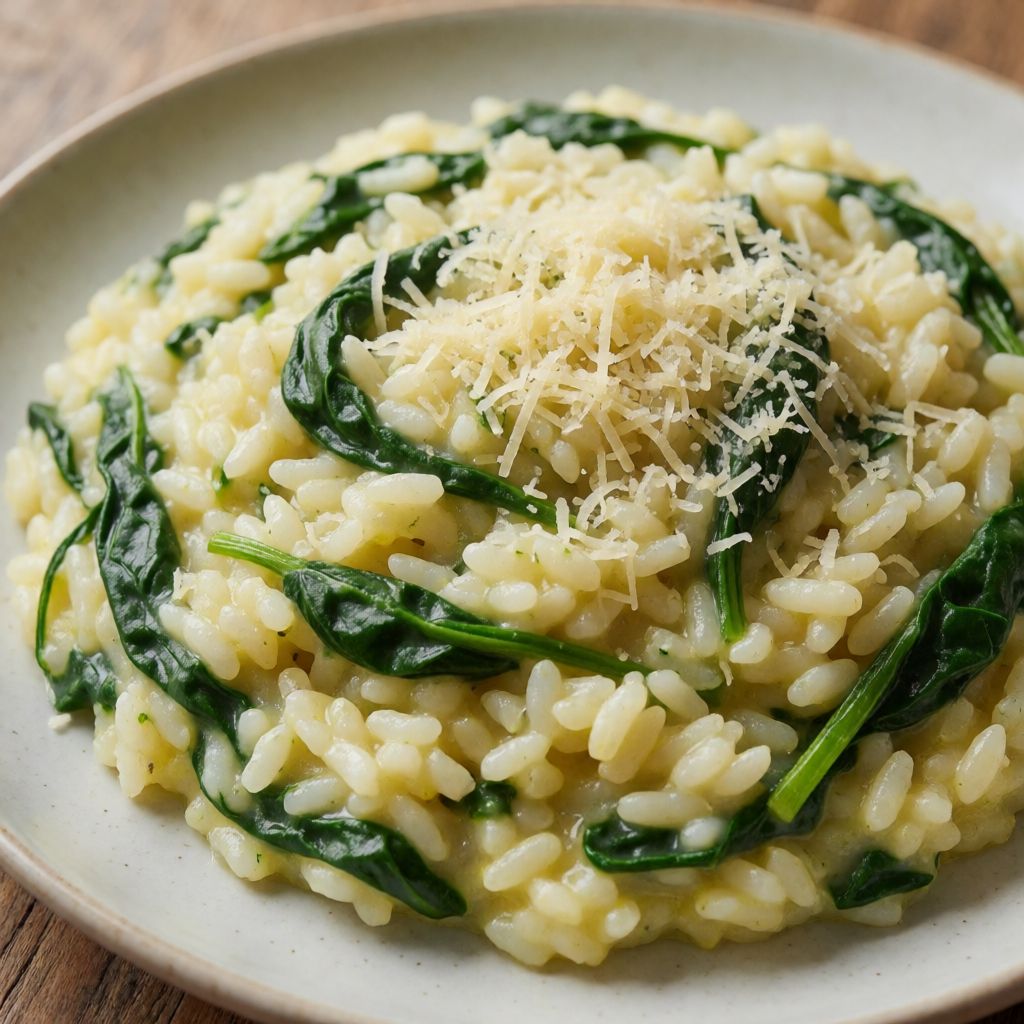
 AI photo
Spinach and Saffron Risotto
A creamy risotto with spinach and saffron, finished with grated Parmesan and a hint of nutmeg.
Labels are worked out automatically from the ingredients and can be wrong. Check the packaging if it matters to you.
Ingredients
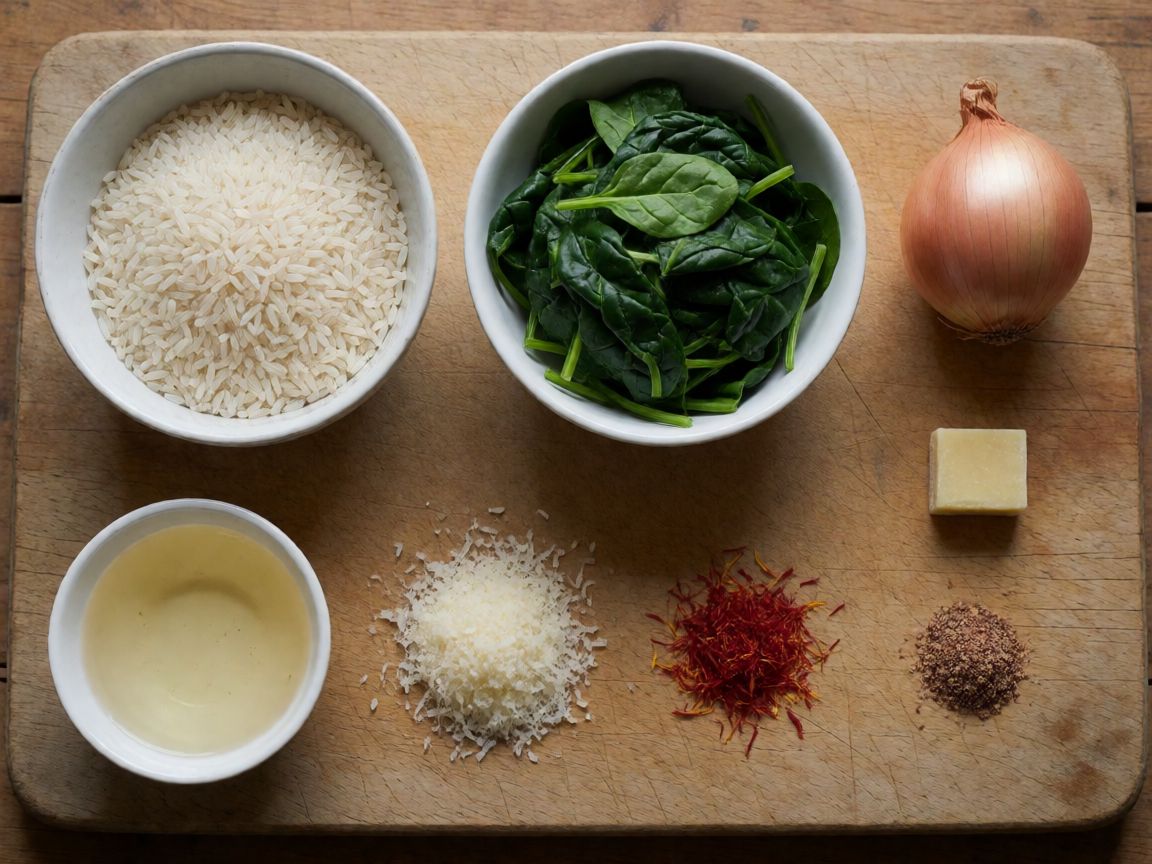
- 320 g Rice
- 200 g Spinach
- 1 pcs Saffron sachet
- 1 pcs Onion
- 1 tbsp Vegetable stock cube
- 2 tbsp Parmesan grated
- 120 ml White wine
- Nutmeg to taste
- Butter to taste
- Salt to taste
- Black pepper to taste
- Olive oil to taste












Steps
Melt the butter with the olive oil, add the finely chopped onion and lightly soften.
Add the rice and toast it, stirring constantly.
4 minPour in the dry white wine and let it evaporate over high heat.
Wash the spinach thoroughly and slice it thinly.
Add the spinach to the rice and gradually pour in the hot stock, stirring constantly.
When the dish is about half cooked, add the saffron.
When the rice is cooked through, remove from the heat and stir in the grated Parmesan.
Finish with black pepper and a pinch of nutmeg.
Serve the risotto hot, straight after cooking.
Risotto isn't a rice dish — it's a starch-management dish. Every grain of risotto rice (you're using something like Arborio or Carnaroli-type here, labelled simply "Rice" but it has to be a short, fat, starchy grain) is wrapped in two layers: a soft outer layer of starch that dissolves into the liquid, and a firmer core that stays al dente. The whole method — toast, splash wine, add liquid bit by bit, stir — exists to control how fast that outer layer breaks down. Rush it and you get wallpaper paste with crunchy centres. Go too gentle and nothing binds, and you've made wet rice soup.
What decides whether this one works is the stock-adding rhythm, not a clock. You add hot stock gradually and keep the pan at a lively simmer — a gentle, constant bubble, not a flat sit and not a hard boil. Too cold and the rice stews instead of releasing starch; too violent and it breaks the grains apart before the inside cooks. The stirring isn't ritual either — it drags starch off the grains into the liquid, which is what turns broth into that silky, slightly thick sauce clinging to the rice. Stop stirring and you just get boiled rice in soup.
The rice is the one ingredient you can't fudge with a substitute and still call it risotto. You need a short-grain variety bred to be starchy on the outside and firm in the centre — Arborio is the easy supermarket one, Carnaroli holds its shape slightly better if you can find it. Basmati, long-grain, "easy cook" rice — none of these release starch the same way, because the starch structure inside a long grain is different, built to stay separate, not to glue together. Use them and you'll get fried rice in broth, pleasant enough, just not this dish.
The stock cube stands in for a proper simmered vegetable stock, and that's an honest trade, not a cheat — most households don't keep a pot of stock on the hob on a Tuesday. Just dissolve it in enough hot water to keep topping up the pan, and keep it hot on a back ring or in a jug by the stove; cold stock added to hot rice stalls the cooking and you lose your rhythm chasing the temperature back up.
Wine's job is acid, not alcohol. It cuts through the butter and toasted-rice richness before the liquid stage starts, and it has to boil off properly — that's why it goes in over high heat, so the alcohol and raw-wine sharpness cook away and leave only the brightness behind. No wine in the house, a squeeze of lemon added later does a rougher version of the same job, though you lose the slight toasted edge the evaporating wine leaves on the rice.
Butter and olive oil together rather than either alone: butter brings flavour and helps the final stir-in (the famous "all'onda" wave you're after, where the risotto moves like a slow tide, not a solid block), olive oil raises the point at which the fat starts to burn, so the onion softens rather than catching while you're busy chopping spinach. Any neutral oil with no real smell of its own will do if olive oil feels wrong for the dish — sunflower, groundnut — the point is a fat that won't fight the saffron.
Parmesan goes in off the heat, after you've pulled the pan away from the flame. On the heat it seizes and goes grainy, because the cheese's fat and protein separate under direct high temperature — off the heat, the residual warmth melts it smoothly into the sauce instead. Any hard, well-aged grating cheese with a similar dry, sharp character will stand in — Grana Padano, a mature cheddar in a pinch, though you'll trade some of that nutty depth for sharper tang.
Nutmeg is a spinach habit, not a decoration — it's been paired with greens in European cooking for centuries because its warmth balances the slightly mineral, bitter note spinach carries, the same logic behind nutmeg in creamed spinach or a béchamel. A few scrapes is a seasoning, not a flavour of its own; more than a pinch and it starts to taste like the dish is trying to be a pudding.
And the patience point, since it's easy to skip past: the gradual stock-adding is slow on purpose. Each ladleful needs to mostly absorb before the next goes in, which means standing at the pan, not setting a timer and walking off to lay the table. Forty minutes of cook time includes that standing — it's not oven time you get back, it's attention you're spending, and there's no shortcut that doesn't cost you the texture.