
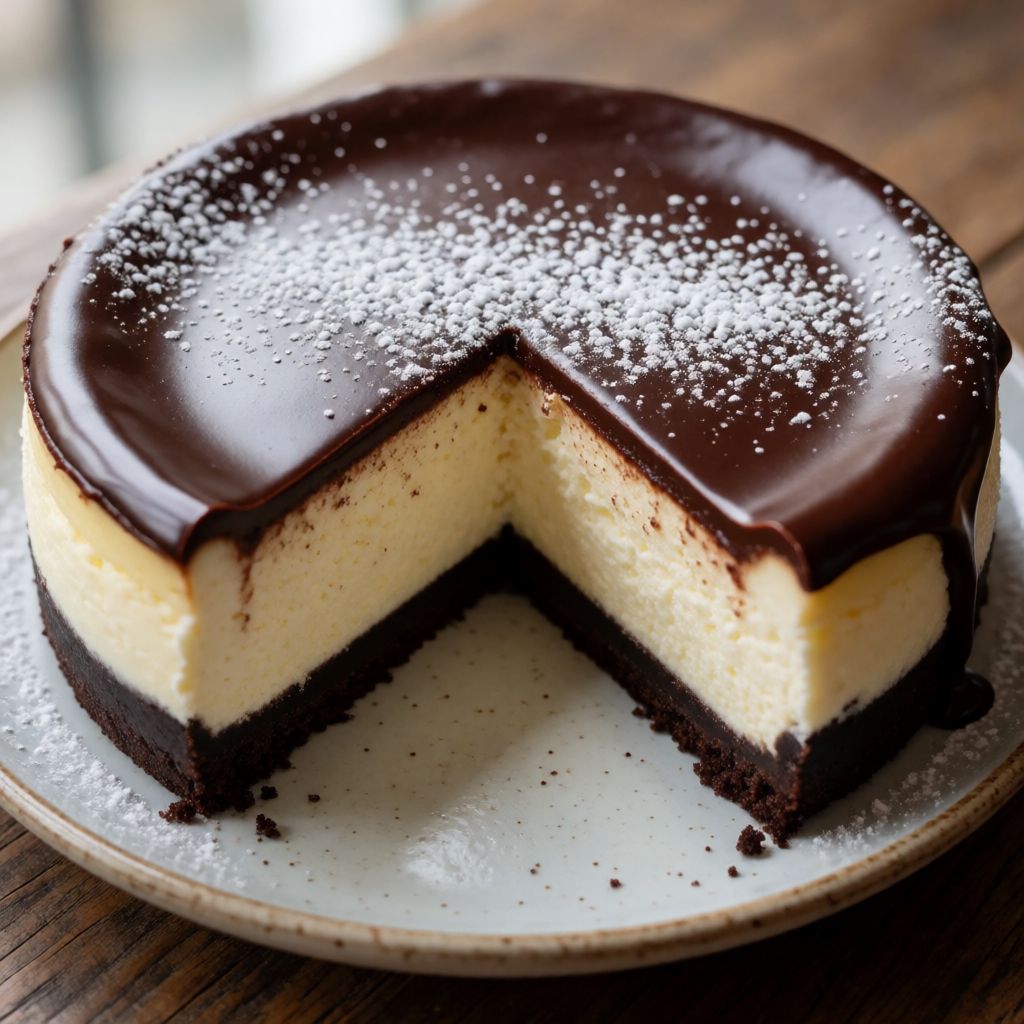
 AI photo
Sacher Cheesecake
A no-bake chocolate cheesecake inspired by the classic Sacher cake, finished with a glossy chocolate ganache.
Labels are worked out automatically from the ingredients and can be wrong. Check the packaging if it matters to you.
Ingredients
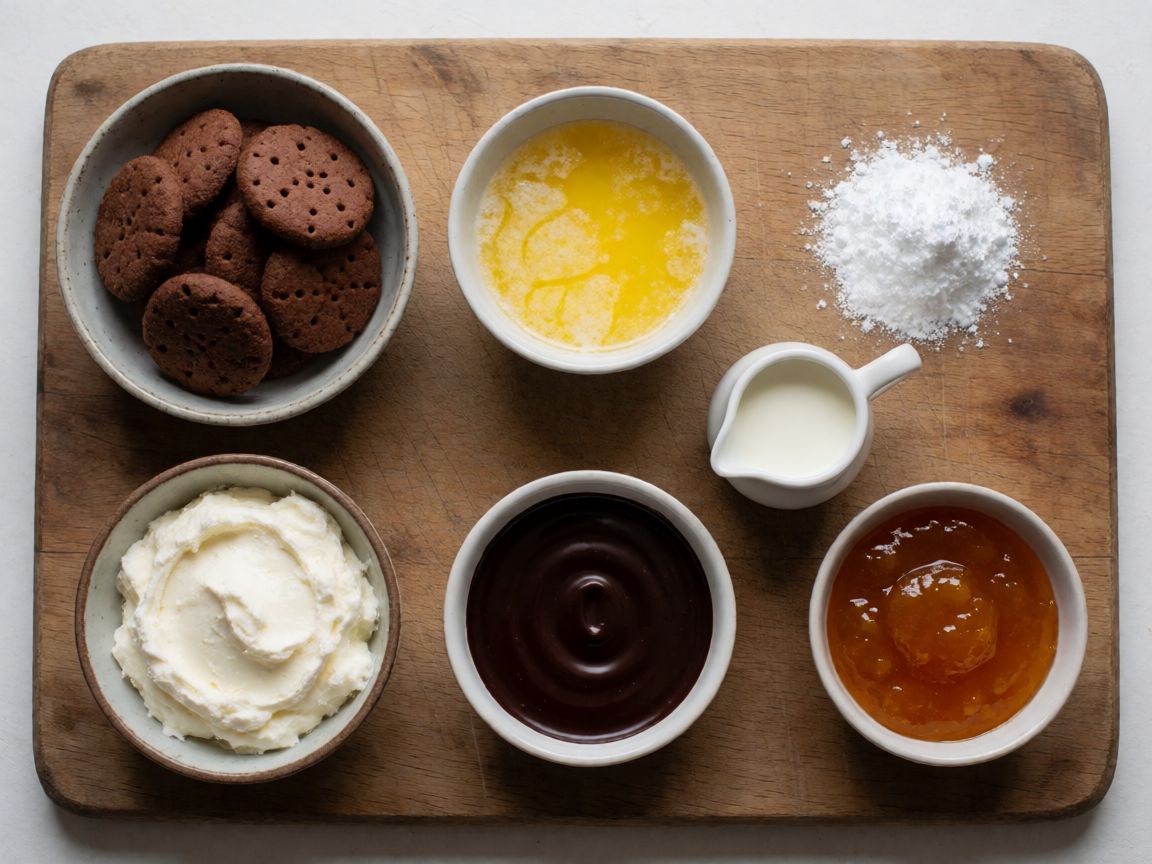
- 200 g Chocolate digestive biscuits
- 100 g Butter melted
- 500 g Mascarpone
- 500 g Dark chocolate
- 125 g Icing sugar
- 400 ml Double cream or plain unsweetened whipping cream
- 200 g Apricot jam about




Steps
Crush the chocolate digestive biscuits and mix with the melted butter. Press firmly into an even layer on the base of a baking-paper-lined tin and smooth it out.
Put the tin in the fridge.
With a mixer, beat the mascarpone, add the melted dark chocolate and mix until smooth.
Separately whip the double cream with the icing sugar until it holds stiff peaks.
Gently fold the two mixtures together, stirring from the bottom up.
Spread half of the cream over the biscuit base and level it.
Spread the apricot jam evenly over the top.
Spread the remaining chocolate cream on top and level it.
Put the cake back in the fridge.
Make the ganache: combine the cream and dark chocolate in a saucepan and melt over low heat, stirring.
Let the ganache cool slightly.
Pour the ganache over the surface of the cheesecake.
Chill the cake in the fridge for 4–5 hours.
240 minIf you like, pipe a decorative message using a piping bag.
This is a no-bake cheesecake wearing the name of Vienna's most famous cake — the apricot-and-chocolate pairing is the only thing it genuinely borrows from Sacher-Torte. The real Sacher is a baked almond sponge, apricot glaze, chocolate icing; this is mascarpone and cream set with chocolate in a fridge. Nobody in Vienna would call it that. Doesn't matter. The logic of it is sound and worth understanding on its own terms.
What decides whether it works is temperature control at three separate points, and the biscuit base is the one people rush and ruin. Melted butter plus crushed biscuit, pressed hard, then chilled before anything touches it — that's not decoration, that's glue. Butter is a fat that's liquid warm and solid cold; press it in warm and it holds nothing, chill it first and it sets into a floor that can bear the weight of two kilos of filling without crumbling when you slice.
The second decision point is the fold at step 5. You've made two things that want to behave differently — a heavy chocolate-mascarpone paste and a light whipped cream — and the only way to keep the air you beat into the cream is to go in gently, bottom to top, not round and round. Stir it like batter and you knock the air straight back out; the filling turns dense and sad instead of holding its shape when cut.
Mascarpone is the structural ingredient here, not a flavour one — it's a high-fat, low-moisture cheese, which is why it holds shape without gelatine and without an oven. If you can't get it, full-fat cream cheese beaten until smooth will do a similar job, though it's sharper and less silky; don't reach for ricotta, it's too wet and the filling will slump.
Dark chocolate: anything from 54% to 70% cocoa works, and the percentage is really a sweetness dial — the icing sugar in the cream is there to balance whatever bitterness the chocolate brings, so a cheaper, sweeter dark chocolate means you could ease off the sugar slightly. Melt it gently — bowl over simmering water, not direct heat, because chocolate seizes (goes grainy and stiff) the moment water or too much direct heat hits it, and a seized batch can't be rescued by more cream.
Double cream is non-negotiable for whipping to stiff peaks — it's the fat content, around 48%, that lets it hold air. Single cream or anything labelled "whipping" with lower fat will just go to soft billows and never stiff peaks, and your filling won't have the backbone to slice cleanly. "Plain unsweetened whipping cream" in the ingredient list is the fallback version, slightly less rich, still workable, don't panic if that's what's in the fridge.
The apricot jam is doing exactly what it does in the original Sacher-Torte — a thin layer of something sharp and fruity cutting through what would otherwise be an unbroken wall of chocolate and fat. Some say any red jam will do; no, because the tartness of apricot is specifically what the chocolate is built to argue with — raspberry works at a push for the same acid reason, strawberry is usually too sweet and flat to do the job.
For the biscuit base, chocolate digestives are convenient in a British kitchen because they're already seasoned with a bit of cocoa and sugar, but plain digestives, ginger nuts, or any dry biscuit that crushes to sand rather than dust will work — just taste the crumb with the butter before you commit, because that's your only flavour check at this stage.
On equipment: you don't need a springform tin specifically, but you need a tin with a removable base or sides, because this cake has no structural strength until it's chilled solid — try to turn it out of a solid tin and you'll tear the base clean off. A loose-bottomed tart tin, a springform, anything that releases sideways or from underneath, that's the requirement, not the brand.
Patience is the actual ingredient that makes this cake, not an afterthought to the recipe. Four to five hours chilling isn't a suggestion with room for negotiation — it's the time the fat crystals in the cream and the cocoa butter in the chocolate need to re-solidify into a structure that holds a slice upright. Cut it at three hours because you're hungry and it'll sit down flat on the plate rather than stand proud. Overnight is better than the stated minimum, if you've got the fridge space and the self-control.