
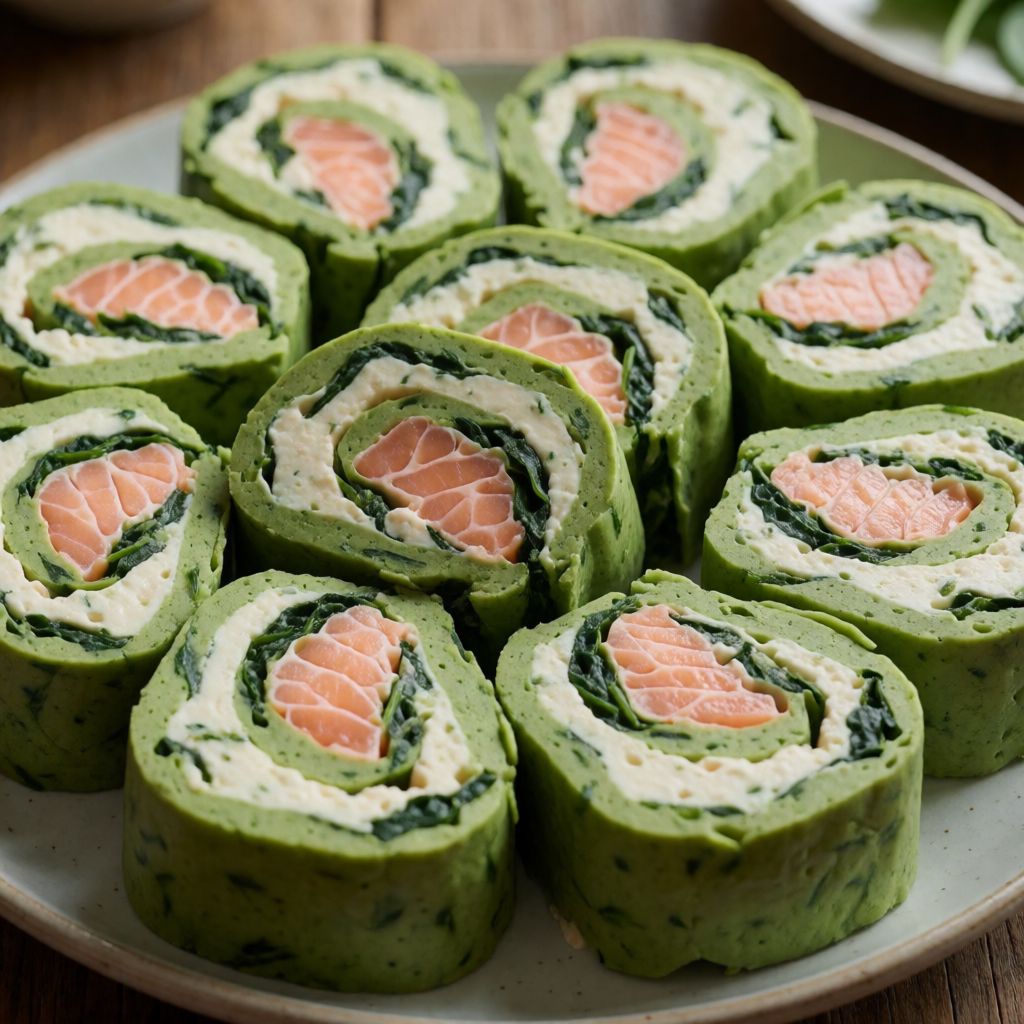
 AI photo
Salmon and Spinach Roulade
A classic smoked salmon and spinach roulade, perfect as a light starter or main.
Labels are worked out automatically from the ingredients and can be wrong. Check the packaging if it matters to you.
Ingredients
- 400 g Spinach thawed
- 50 ml Milk
- 2 pcs Eggs separated into whites and yolks
- Salt
- Black pepper freshly ground
- 100 g Cream cheese
- 1 bunch Dill finely chopped, fresh
- 0.5 pcs Lemon juice only
- 200 g Smoked salmon
- 1 pinch Dill fresh
- 3 bunch Lettuce leaves washed, for serving
- 1 pcs Lemon cut into wedges










Steps
Drain the liquid from the thawed spinach, squeezing it in a sieve to remove as much moisture as possible.
5 minMix the milk, egg yolks, salt and pepper, then stir in the spinach.
Whisk the egg whites to stiff peaks, gently fold 2 tbsp of the whites into the spinach mixture, then fold in the rest.
Spread the spinach mixture onto baking paper in a rectangle about 25 x 30 cm.
Bake in a preheated fan oven at 180°C for about 15 minutes, until the surface turns golden.
15 minTurn the base out onto a large board and remove the paper once it has cooled slightly.
3 minMix the cream cheese, half the dill, salt, pepper and a squeeze of lemon juice until smooth.
2 minSpread the mixture over the cooled spinach base, leaving a 4-6 cm border unfilled.
Lay the salmon slices on top, sprinkle with the second half of the dill (keeping a little for garnish) and roll tightly so the roulade closes on the unfilled border.
2 minWrap the roulade in cling film and chill for at least 1 hour before serving.
60 minCut into slices about 2 cm thick with a sharp knife, wiping the knife with cold water between each cut.
Arrange the roulade slices on a bed of lettuce, sprinkle with fresh dill and grated lemon zest.
2 min
Forget the word "roulade" for a second — this is a spinach omelette that's learned to roll itself into a bandage round smoked salmon and cream cheese. No flour, no gelatine, no clever binder. The whole structure stands on egg protein, the same way a soufflé does, just baked flat instead of risen in a dish. That's why the whites get whisked separately and folded in rather than just cracked into the bowl — air trapped in the whites is what holds the sheet together enough to roll without cracking down the middle.
What decides whether this works is moisture, twice over. First out of the spinach: thawed spinach is basically a wet sponge, and if you don't wring it out properly in a sieve, that water comes out in the oven instead, and you get a soggy, slippery base that tears the moment you try to roll it. Second out of the roll itself: it has to chill, wrapped tight, before you cut it — not for flavour, for structure. Warm cream cheese is a spread; cold cream cheese is a solid that holds a slice shape. Patience here isn't a virtue, it's an ingredient with its own job.
Some say a roulade needs a tea towel to roll on, rolled up and left to cool before filling, like a Victoria sponge roll. No — because this base isn't flour-and-sugar sponge with gluten and elasticity, it's set egg and spinach, closer to a frittata. Roll it cold-ish but not bone dry, fill it, then roll once, gently, using the unfilled border to seal the seam — that's the only rolling it gets.
Spinach: thawed frozen spinach is the right choice here, not a failure of ambition — fresh spinach would need wilting down first anyway, and you'd lose moisture control at a stage you can't easily fix. The whole point is spinach with almost no free water left in it, so squeeze it properly in a sieve, really press, don't just let it drip. If you only have fresh, wilt it hard in a dry pan first, cool it, then squeeze exactly the same way.
Eggs: this is a two-job ingredient, split deliberately. Yolks go in with the milk and spinach for richness and colour, binding the mixture at the molecular level as they cook. Whites go in whipped, for structure and lift — this is a flat soufflé technique borrowed for a savoury, cold sheet. Fold gently, don't stir: knock the air out and the base turns dense and rubbery instead of light enough to roll.
Cream cheese: full-fat, plain, the supermarket tub kind is exactly right — nothing fancy needed, because its job is to be a cold, spreadable, slightly tangy backdrop that won't fight the smoked salmon. If you only have cottage cheese or ricotta, drain it hard first, or you reintroduce the same moisture problem you just solved with the spinach.
Smoked salmon: the salt and smoke here are doing the seasoning work that the spinach layer deliberately underplays — that's why the spinach mix only gets a modest hit of salt and pepper, the salmon brings its own. Cold-smoked, pre-sliced is standard and correct; it's flexible enough to lie flat without tearing when rolled. Hot-smoked salmon flakes and won't lie in a sheet, so it's the wrong texture for this particular job, even though it's lovely elsewhere.
Dill and lemon: lemon juice in the cream cheese isn't decoration, it cuts the fat of the cheese and lifts the whole filling so it doesn't taste flat next to the smoky salmon. Dill is traditional with salmon for the same reason British cooks reach for it with trout or mackerel — it's one of the few herbs that doesn't get bullied by oily fish, it has enough of its own sharpness to hold a conversation with it. No dill in the house, fresh chives or a little fresh tarragon will do the same cutting job, though the flavour shifts.
On the oven: "preheated fan oven, 180°C" matters because you want the surface setting and lightly colouring at a steady rate — too cool and the spinach layer stays wet and floppy in the middle even once the top looks done; too hot and it dries and cracks before it's set through, which is exactly the crack you don't want when you roll it. A domestic fan oven holds this evenly enough; if you've only got a conventional (non-fan) oven, you'll likely want it a touch hotter and watching rather than timed, because the heat sits less evenly round the tray.