
 AI photo
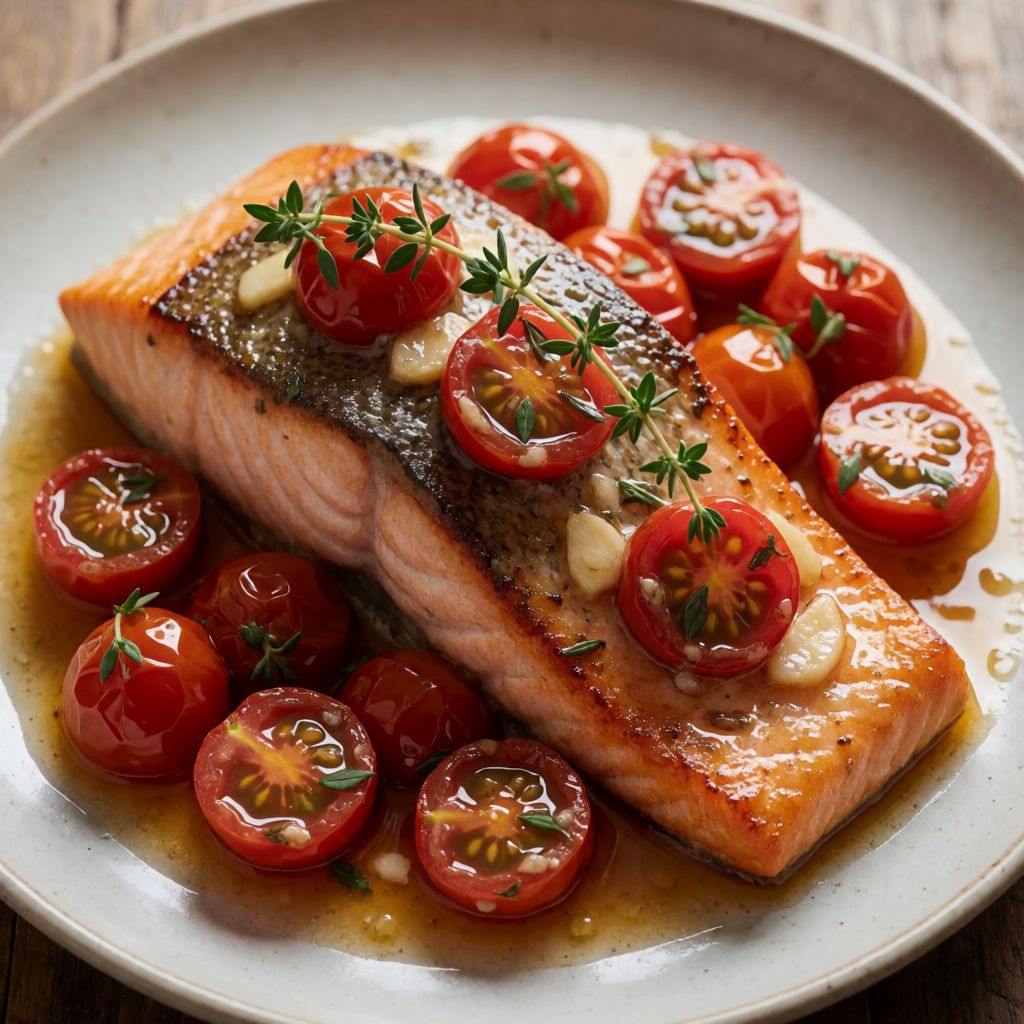
Salmon with Datterini Tomatoes and Thyme
A quick pan-seared salmon with datterini tomatoes, malty amber ale and thyme.
Labels are worked out automatically from the ingredients and can be wrong. Check the packaging if it matters to you.
Ingredients
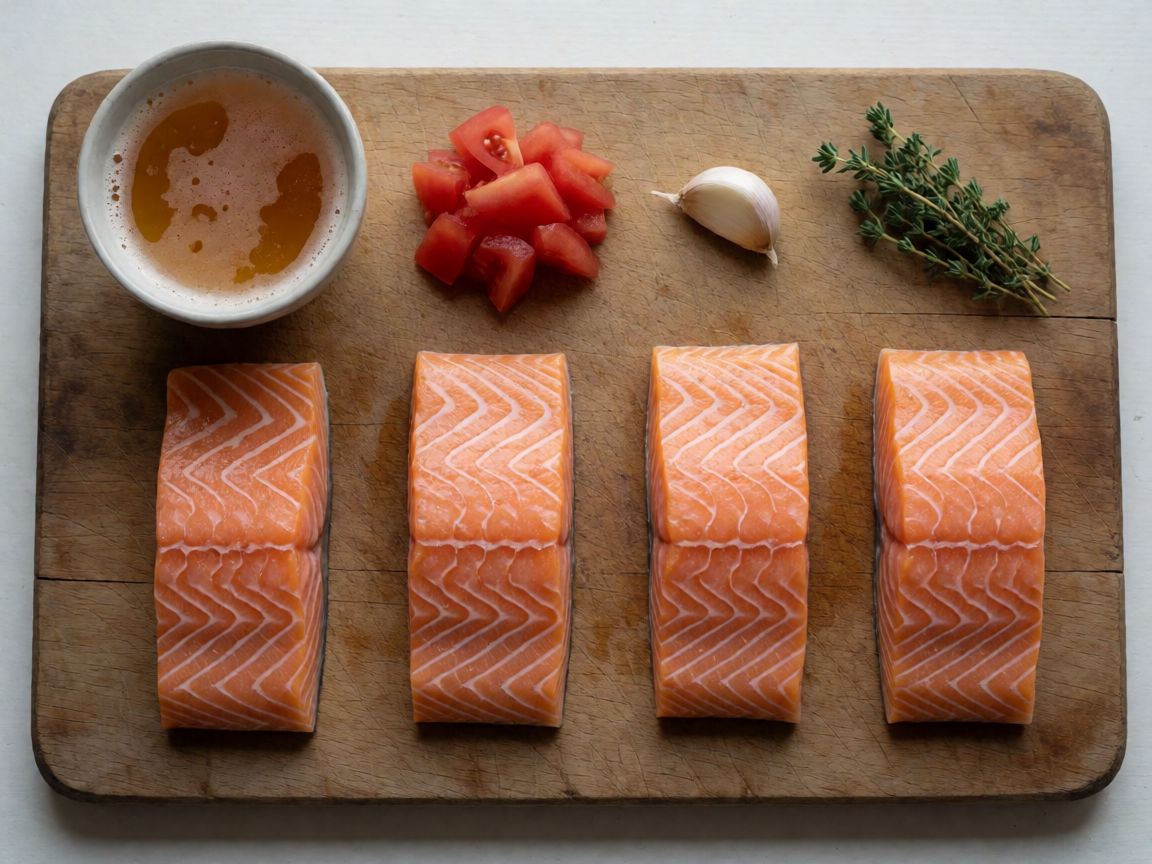
- 4 pcs Salmon fillets
- 200 g Datterini tomatoes
- 200 ml Malty amber ale
- 1 clove Garlic
- Thyme to taste
- Olive oil to taste
- Salt to taste
- Black pepper to taste








Steps
Heat 2 tablespoons of olive oil in a pan with a clove of garlic, and remove the garlic as soon as it turns golden.
Add the salmon fillets and cook, turning carefully once.
Pour in the malty amber ale and let it reduce well.
Add the datterini tomatoes, sliced into rounds, and cook for a few minutes, taking care they do not fall apart.
Season with salt to taste, black pepper to taste, and sprinkle with thyme.
Finish cooking the salmon, making sure the thickest part reaches an internal temperature of 63 °C, spoon over the pan sauce, and serve with mesclun salad dressed with a lemon vinaigrette.
This dish is simply seared salmon finished in a beer-and-tomato pan sauce — what decides whether it works is restraint at two points: how long you let the ale reduce, and how far you let the salmon's internal heat climb. Everything else is secondary.
The garlic is there for scent, not substance — infuse the oil, discard the clove the moment it turns gold. Then the salmon goes in and is left alone until a crust forms, turned once. That single flip matters more than any heat setting: disturb the fish too soon and you tear the crust before it sets, and the fillet sticks and shreds instead of releasing clean off the pan.
Then beer. Malty amber ale isn't a quirky swap for wine — it's doing the same job wine does in a hundred European fish sauces. Poured hot, it dissolves the browned bits stuck to the pan, and as it cooks down the malt sugar caramelizes while the hop bitterness balances the fat of the salmon, much as a squeeze of lemon would. "Reduce it well" means watching the liquid go from thin and foamy to something that coats the back of a spoon — rush this and you get a watery puddle that drowns the fish instead of dressing it.
The datterini go in late and stay whole-ish on purpose. Add them too early, or let the pan run too wet, and they collapse into soup instead of staying as little bursts of sweetness against the malt. Taking care they don't fall apart isn't fussiness — it's the difference between a sauce with texture and tomato mush.
The number everyone gets nervous about is 63°C. Forget "cook until it flakes" — that's a myth that has dried out a lot of good salmon. Flaking happens well past actual doneness, once the connective tissue between muscle segments has broken down and the protein has squeezed out its water — you'll see that water as white beads on the surface, and that's not doneness, that's dryness announcing itself. At 63°C the protein sets enough to hold together while the fish stays moist. A thermometer settles the argument faster than any amount of poking at it with a fork.
For the fillets, look for even thickness — a tail-cut piece and a belly-cut piece from the same fish cook at different rates in the same pan, and that's a flaw in the cut, not in your technique. Skin-on gives you something to crisp and a fat layer that shields the flesh from direct heat; skin-off is fine, just handle the flip more gently since there's less holding the fillet together.
Datterini tomatoes are small, dense, and low in water compared to a standard salad tomato, which is exactly why they hold their shape in the pan instead of weeping. No datterini, no problem — halved cherry tomatoes do the same job. A large tomato chopped up will add more water than the sauce can use, and you'll be reducing twice as long to make up for it.
For the beer, the word to chase is "malty" — body and a caramel note, not fizz and bitterness alone. A pale lager won't give you sugar to caramelize; a very hop-forward IPA tips the sauce bitter instead of balanced. In the UK this is an easy one to get right off the shelf — any amber or bitter-style ale does what the recipe wants. No beer in the house, no shame in it: a dry white wine, or even stock with a pinch of sugar, gets you close, because what the sauce actually needs is acid, sugar, and liquid to lift the fond — beer is just one tasty way of delivering all three together.
Three small ingredients earn their place by timing, not quantity. The garlic clove stays whole or lightly crushed, never minced here — minced garlic burns before the oil is hot enough to sear fish, and burnt garlic turns bitter in a way thyme won't rescue later; pull it the instant it golds. The oil is just the heat-carrier and the garlic's perfume-carrier, so any oil with no strong smell of its own will do — a neutral vegetable oil if olive oil isn't to hand, though you lose some of that background fruitiness. Thyme goes in near the end because its aromatic oils are delicate and burn off fast — strip the leaves straight into the pan rather than simmering a sprig in the sauce for ten minutes.
One honest note for a British hob: it doesn't hold heat the way a professional burner does, so pouring in cold beer will knock the temperature down hard. Give the sauce the time back rather than the clock — "reduce well" isn't a fixed number of minutes, it's watching the bubbles slow and the liquid thicken, and that may simply take longer on your ring than on someone else's. Patience isn't on the ingredient list, but it's the one thing deciding whether the sauce coats the fish or just floods the plate.