
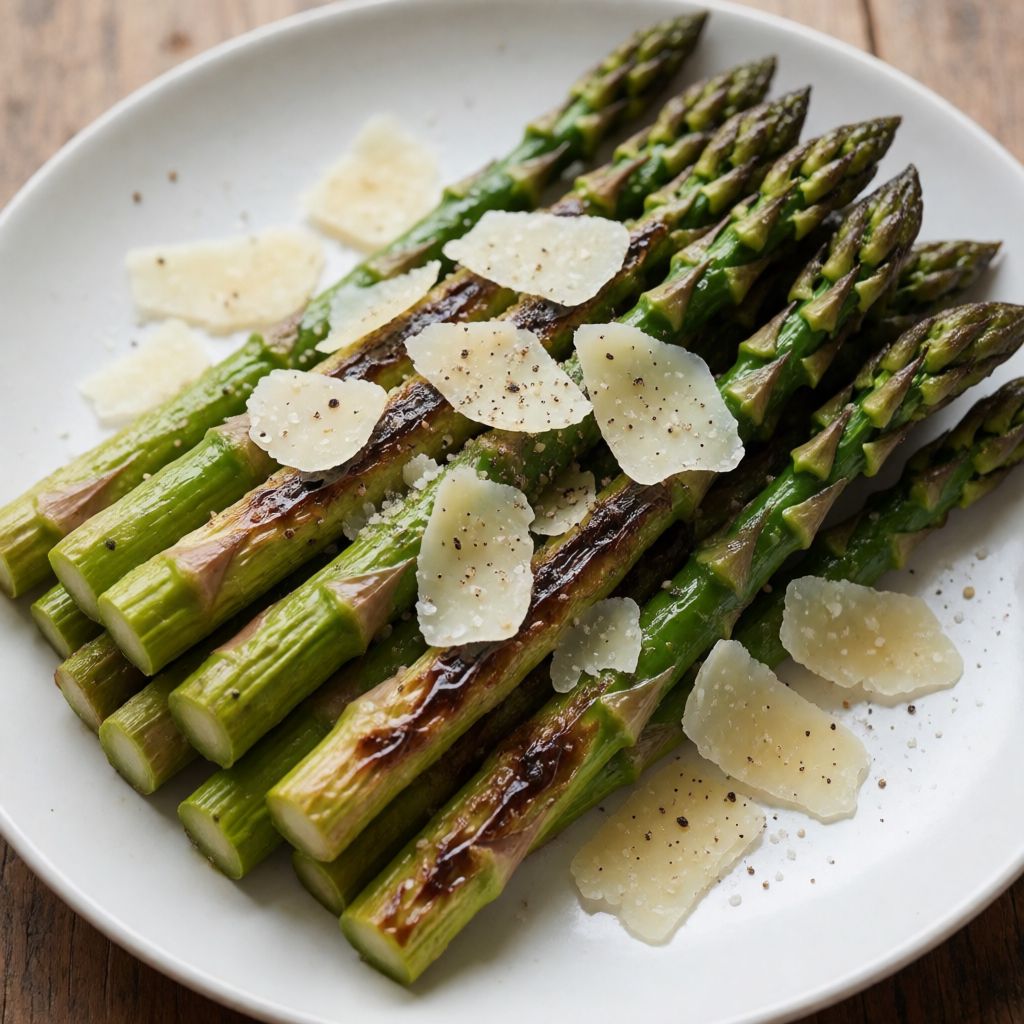
 AI photo
Pan-Fried Asparagus
A simple side dish of asparagus tossed with Parmesan and pan-fried until golden.
Labels are worked out automatically from the ingredients and can be wrong. Check the packaging if it matters to you.
Ingredients
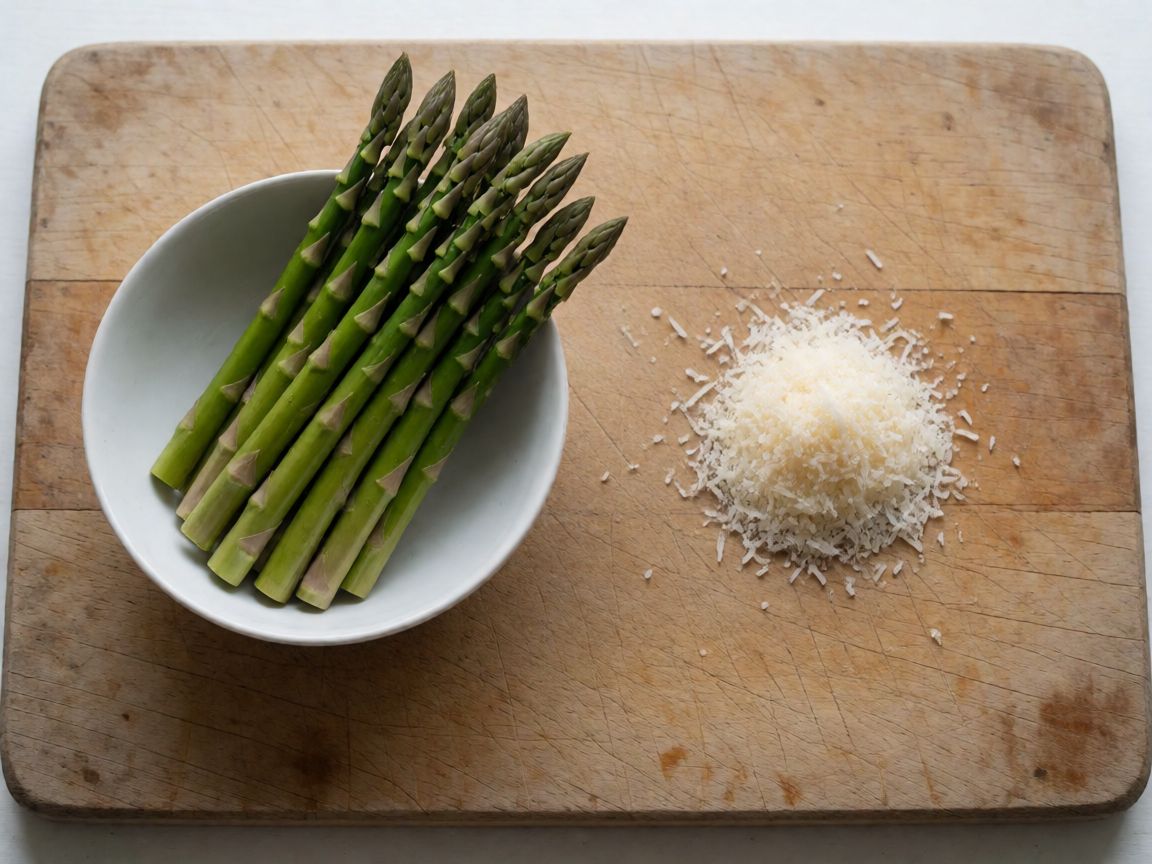
- 800 g Asparagus
- 100 g Parmesan
- 10 tbsp Olive Oil
- Black Pepper to taste
- Salt to taste





Steps
Trim the tough, woody ends from the asparagus. Rinse the spears under running water.
Bring a pot of water large enough to hold all the asparagus to the boil.
Add the asparagus to the boiling water and cook over high heat.
10 minRemove from the heat and pat the asparagus dry with a soft cloth or paper towel.
Place the asparagus in a bowl and toss with a mixture of grated Parmesan and olive oil, then season with salt and pepper.
Heat a little olive oil in a non-stick frying pan and add the asparagus.
Cook the asparagus until the cheese has melted nicely.
3 min
This is asparagus cooked twice, each time for a different reason: first in water, to soften the stalk all the way through, then in a hot pan with cheese and oil, to get a coat that browns instead of just melting into a puddle. What decides whether it works is not minding the clock too closely but matching each stage to the one job it's meant to do — the water softens, the pan finishes. Try to make the pan do both and you either get rubbery asparagus with burnt cheese, or soft cheese on asparagus still snapping like a twig.
The test for the first stage is the spear itself: pick one up by the thick end and it should droop gently, not flop dead and not stand stiff. That's the bend test, older than any timer, and more honest than one — thickness of the stalk varies tray to tray, a timer doesn't know that, your hand does.
Some say you must shock the asparagus in ice water straight after boiling, to lock the colour and stop the cooking dead. Not here, and for good reason: this asparagus is about to meet hot oil in a few minutes anyway, so plunging it in cold water only adds moisture you then have to dry off again before the cheese will stick to it. One more bowl, one more towel, nothing gained. Patting it dry with a cloth the moment it comes out of the pot does the same stopping job and saves you the washing-up.
Buy asparagus by looking at the tip and the cut end, not the price tag. Tight, closed tips and a cut end that's still moist, not split and corky, tell you it was cut recently. In Britain the home-grown stuff has a short window, roughly May into June, and it's dearer then for the honest reason that it doesn't travel or store well — asparagus starts converting its sugars to starch within a day or two of cutting, which is why imported, weeks-old spears taste flatter no matter how you cook them. Outside that window you're mostly buying imported, and that's fine, just don't expect the same sweetness.
Trimming the base isn't tidiness, it's mechanics. The bottom few centimetres of the stalk are where the plant has laid down woody lignin for structural support — the same stuff that makes tree bark bark. No amount of boiling softens lignin; you'll chew it like string long after the tip has gone tender. Cut until the stalk looks and feels the same pale, moist green all the way through, not by a fixed measurement.
Parmesan is doing a specific job here: it's a hard, well-aged cheese with very little moisture left in it, which is exactly why it melts into a cling rather than a puddle, and why it can sit in a hot pan without turning stringy. If you want a substitute, the criterion is the same — a firm, dry, finely-grating cheese with real age on it. Grana padano or a mature pecorino both behave the same way. A soft or young cheese, cheddar included, has more water and fat still mobile in it, and it'll either run off the spear or go gluey instead of coating it.
Olive oil here is a carrier, not just a flavour. Tossed through the grated cheese before it goes near the pan, it coats every strand so the cheese never touches bare hot metal directly — that's what stops it scorching and sticking in patches. The substitution rule for any oil is: no smell of its own if you want it to stay invisible, but olive oil is doing more than staying invisible in this dish — it's part of the taste, so swapping it for a neutral oil like sunflower will cook the asparagus just as well and quietly take a dimension out of the dish.
Salt and pepper go on after the spears are boiled, dried, and coated — not into the boiling water. That's deliberate, not an oversight: the Parmesan itself is salty, and seasoning the dry, coated spear directly lets you see where the seasoning actually lands, rather than guessing how much a pot of water absorbed.
A domestic non-stick pan is the right tool here, no need to mourn not having a kazan — this is a short, hot finish, not a long braise, and a wide flat surface matters more than depth. If 800g of spears won't lie in one uncrowded layer in your pan, do it in two batches rather than piling them in. Crowded spears steam each other and keep the cheese damp instead of letting it brown, which is the one patience point in this whole dish: give the cheese room to actually meet the hot surface, and give yourself a few extra seconds rather than rushing it off the heat the moment it looks shiny.