
 AI photo
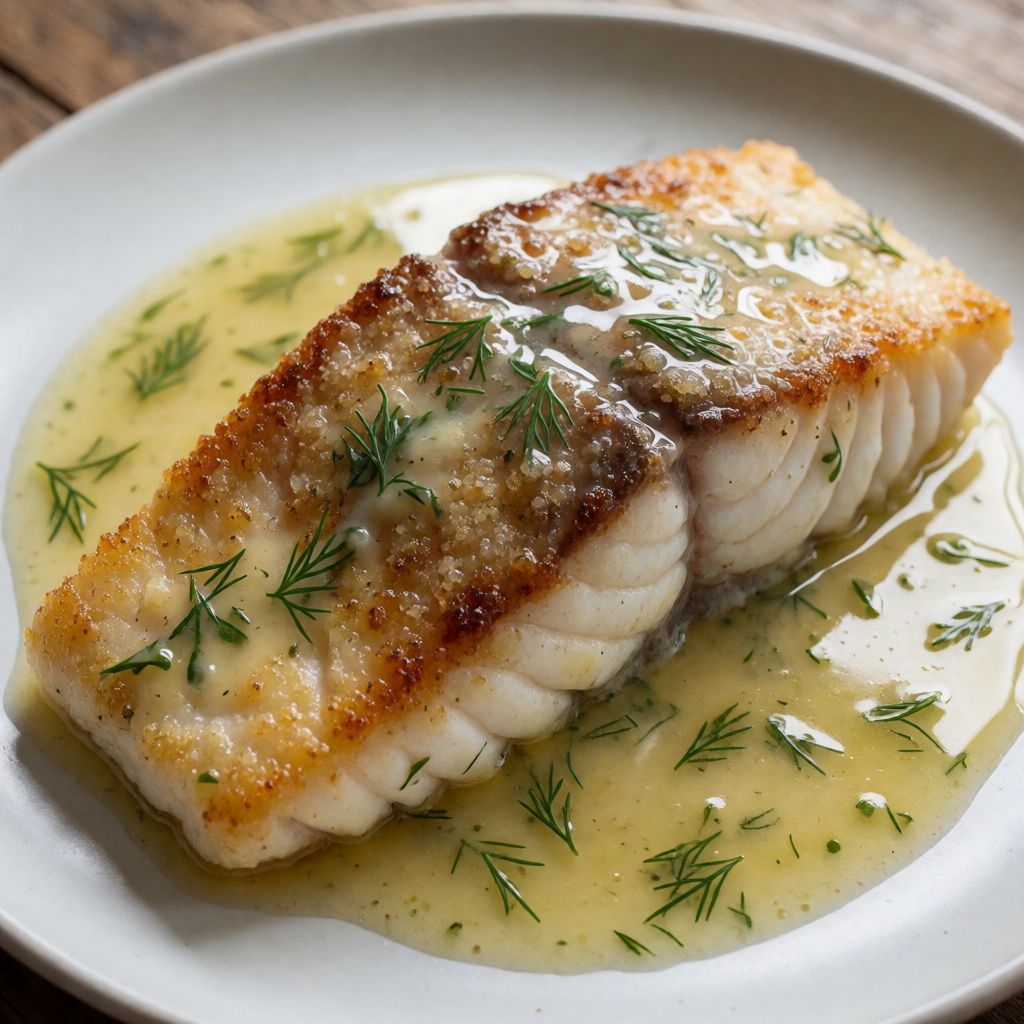
Sea Bass Fillet with Lime
A quick pan-seared sea bass fillet finished with white wine, lime and fresh herbs.
Labels are worked out automatically from the ingredients and can be wrong. Check the packaging if it matters to you.
Ingredients
- 4 pcs Sea bass fillet
- Plain flour for dredging
- 1 tbsp Olive oil
- 125 ml White wine
- Salt to taste
- Dill to taste
- Chives to taste
- Marjoram to taste
- Black pepper to taste
- 1 pcs Lime
- Parsley to taste











Steps
Coat the sea bass fillets in a thin layer of flour, shaking off the excess.
Heat the olive oil in a large frying pan and place the fillets skin-side down.
Pour in the white wine and let it reduce completely.
Season with salt and dill, add the chives and marjoram, add ground black pepper and sprinkle with lime juice.
Cook for 10 minutes over low heat; the fish is ready when it reaches 63°C.
10 minSpoon the pan juices over the fish and serve sprinkled with parsley.
This is a quick pan dish: four sea bass fillets, dusted in flour, laid skin-down in a hot pan and left there — no flipping — while a splash of wine turns into a sauce around them. Ten minutes, low heat, a squeeze of lime at the end. What decides whether it works isn't the herbs or the lime, it's three things: the skin stays down the whole time, the wine actually reduces instead of just simmering, and you stop before the fish turns chalky.
Start with the flipping question, because it's the one people get wrong on instinct. Some say fish needs a hard sear on both sides to "seal in the juices." No — fish isn't steak, there's no membrane to seal, it's mostly water held in a loose muscle structure, and the moment you turn a thin fillet twice in a hot pan you tear it or dry it from both sides at once. Here the skin takes all the direct heat, the top of the fillet cooks from steam and from the wine lapping around it. One contact surface, gentler cooking — that's the whole trick, not a shortcut.
The flour is doing one small job, not several: a thin dusting, shaken off hard, gives the skin something to grip against the pan so it doesn't weld itself on and tear when you lift it out — remember, you're never flipping this fillet, so that first contact has to be clean. A thick coat does the opposite: it insulates the skin from the pan, stops it crisping, and turns gluey once the wine goes in. Plain flour, not self-raising — the last thing a piece of fish needs is to puff.
Olive oil here is just a heat-transfer medium, not a flavour. Use a light, mild one — the fruity, grassy punch of a good extra virgin would fight the wine and the dill rather than support them. The general rule for this kind of dish: any oil with no real smell of its own does the job — a light olive oil, sunflower, rapeseed, whatever's in the cupboard.
The white wine needs to be dry and reasonably acidic, because that acidity is what lifts the fond — the browned bits stuck to the pan from the skin — into the sauce. A sweet wine will reduce into something sticky and wrong. Dry vermouth works as a stand-in, it has the same backbone. If you have no wine at all, fish stock with a splash of vinegar or lemon gets you a sauce, just a flatter one — wine brings a depth that stock alone doesn't.
Dill, chives and marjoram go in after the reduction, which matters: at that point they're wilting in residual steam, not cooking, so they keep their grassy, cut-grass smell instead of going flat and muddy. These are all soft, bruisable herbs. Woody ones — rosemary, thyme — need real time in heat to give anything up, and dropped in at this stage they'd just taste raw and sharp. If you're short on any of the three, parsley alone, added the same way, carries the dish fine.
Lime at the end is acid doing a cleanup job — cutting through the oil and the slight richness the reduced wine picks up, waking the whole pan back up. Lemon is the obvious swap and arguably the more honest choice in a British kitchen where it's always to hand — lime is a touch more floral, lemon a touch sharper, but 1:1 and nobody will complain.
For the fish itself, look for fillets of even thickness so all four cook at the same rate — ask whoever's behind the counter to leave the skin on and scale it properly, since the skin is doing real work here, not just sitting there for looks. Around 120–150g a fillet feeds one properly. Any firm white fish with skin stands in for sea bass — bream, snapper — just keep the skin-down, no-flip logic, because that's the method, not a detail about this particular fish. And treat the ten minutes as what it is: the minimum time patience needs to turn flour, fish, wine and herb into something that holds together on the plate, not a countdown to rush through on a weeknight.