
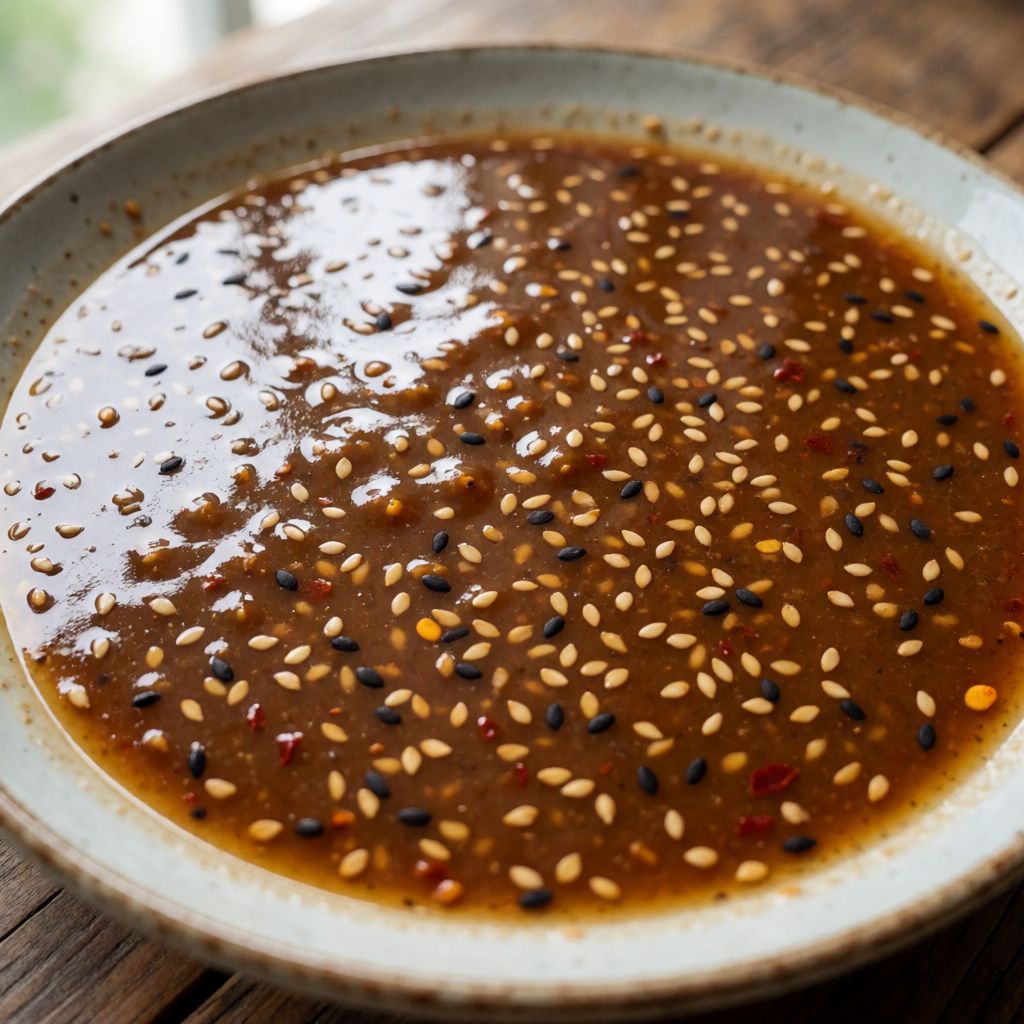
 AI photo
Sesame Dressing
A nutty, savoury sesame dressing perfect for dipping vegetable sticks.
Labels are worked out automatically from the ingredients and can be wrong. Check the packaging if it matters to you.
Ingredients
- 125 g Sesame seeds
- 3 tbsp Soy sauce
- 1 clove Garlic pour boiling water over it to peel easily
- 1 pinch Chilli flakes
- 1 tsp Sugar
- 1 pcs Lemon juiced
- 50 ml Sesame oil
- 50 ml Water or as needed for the right consistency







Steps
Toast the sesame seeds in a hot dry frying pan, stirring, for 7–10 minutes until they smell warm and fragrant.
8 minBlend the sesame seeds with the soy sauce, garlic, chilli flakes, sugar, lemon juice and half of the sesame oil until smooth and creamy.
5 minAdd the remaining sesame oil and the water, one tablespoon at a time, until the texture is just right.
2 minThe dressing should be thick enough to coat vegetable sticks nicely when dipped.
Taste and adjust — add more salt, sugar, acidity or heat as needed.
What was changed
We use Chilli flakes in place of a fresh chilli pepper, since a whole pepper can't be measured by the pinch and the flakes give the same gentle heat.
This is not a vinaigrette — it is a paste that has been talked into pourable form. Sesame seeds get toasted until they smell like themselves, ground down with their own oil, then loosened with soy, lemon and water until a vegetable stick dipped in comes out coated, not dripping. Four people get a good bowlful — enough for a stack of carrot and cucumber sticks before the roast, or spooned over cold noodles the next day.
What decides whether it works is the toast, and that step can't be skinned over. Raw sesame seeds taste of almost nothing, a dusty crunch. Toasted, their oil warms up and their proteins and sugars start knocking into each other, and that reaction is where the whole flavour of the sauce comes from — there's nothing else in the bowl doing the heavy lifting. Scorch them past the point where they smell warm and nutty, into the point where they smell sharp and ashy, and that bitterness rides straight through to the finished sauce. No amount of lemon talks it back.
Myth worth naming: you might as well skip the pan and start from a jar of tahini, since it's already sesame. No — the pale hummus-style tahini is ground from seeds that were never toasted, and it tastes of faintly bitter cream, not of this sauce at all. The whole reason this works as a dip and not just a paste is the roast. If you're starting from a jar, look for toasted sesame paste, and taste before you trust the label.
Sesame seeds are the whole dish, not a component of it, so buy whole hulled ones rather than a pre-toasted jar that's been sitting on a shelf losing its smell. Give the pan your attention while they're in it — shake or stir without stopping, because sesame oil is close under that thin shell and it heats fast and unevenly if you leave it be. That constant stirring is where the patience in this recipe actually goes; it's ten minutes of standing there doing something small and repetitive, and skipping it is how seeds scorch on one side while the rest stay pale and grassy.
Soy sauce brings the salt and the savoury backbone; garlic brings sharpness. The boiling water over the clove is a peeling trick, not a cooking step — heat makes the skin's moisture expand a fraction faster than the flesh underneath, so it slips off instead of tearing with it. The garlic inside stays entirely raw and entirely pungent, which is the point; it's there to bite, not to mellow.
The chilli, sugar and lemon are doing the oldest trick in any dipping sauce: salt against sweet against sour, each one stopping the others from running the show. The lemon stands in for rice vinegar here, which is the more traditional sharp note behind this style of sauce in the kitchens it comes from. The criterion for swapping either way is simple — something sharp and clean that doesn't bring its own strong flavour to the party. Rice vinegar, lemon, a thinned white wine vinegar all work; balsamic or a heavily flavoured vinegar doesn't, because it starts arguing with the sesame instead of setting it off.
Sesame oil here means the dark, toasted kind, not the pale refined bottle sold as a neutral cooking oil. It's concentrated version of the same toasting you did to the seeds, and it's there to push that roasted smell further, not to add body you don't already have from the seeds themselves. If all you've got is the neutral light sesame oil, it won't do that job — you're better off toasting a few extra seeds than relying on it.
Sauces built on an oil-rich seed, stretched with soy and something sour, turn up across a lot of kitchens that needed a dressing to make simple vegetables worth eating without needing a fridge or a cut of meat behind it — sesame keeps for months as seed, the paste keeps for days once made, and a little goes a long way over a plate of raw vegetables or noodles. None of that needs special equipment: a wide dry frying pan for the toast and a blender for the grinding does the whole job, no mortar and pestle or kazan required.
It thickens a little in the fridge as the sesame oil cools and sets slightly — loosen it with a spoonful of warm water the next day rather than more oil, and it comes back to the coat-a-vegetable-stick consistency you want. It sits comfortably alongside a Sunday roast as a dip for the raw veg plate while everything else is still in the oven, or thinned a touch further, as a dressing for whatever cold vegetables are left once the roast is done.