
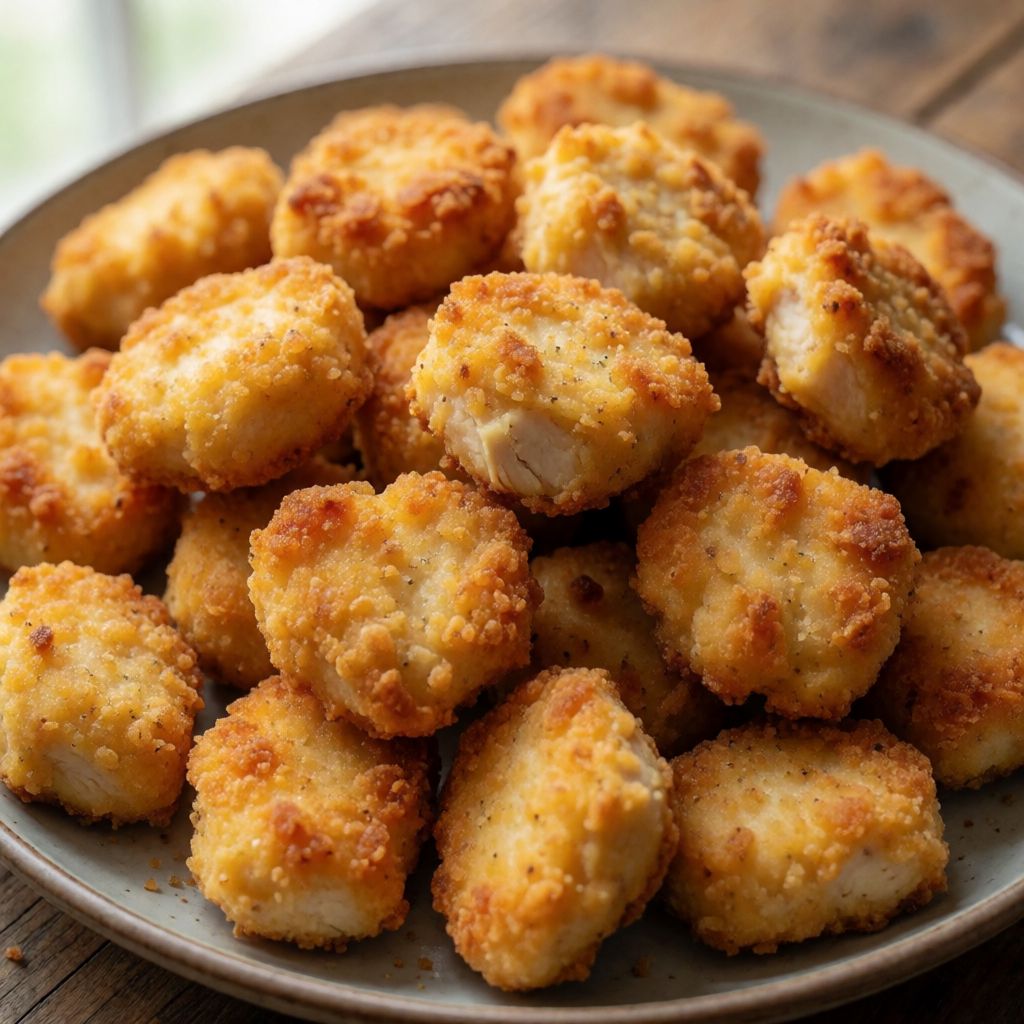
 AI photo
Oven-Baked Chicken Nuggets
Crispy oven-baked chicken breast pieces, coated in breadcrumbs and Parmesan.
Labels are worked out automatically from the ingredients and can be wrong. Check the packaging if it matters to you.
Ingredients
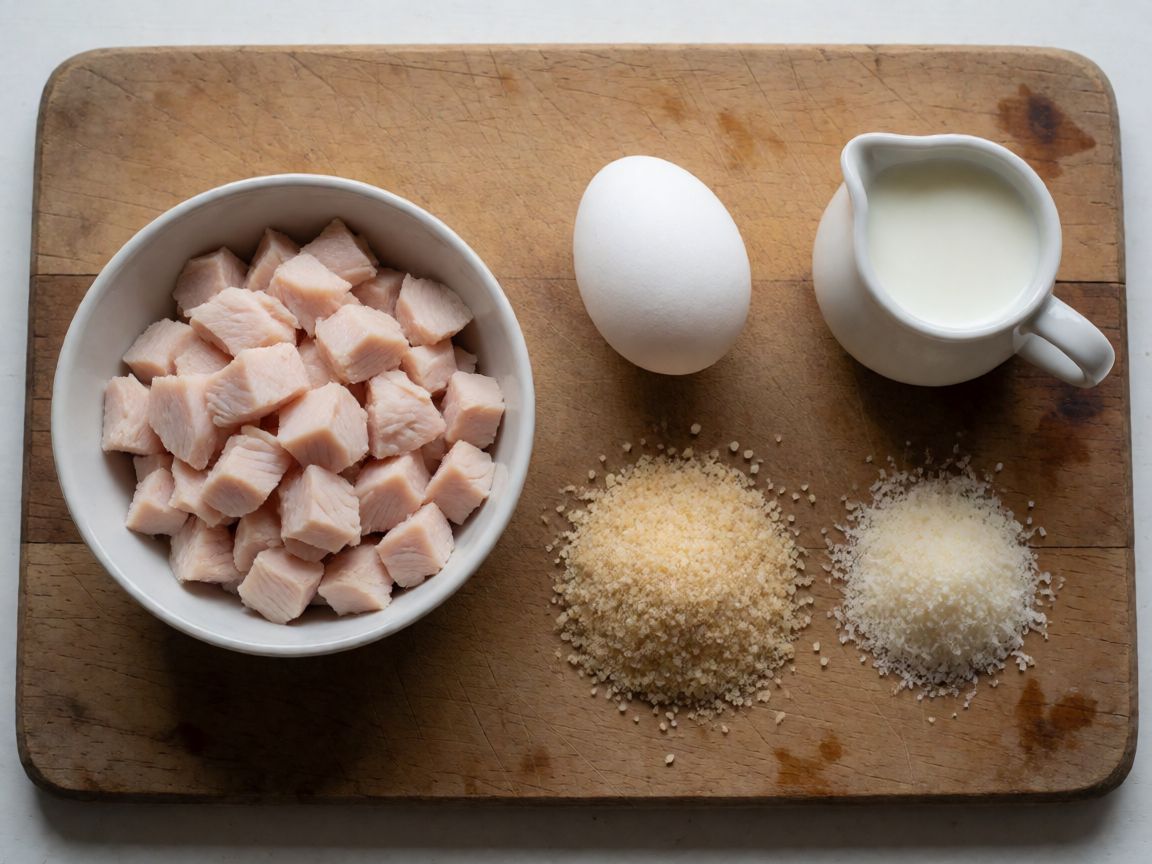
- 300 g Chicken breast
- 1 pcs Egg
- 30 ml Milk
- Salt to taste
- Black pepper to taste
- Olive oil to taste
- 100 g Breadcrumbs dried
- 30 g Parmesan








Steps
Trim the chicken breast of fat and any bones, then cut it into pieces.
In a bowl, whisk the egg with the milk and add a pinch of salt and pepper.
On a flat plate, tip out the breadcrumbs and mix with the Parmesan and any spices you like.
Dip the chicken pieces into the egg and milk mixture.
Coat them in the breadcrumb and Parmesan mix, trying to cover the whole surface evenly.
Place the coated pieces on a baking tray lightly greased with olive oil.
Drizzle the pieces with olive oil.
Preheat the oven to 180°C and bake for at least 20 minutes, until the chicken is cooked through and reaches 74°C in the middle.
20 minTurn the pieces occasionally so they brown evenly.
Serve piping hot, straight from the oven.
This is schnitzel's younger, lazier cousin — the same armour of egg and crumb, but baked instead of fried, so the oil never gets hotter than the oven lets it. That's the whole mechanism you're working with: in a fryer, boiling oil surrounds every piece and crisps it on all sides at once; in an oven, heat comes mostly from above and below, so the crust browns where it touches metal or catches a drizzle of oil, and stays pale everywhere else unless you turn the pieces. That's why step 9 isn't a suggestion — it's the only thing standing between you and nuggets that are crisp on top and rubbery underneath.
What decides success here is moisture management, twice over. First, in the chicken itself: cut it even, trim every scrap of fat and sinew, because fat under a crumb crust doesn't render at 180°C the way it would at frying temperature — it just sits there, slick and chewy. Second, in the coating: the egg-and-milk wash is thin on purpose. Milk dilutes the egg so it spreads as a film, not a paste. A thick gluey coat traps steam against the meat and goes soft; a thin one lets the crumb crisp because there's nothing wet insulating it from the heat.
Chicken breast is the right cut because it's lean and cooks fast and even — a thigh would need longer and render fat as it goes, which is a different dish. 300g for four people sounds thin, but remember these are coated: the crumb adds bulk and these are usually eaten alongside something, chips or a salad, not as the whole plate. If you've a British habit of a Sunday roast with leftover chicken breast going spare on Monday, this is exactly where it goes — just make sure it's not already dried out from a second trip through heat, or you're fighting dryness from both directions.
The egg and milk together aren't two separate jobs, they're one: egg alone sets too thick and patchy, almost rubbery when baked, because its proteins clump fast once warm. Milk thins that protein network so it spreads in an even film over the meat, giving the crumb something continuous to grip rather than isolated wet patches. If you're out of milk, water does the dilution job, though you lose a touch of browning from milk's natural sugars; a splash of cream works too and gives you a slightly richer crust.
Breadcrumbs need to be dry for the same reason the egg wash needs to be thin: a home oven is a dry-heat environment with no oil bath to drive moisture off quickly, so anything already damp going in — fresh breadcrumbs, soft panko straight from a packet that's been open in a steamy kitchen — ends up steaming rather than crisping. Dried crumbs start the bake already most of the way to crisp; they just need colour. Any coarse, dry crumb with no inherent moisture works here — shop panko, crumbs made from stale bread dried out in a low oven, even crushed crackers in a pinch, though you'll want to go lighter on added salt if you do.
Parmesan in the crumb mix isn't a flavour flourish you can skip without consequence — it's doing real work. Its own fat content helps the crumb brown faster and more evenly than bread alone would, and its glutamates give you savoury depth the chicken itself, being lean and mild, doesn't supply on its own. Any hard, aged, salty cheese does the same job — Grana Padano, Pecorino, even a very mature cheddar grated fine enough to mix through the crumb rather than sit in clumps.
For the oil, the only real criterion is that it carries no flavour of its own strong enough to fight the crumb — light olive oil, sunflower, rapeseed, anything neutral. Save the good extra virgin for the salad on the side; at 180°C its aromatic compounds just burn off, so you're paying for a flavour you won't taste.
And don't rush the turning. Let the crumb set on the tray a few minutes before you touch it — flip too early and the crust tears away with the tray rather than staying on the meat, which is the most common reason people end up with bald patches of bare chicken showing. Patience here isn't poetic, it's structural: the crumb needs a minute of heat to bond before it can survive being moved.