
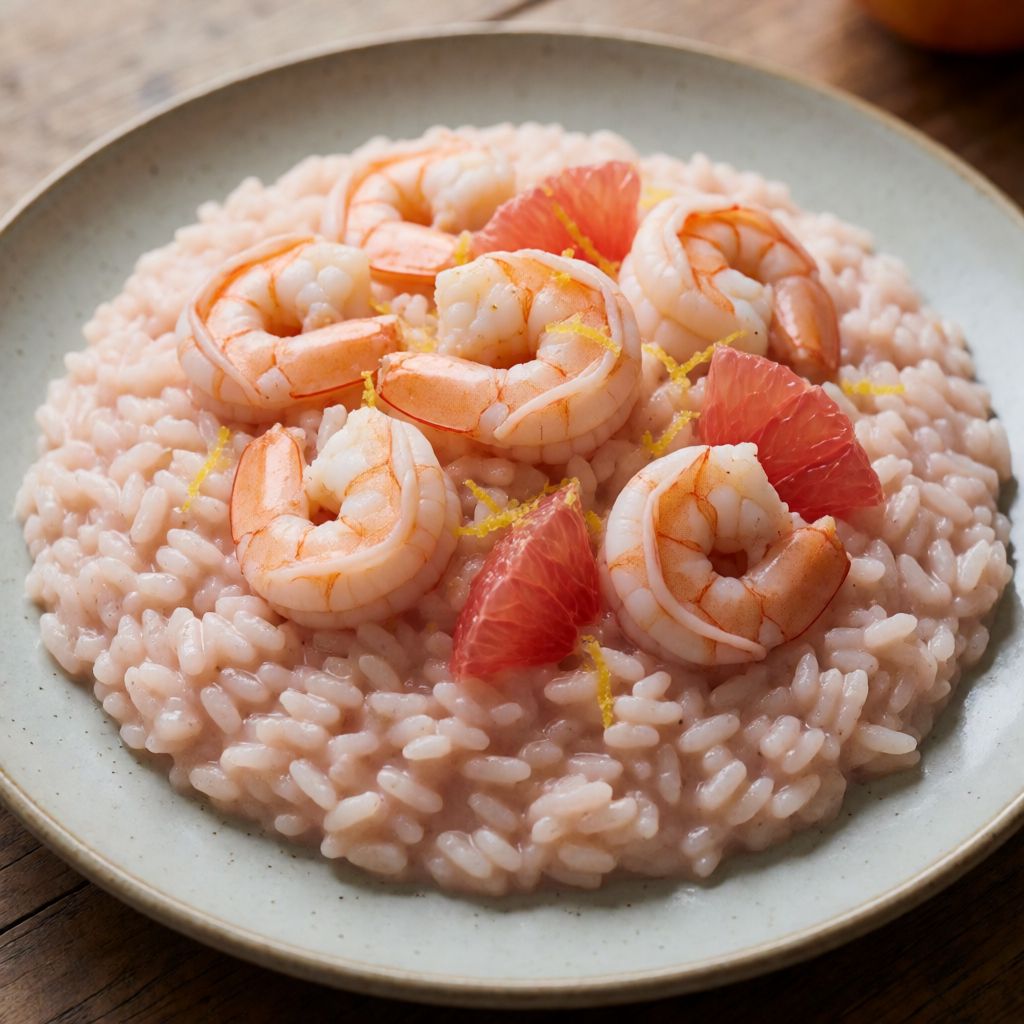
 AI photo
Pink Risotto with Prawns
A delicate pink risotto with king prawns, finished with grapefruit zest and juice.
Labels are worked out automatically from the ingredients and can be wrong. Check the packaging if it matters to you.
Ingredients
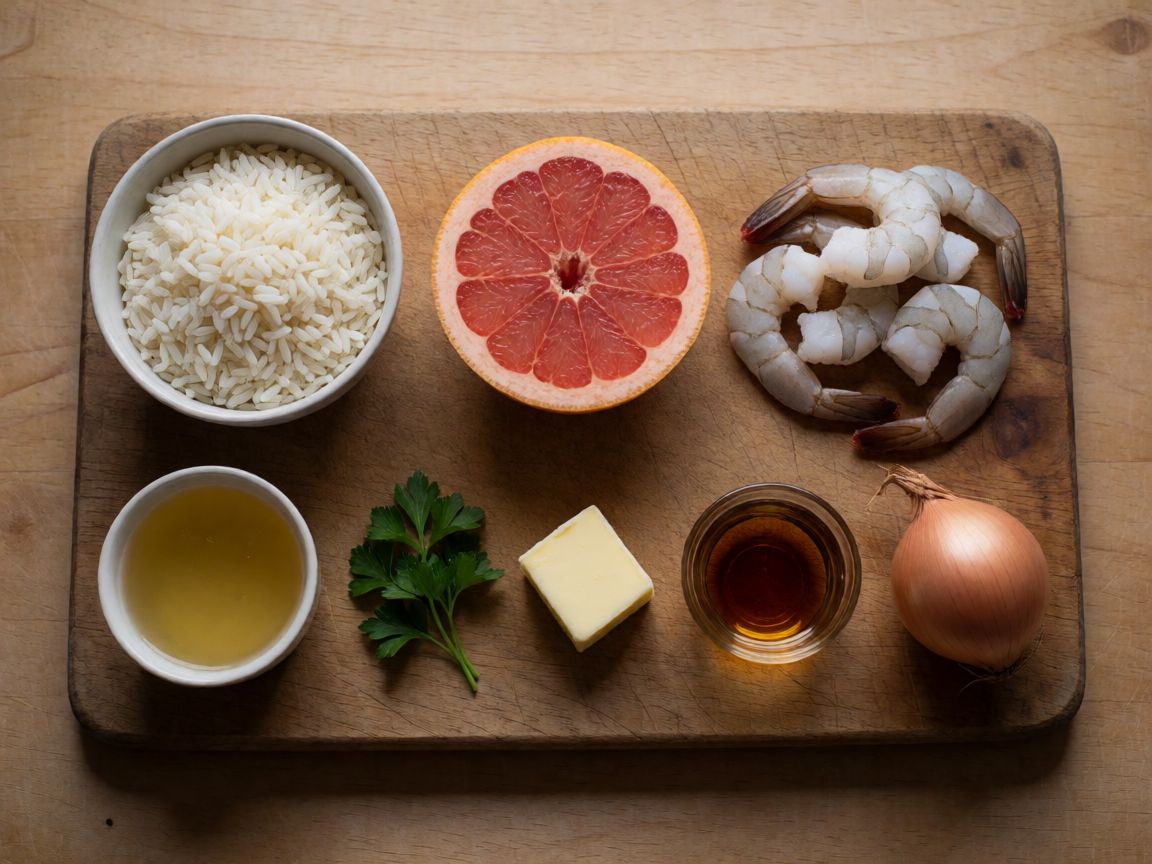
- 350 g Carnaroli risotto rice
- 1 pcs Grapefruit
- 1 l vegetable stock made with the prawn heads and shells
- 12 pcs king prawns
- 2 tbsp olive oil
- 20 g butter
- 1 bunch parsley to taste
- 1 pcs brandy
- 1 pcs onion
- 1 pinch salt to taste
- 1 pinch white pepper to taste
- 1 tbsp lemon juice for blanching the prawns












Steps
In a pan, soften the onion in 2 tbsp olive oil, add the rice and toast it.
5 minPour in the brandy and let it evaporate completely.
2 minAdd the grapefruit juice, having first grated the zest on a coarse grater.
2 minBlanch the prawns for a few minutes in water with lemon juice and salt. Doneness: 63°C at the thickest point.
3 minCook the risotto until done, gradually adding the hot stock.
18 minA few minutes before the end of cooking, add the grapefruit zest and the prawns.
3 minSeason with salt, add white pepper, stir in the butter and sprinkle with parsley.
2 min
Risotto is not a rice dish. It is a starch-management exercise, and the pink here comes from grapefruit doing the job lemon usually does in a seafood risotto, but with bitterness instead of pure acid. Carnaroli is the rice that survives this exercise - high amylose content means the grains hold their shape and release starch slowly, so you get the creamy suspension without the collapse into porridge. Use Arborio and you're closer to the edge; use a long-grain rice and you've made something else entirely, not risotto.
What decides whether this works is two separate pieces of heat control that have nothing to do with each other. The rice needs a slow, steady feed of hot stock so the starch comes out gradually and binds the liquid into sauce rather than just boiling in it. The prawns need almost no heat at all - blanched to a bare 63°C at the core, then added at the very end to ride the risotto's residual warmth. Cook the prawns in the pan with the rice for eighteen minutes and you'll get rubber, because prawn muscle fibre seizes and expels water well before that time is up. That's the one mechanism in this dish you cannot skip or rush.
Some say risotto needs constant stirring from start to finish, like a devotional act. It doesn't - what it needs is stock added in stages, each ladle only after the last one's been absorbed, so the grain surface stays agitated enough to release starch without drowning. Stir too little and the pan scorches at the base; stir too much too early and you just tire your arm for no gain. The stirring matters at the right moments, not continuously.
Start with the stock, because it is doing more than "liquid for the rice." Shells and heads hold most of a prawn's flavour - the meat is actually fairly bland on its own, which is why a prawn risotto made with plain stock tastes thin. Simmer the shells, don't boil them hard; a hard boil breaks the proteins into a cloudy, slightly bitter stock instead of a clean one. If you've bought peeled prawns with no shells to hand, a light fish stock or even a good chicken stock with a splash of fish sauce stirred in gets you most of the way - not identical, but it won't read as a gap.
The onion and the toasting stage exist to coat each grain in fat before any liquid arrives. That fat coating is what stops the rice clumping into a solid mass later - each grain stays separate inside the creamy suspension because oil got there first. Use an oil with no character of its own for this, because its job is to carry heat, not flavour; a plain olive oil or any neutral vegetable oil does it, a strongly peppery extra-virgin just fights the grapefruit later.
The brandy is for aroma and for cutting fat, not for getting anyone tipsy - it has to properly evaporate, or you're left with a raw alcohol sharpness sitting on top of the dish. If you don't keep brandy in the house, a dry white wine does the same acidic-aromatic lift and is the more common move anyway; brandy here is the slightly unusual choice, not the default.
Carnaroli specifically, not any risotto rice interchangeably: it has a stronger starch structure than Arborio, which means more forgiveness if your stock timing slips by a minute or two on a domestic hob that doesn't hold a steady simmer the way a professional burner does. Arborio works and is more common in UK shops, but it turns to mush faster if you're distracted - risotto genuinely does not like being left while you answer the door.
Grapefruit instead of lemon changes the character, not just the colour - lemon risotto is clean and sharp, grapefruit brings bitterness alongside the acid, which is why the butter at the end matters more here than in an ordinary risotto: butter rounds that bitterness off rather than just adding richness. White pepper rather than black is a visual choice as much as a flavour one - black flecks would sit oddly against pink rice, and white pepper has a quieter, slightly musty heat that doesn't fight the citrus.
On the prawns: blanching in lemon-salted water before they ever meet the rice is what lets you hit that precise undercooked-at-the-edge point and then finish them gently in the hot risotto rather than guessing doneness in a pan full of starch where you can't see what's happening to them clearly. Twelve prawns for four people is three each - plan for that ratio if you scale the recipe up or down, don't just eyeball a pile of prawns and hope.