
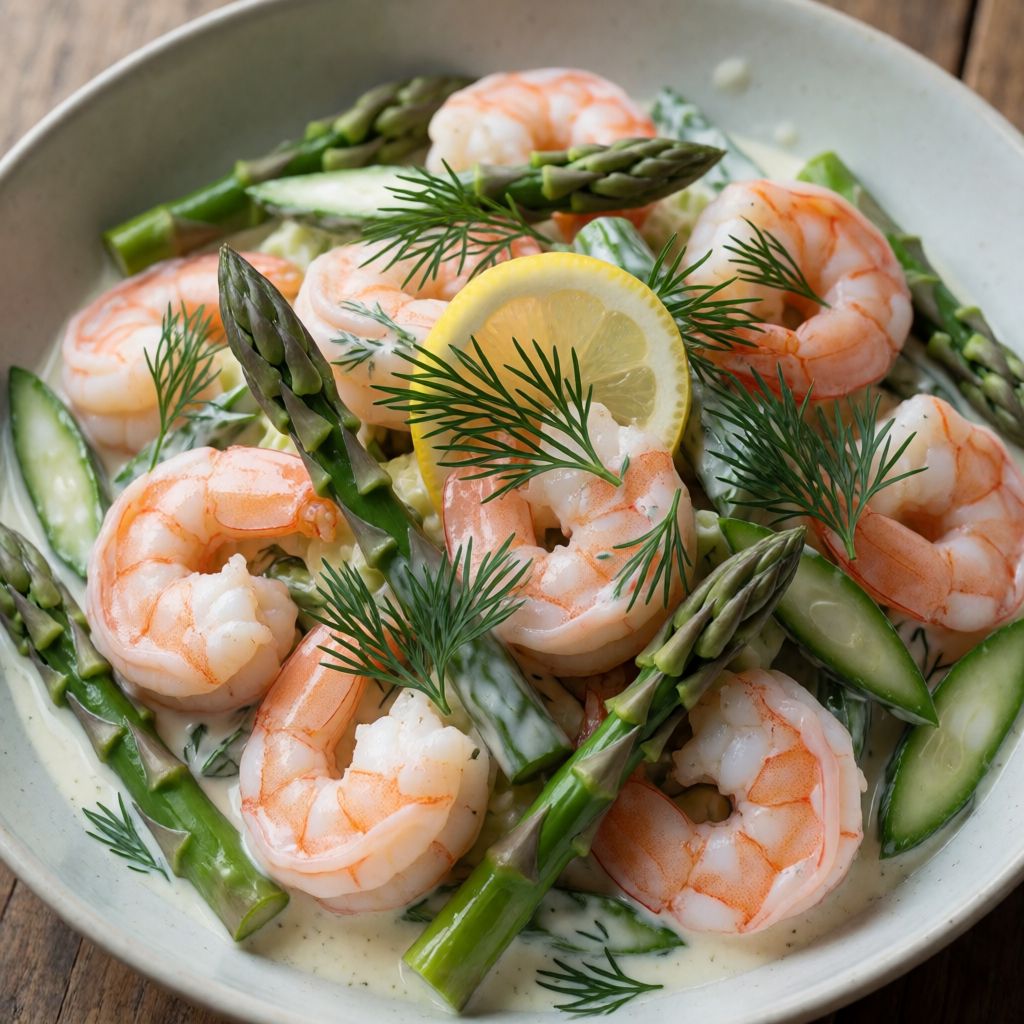
 AI photo
Classic Prawn Salad
A classic prawn salad with asparagus, lemon and dill, tossed in a creamy crème fraîche and mayonnaise dressing.
Labels are worked out automatically from the ingredients and can be wrong. Check the packaging if it matters to you.
Ingredients
- 3 tbsp Crème fraîche
- 3 tbsp Mayonnaise
- ½ pcs Lemon unwaxed, finely grated zest and a little juice
- 100 g Asparagus tinned or jarred, drained and sliced
- 250 g Prawns drained
- ½ bunch Dill fresh, finely chopped
- Salt to taste
- Black pepper freshly ground, to taste








Steps
Mix the mayonnaise, crème fraîche and finely grated lemon zest together.
Drain the prawns and asparagus well, then pat them dry with a paper towel.
Combine the prawns and asparagus with the dressing, along with the finely chopped dill.
Season to taste with salt, freshly ground pepper and a few drops of lemon juice.
There's no heat here, no pan work, nothing simmering — this is pure assembly, and that's exactly where it can go wrong. A prawn salad like this lives or dies on one thing: how dry everything is before the dressing touches it. Tinned prawns and jarred asparagus both sit in brine or liquor, and if you tip them straight from the tin into the bowl, the dressing turns thin and runs off everything instead of clinging. Pat them dry on paper towel, properly, not a token dab. That's the step that decides whether you get a coated salad or a soup.
Some say tinned prawns are the lesser option, a compromise you make because fresh ones were too dear or too much trouble. No — because this dish was built around tinned and jarred ingredients from the start. It's a product of the era when tinned prawns were the exotic, slightly glamorous thing to put on a table, not the fallback. The texture is softer than fresh-cooked prawn, almost yielding, and that's what sits well against a creamy dressing. Swap in fresh cooked prawns if you want, but know you're changing the dish's character, not just upgrading it.
Crème fraîche is doing a specific job: fat plus acid, in a form that won't split when you stir it. If you don't have it, soured cream works, though it's sharper and a touch heavier — you may want a shade less mayonnaise to compensate. What you're after is any thick, cultured, soured dairy that holds its structure when mixed, not thinned yoghurt, which will make the whole thing watery and undo the drying work you did on the prawns.
Mayonnaise needs to be a proper egg-based emulsion — homemade or shop-bought, either is fine, but it needs that emulsified body to grip the prawns and asparagus rather than pool at the bottom of the bowl. A lighter "salad cream" style dressing won't give you the same coating; it's thinner by design and built for a different job.
The lemon is unwaxed for a reason that has nothing to do with flavour and everything to do with what's on the skin — wax and the wash used to apply it shouldn't end up grated into your dressing. If all you've got is a waxed lemon, scrub it hard under warm water first. Zest only the outer yellow layer; go deeper and you hit the white pith, which is bitter and will sit oddly against the cream.
Asparagus here is the tinned or jarred kind on purpose — it's already soft, already seasoned by its own brine, and it slices cleanly without the bite that fresh steamed asparagus would bring. Fresh asparagus, blanched and cooled, can stand in if that's what you've got, but drain and dry it just as hard, because the whole dish depends on that one discipline.
Dill is the right herb because it's soft enough to fold through a cream dressing without turning tough, and its flavour sits close to both lemon and shellfish without fighting either. Parsley is the obvious substitute if dill isn't in the shop, though it changes the character — milder, grassier, less of that aniseed lift. Chop it by hand with a sharp knife rather than in a processor, which bruises it and turns it into green paste.
Salt and pepper go in last, and taste before you add salt — tinned prawns and jarred asparagus are rarely short of it. This is a salad that forgives very little improvisation on the main mechanism — dry ingredients, balanced dressing — but plenty on the extras. Feeds four as a starter, less if someone at the table decides it's the whole lunch, which happens more often than you'd think.