
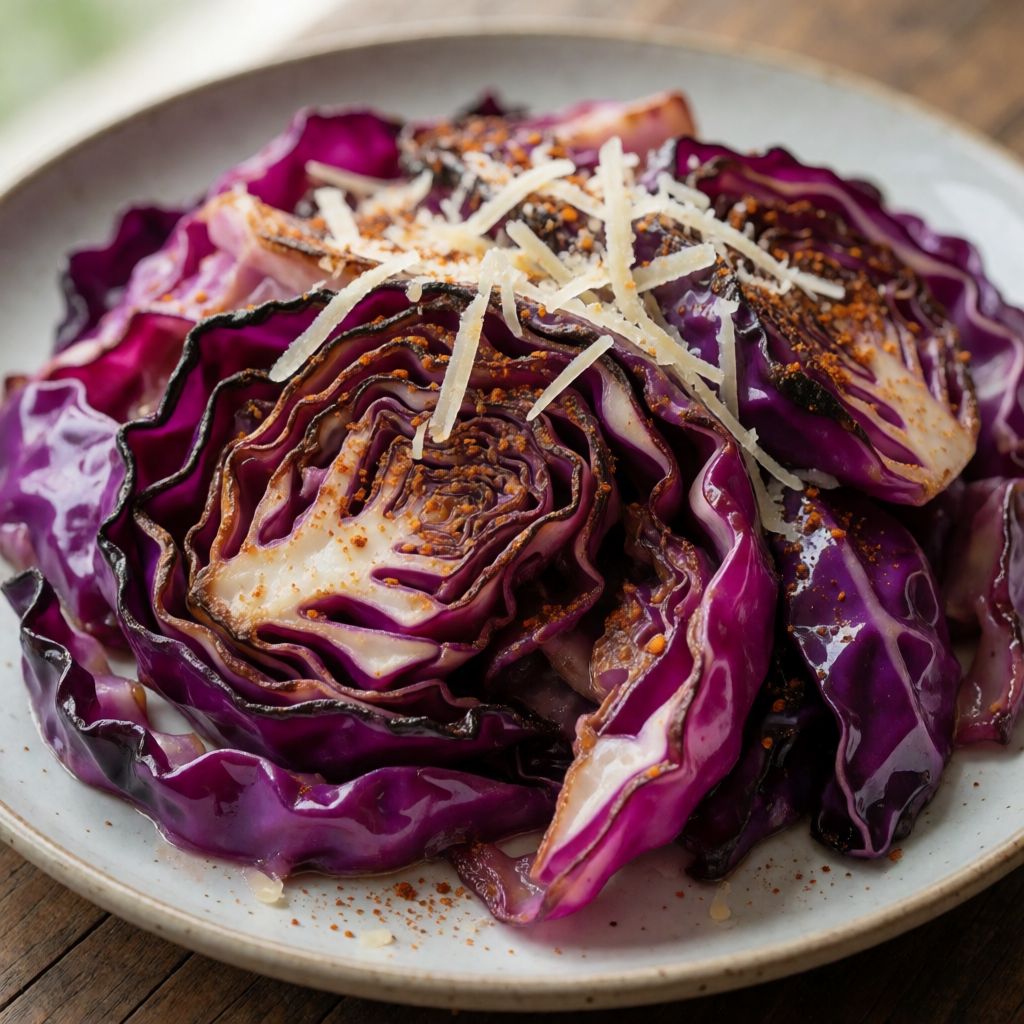
 AI photo
Pan-Fried Red Cabbage
A quick side dish of shredded red cabbage pan-fried with chilli, finished with salt and an optional sprinkle of parmesan.
Labels are worked out automatically from the ingredients and can be wrong. Check the packaging if it matters to you.
Ingredients
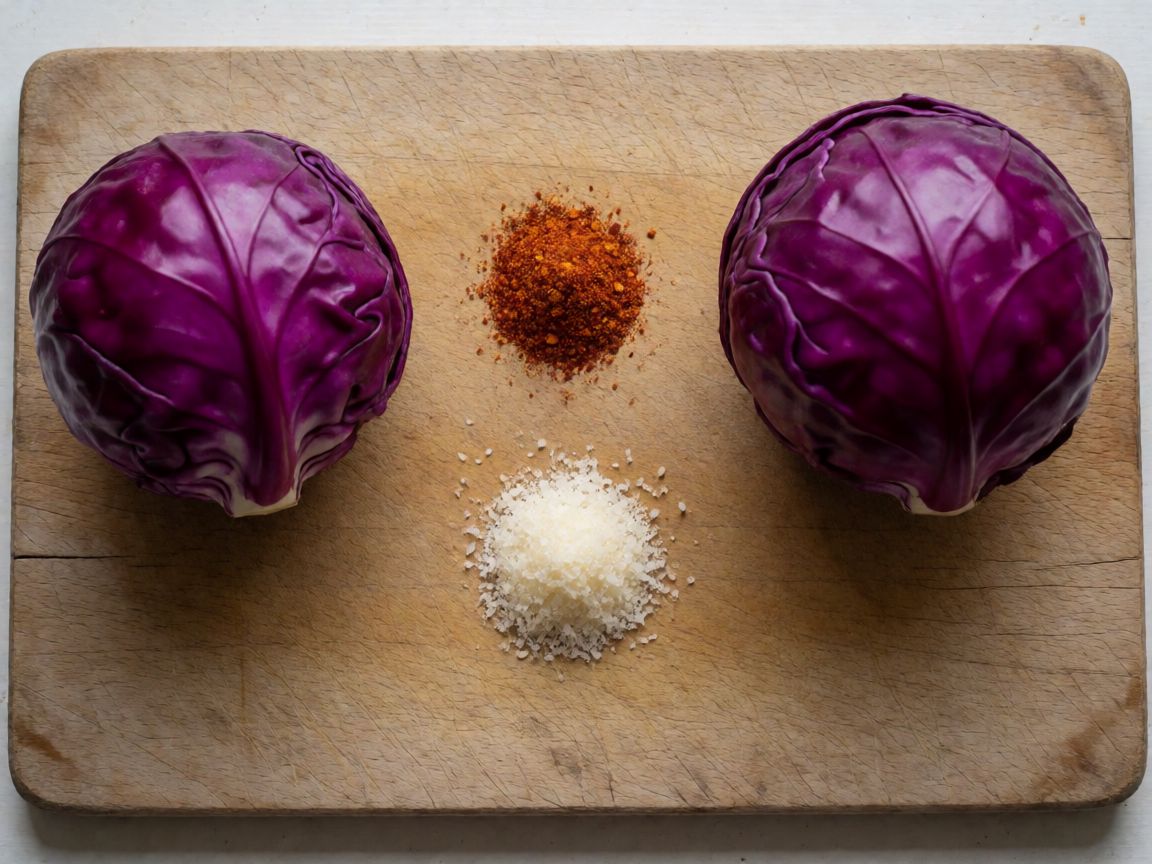
- 2 pcs Red cabbage
- 1 tsp Chilli powder to taste
- 1 pinch Salt to taste
- 2 tbsp Olive oil to taste
- 2 tbsp Parmesan optional, grated




Steps
Remove the tough white core of the cabbage, discard the outer leaves, and shred the rest into thin strips.
5 minRinse the shredded cabbage under cold running water and pat dry with a clean tea towel.
2 minHeat the olive oil in a non-stick frying pan.
2 minAdd the chilli powder, and once the oil starts to sizzle, add the shredded cabbage.
3 minPour in 100ml of water, cover with a lid and cook, stirring occasionally.
15 minRemove the lid and fry over high heat for a few minutes until done to your liking.
5 minAdd salt before serving, and sprinkle with parmesan if desired.
This is shredded red cabbage cooked in two completely different registers, one after the other: first steamed under a lid in its own puddle of water, then fried hard with the lid off. That change of regime is the whole dish. It is not the slow, sweet-sour braised red cabbage the British Sunday table knows from the roast dinner — no vinegar, no sugar, no two hours on the back of the stove. That version exists because red cabbage used to be a winter keeper, and the long cook with vinegar was as much preservation as flavour. Here you are not preserving anything, you are feeding four people in half an hour, so the method has to do its job fast.
What decides whether this works is the shred and the water. Cabbage leaf is stiff because its cell walls are full of tough fibre — raw, a strip snaps rather than bends. Cut it thick and the lid-and-water phase will never reach the middle before the outside turns to rag. Cut it thin, in ribbons, and that same small puddle of water turns to steam fast enough to soften the fibre right through, evenly, in the time it takes to make tea.
Red cabbage: buy it heavy for its size with a tight, closed head — a loose one has already started drying from the inside, and dry outer leaves are exactly what you're told to discard anyway, so don't pay for them twice. One head this size, minus the tough white core and the outer leaves, is roughly what two cabbages in the recipe give you for four people — this isn't a vegetable you portion by weight at the table, it shrinks hard once the water cooks out of it, so what looks like too much shredded cabbage in the pan is about right.
Chilli powder goes into the oil before the cabbage, not on top at the end, because that's the only way to get its flavour to travel through the fat instead of sitting as dust on the surface. The oil has to be hot enough to make it sizzle gently the moment it goes in — that's your cue, not a number on a dial, and it's also the point that stops the powder just going bitter from sitting in cold oil too long. If you don't have chilli powder, any ground dried chilli works the same way; what you're after is heat that blooms in fat, not heat from a fresh chilli that would release its own water and undo the point of a dry pan.
Olive oil here isn't doing a delicate job — it's a frying medium and a carrier for the chilli, so "olive oil" means any oil with no smell of its own that can take the final high-heat stretch without smoking and arguing with the chilli for attention. A light sunflower or vegetable oil does exactly the same work if that's what's in the cupboard; keep the extra virgin bottle for salads, its flavour will only fight the dish, not add to it.
The 100ml of water is a lower bound, not a measurement to defend with a jug — enough to make real steam under the lid without flooding the pan, and a British hob without a kazan or a proper lid means you're likely using a plate over the pan as a stand-in, which is fine, it holds the steam in well enough for this short a braise. If your pan is narrow, you may need to crowd the cabbage less at the frying stage, or do it in two goes — a packed pan on a domestic ring just steams in its own damp rather than frying, lid off or not.
Parmesan is the only thing in the recipe doing a job nothing else here does — salt, fat, and that savoury edge, dropped on at the very end so it melts slightly against the hot cabbage rather than cooking into it. It's marked optional for a reason: any aged, hard, salty cheese does the same thing, and if you have none, the dish stands on the chilli and the char at the cabbage's edge without missing anything essential.
And give it the ten minutes of prep without rushing the shredding — thin, even strips are what make the whole two-stage cooking method work in the time given. A knife going fast but careless gives you some thick ribbons and some shreds, and then half the cabbage is tender while the other half is still fighting you with that first snap instead of a bend. Patience with the knife now saves you from compensating with more time in the pan later.